Introduction: What Does “Plant-Based” Really Mean?
Plant‑based eating isn’t a strict set of rules. It’s a flexible, empowering way to nourish your body with foods that help you feel your best. In this guide, you’ll learn the different types of plant‑based diets, how they work, and how to choose an approach that fits your lifestyle. Whether you’re curious, transitioning, or ready for a full shift, this is a great place to begin.
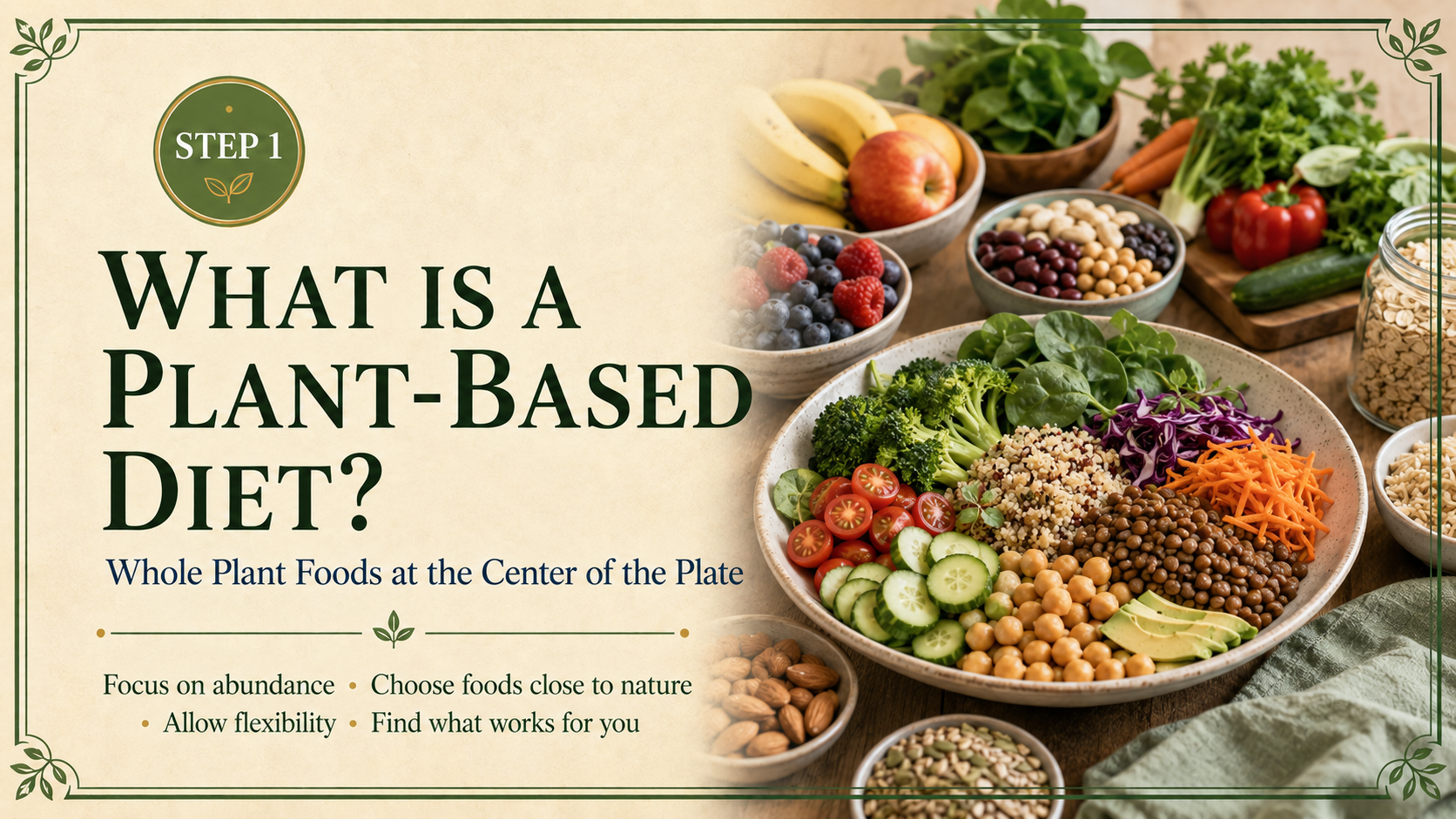
At its core, “plant-based” refers to foods grown from the soil and consumed in their natural state, excluding meat, dairy, eggs, and honey. Whole foods are unprocessed and additive-free, such as brown rice and fresh apples. This approach highlights simplicity and purity in eating.
Variations of Plant-Based Diets
Plant-based means different things to each person. Here are three approaches:
- Vegetarian: Includes plant foods, eggs, and dairy. Meat and fish are excluded.
- Vegan: Excludes all animal products and byproducts, including meat, dairy, eggs, and honey. Many vegans also avoid animal-derived non-food items like leather and lanolin.
- Whole-Food Plant-Based (WFPB) or Plant-Strong: Focuses exclusively on whole, unprocessed plant foods. No meat, dairy, oils, or imitation products like vegan cheese or mock meats.
What is a Whole Food Plant-Based diet?
Having introduced these variations, let’s take a closer look at one in particular: the Whole Food Plant-Based (WFPB) diet. (What is a vegan? 2024)
The WFPB diet is the most nutritionally focused version of plant-based eating. It includes:
Unlimited:
- Whole grains (brown rice, oats, quinoa)
- Legumes (beans, lentils, peas)
- Vegetables and fruits
In moderation:
- Nuts, seeds, avocados
- Natural sweeteners (like maple syrup)
- Minimally processed soy or wheat products (tofu, tempeh, seitan without added fats)
Excludes:
- All animal products (meat, dairy, eggs)
- Refined grains (white rice, white flour)
- Added oils (including olive oil)
- Artificial sweeteners and high-fructose corn syrup
- Imitation meat and cheese products
Rip Esselstyn coined the term “Plant-Strong” to describe this approach, which also inspired a line of food products and educational resources to help people adopt this lifestyle. (Esselstyn, 2023)
Watch the video on "What is the Plant-Based Diet"
Health Benefits of a Plant-Based Lifestyle
Studies show plant-based diets offer several health benefits:
- Lower blood pressure and cholesterol
- Improved digestion and weight management
- Reduced risk of type 2 diabetes, heart disease, and certain cancers
- Increased energy, better mood, and enhanced immune function
These benefits come from the fiber, antioxidants, and nutrients found in plant foods. Legumes, grains, and vegetables provide protein and essential nutrients without the negative effects of processed or animal-based foods.
For more, watch the video on the benefits of a plant-based diet. (Patton & Zumpano, 2024)
Trusted Resources to Support Your Journey
The Forks Over Knives Plan, created by medical experts behind a popular documentary, is a New York Times bestselling diet plan. Sanjay Gupta describes it as a practical health guide. This plan provides step-by-step instructions for adopting a whole-food, plant-based diet over twenty-eight days, and the documentary explores evidence for reducing meat, dairy, and processed foods to benefit health. Both the film and guide offer concrete nutrition advice and scientific explanations for newcomers.
The Forks Over Knives Plan serves as a step-by-step guide to incorporating whole-food, plant-based meals into your daily life. It includes detailed meal plans, recipe ideas, and structured guidance for both beginners and those looking to update their eating patterns. Find further information at: https://amzn.to/2Gsm0R6
Choose one of these resources and commit to trying it for a week. Afterward, reflect on your experience and decide on your next actionable step toward embracing a plant-based lifestyle. Read these below:
- The Plant‑Based Solution. America’s Healthy Heart Doc’s Plan to Power Your Health.
- The China Study. The Simple Way to Lose Weight and Reverse Illness, Using a Whole-Food, Plant-Based Diet.
- How Not to Die. Discover the Foods Scientifically Proven to Prevent and Reverse Disease..
Conclusion
Plant-based eating is simple: learn the basics, choose what fits your goals, and enjoy nourishing foods for better health.
Progress matters more than perfection. Make small, steady changes and use this guide to grow at your own pace.
Helping others learn plant-based eating can transform health. This guide offers clear, practical steps.
Wherever you are on your journey, I hope this guide boosts your confidence. Every healthy choice counts. I'm here to support you.
Author’s Note
Helping people understand plant‑based eating has been one of the most rewarding parts of my work. Over the years, I’ve seen how even small shifts toward whole, plant‑focused foods can transform energy, mood, and long‑term health. My goal with this guide is to make the journey feel simple, welcoming, and doable—no pressure, no perfection, just practical steps that meet you where you are.
Whether you’re exploring plant‑based eating for the first time or refining an approach you’ve followed for years, I hope this overview gives you clarity and confidence. Every positive choice you make is an investment in your future well‑being, and I’m honored to walk alongside you as you build a lifestyle that supports your health, your values, and your long‑term vitality.
---- Robert
Share Your Thoughts and Experiences
Comment Invitation
I’d love to hear from you.
What stood out to you in this post? What questions or experiences would you add?
Share your thoughts below — your voice helps others on their journey too.
Reference List
Harvard T.H. Chan School of Public Health. (2024). Plant‑Based Diets and Healthy Eating Patterns.
Mayo Clinic Staff. (2024). Plant‑Based Diet: What to Know and How to Start.
Cleveland Clinic. (2024). Health Benefits of Plant‑Forward Eating.
National Institutes of Health. (2024). Plant‑Based Dietary Patterns and Long‑Term Health Outcomes.
Academy of Nutrition and Dietetics. (2024). Position Statement: Vegetarian and Plant‑Based Diets Across the Lifespan.
Esselstyn, R. (2024). Plant‑Strong Principles and Whole‑Food Nutrition.
Campbell, T. C., & Campbell, T. M. (2023). The China Study: Updated Insights on Whole‑Food, Plant‑Based Nutrition.
Greger, M. (2023). How Not to Die: Evidence‑Based Nutrition for Disease Prevention.
Disclaimer
The information provided in this article is for educational and informational purposes only and is not intended as medical, psychological, or professional advice. The content reflects general wellness principles and personal development concepts designed to encourage self-reflection and healthy lifestyle choices.
Individual circumstances vary, and readers should consult qualified healthcare professionals, mental health providers, or other appropriate experts regarding specific concerns or conditions. Never disregard professional advice or delay seeking help because of information contained in this article.
The author and publisher assume no responsibility for actions taken based on the information presented. Your health and well-being are ultimately your responsibility, and any changes to your lifestyle should be made thoughtfully and in consultation with appropriate professionals when necessary.