Pillar Overview
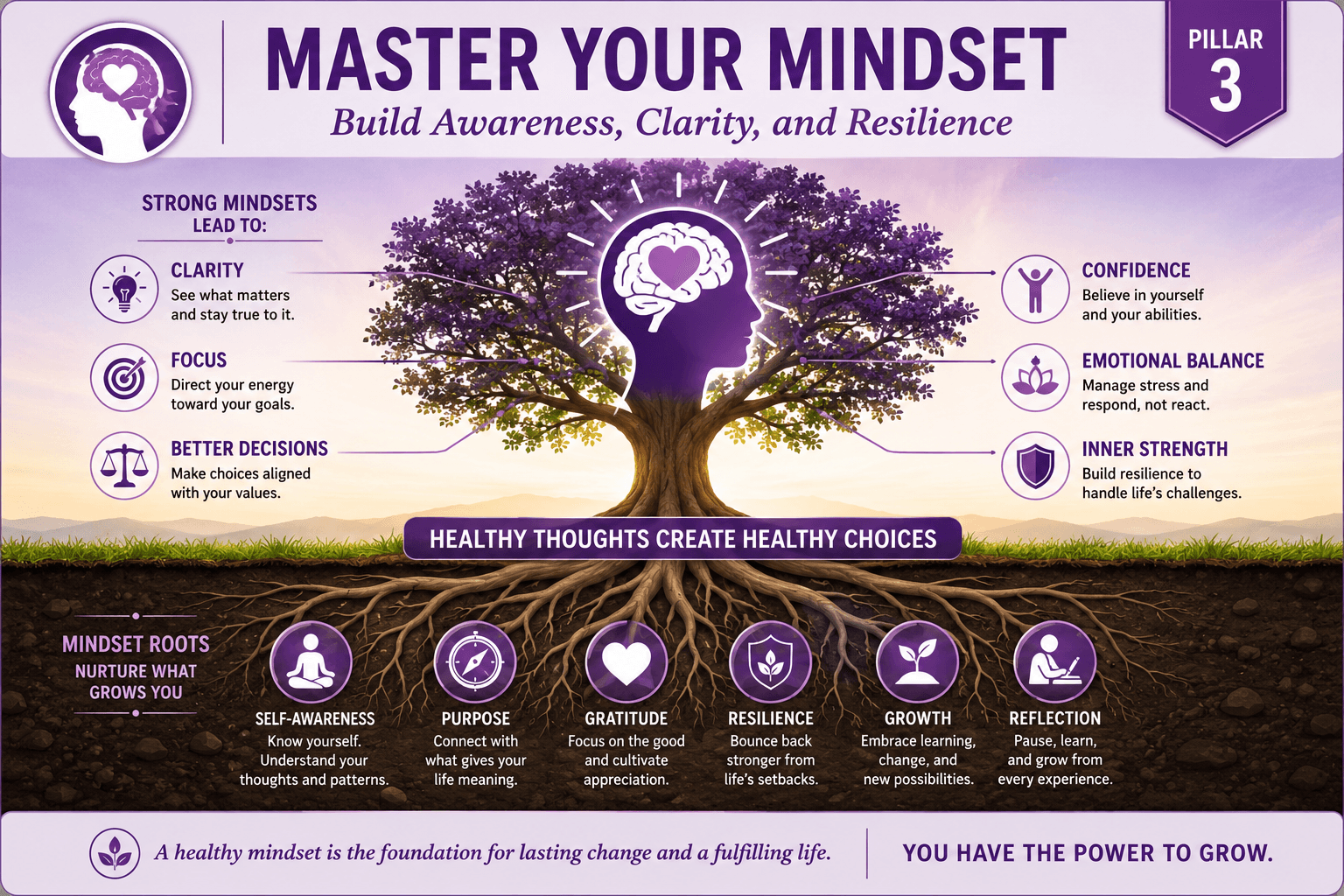
Build Awareness, Clarity, and Resilience
A calm, grounded approach to strengthening your mental and emotional foundations so you can create lasting change.
Your mindset quietly influences every choice, habit, and challenge in your life. When you understand your thoughts, regulate your emotions, and shift unhelpful patterns, you unlock a kind of freedom that transforms your health and your life. This pillar helps you build clarity, resilience, and emotional strength — one intentional step at a time.
Why Mindset Matters
Your mindset is the lens through which you interpret the world. When it is clouded by stress, fear, or old beliefs, even simple goals can feel overwhelming. But when your inner world is grounded and clear, healthier choices involving nutrition, movement, relationships, and daily habits become easier. Mindset helps hold all the other pillars together.
What This Pillar Helps You Do
- Build emotional resilience
- Reduce stress and overwhelm
- Develop healthier thought patterns
- Strengthen self‑awareness and self‑trust
- Create a mindset that supports long‑term change
These skills make every other area of wellness more sustainable.
Core Themes of This Pillar
- Emotional Awareness
Recognize your feelings without judgment. - Thought Patterns & Beliefs
Identify stories that influence your behavior. - Stress Regulation
Learn practical tools to calm the nervous system. - Self-Compassion & Inner Dialogue
Develop a healthier relationship with yourself. - Resilience & Adaptability
Navigate challenges with greater flexibility and confidence.
Your Practical Mindset Framework
These principles provide a practical pathway for building greater awareness, resilience, and emotional well-being.
The Awareness → Interpretation → Action Loop
Every experience passes through three stages:
- Awareness — noticing what you feel or think
- Interpretation — the meaning you assign to it
- Action — the behavior that follows
Pausing at the interpretation stage helps you shift automatic reactions into purposeful choices.
The “Story vs. Fact” Method
Your mind often blurs the line between what happened and what you think happened. Separating facts from assumptions reduces overwhelm and helps you respond with clarity.
The 1% Shift Principle
Mindset change happens through small, consistent improvements — not overnight transformation. Progress, not perfection, builds long‑term resilience.
The Compassionate Observer
Notice your thoughts and emotions as a kind, curious bystander. This reduces shame, builds self‑trust, and opens the door to real change.
Your Mindset Learning Journey
These carefully selected articles will help you build awareness, strengthen resilience, and apply mindset principles to everyday life. Begin wherever you are and move forward one small step at a time.
Step 1: Build Awareness
Step 2: Explore Your Story
- Are You Living in the Past?
- Impossible to Change Your Life?
- Identity: The Story, You Tell Yourself
Step 3: Develop a Growth Mindset
- Growth Mindset
- Positive Self-Talk
- You Can Be as Happy as You Choose to Be
Step 4: Build Resilience
- From Reaction to Response
- Managing Stress
- Developing Resilience
- Gratitude and Reflection
Step 5: Mindset in Action
Author's Note
Your mindset is not fixed — it is a living, evolving system that grows with you. Clarity and emotional strength don’t come from trying harder, but from understanding yourself with honesty and compassion. My hope is that this pillar gives you tools to feel calmer, breathe more easily, and see your inner world with new eyes.
---- Robert
How Master Your Mindset Connects with the Other Pillars
- Nourish Your Body — A healthy mindset supports better nutrition choices and long-term consistency.
- Move With Purpose — Emotional resilience supports motivation, confidence, and sustainable movement habits.
- Hidden Forces Behind Our Health — Awareness helps you recognize the influences that shape your beliefs and decisions.
- Live With Intention — Intentional living begins with awareness, self-understanding, and purposeful choices.
Continue Your Journey
Awareness helps you understand your own thoughts and choices. The next step is recognizing the outside forces that may influence them. Explore Hidden Forces Behind Our Health
to understand how systems, marketing, culture, and environment shape everyday health decisions.
Disclaimer
This content is for educational and informational purposes only and is not a substitute for professional mental health care, diagnosis, or treatment. Always seek the advice of a qualified mental health professional for concerns related to emotional wellness or mental health.