Introduction
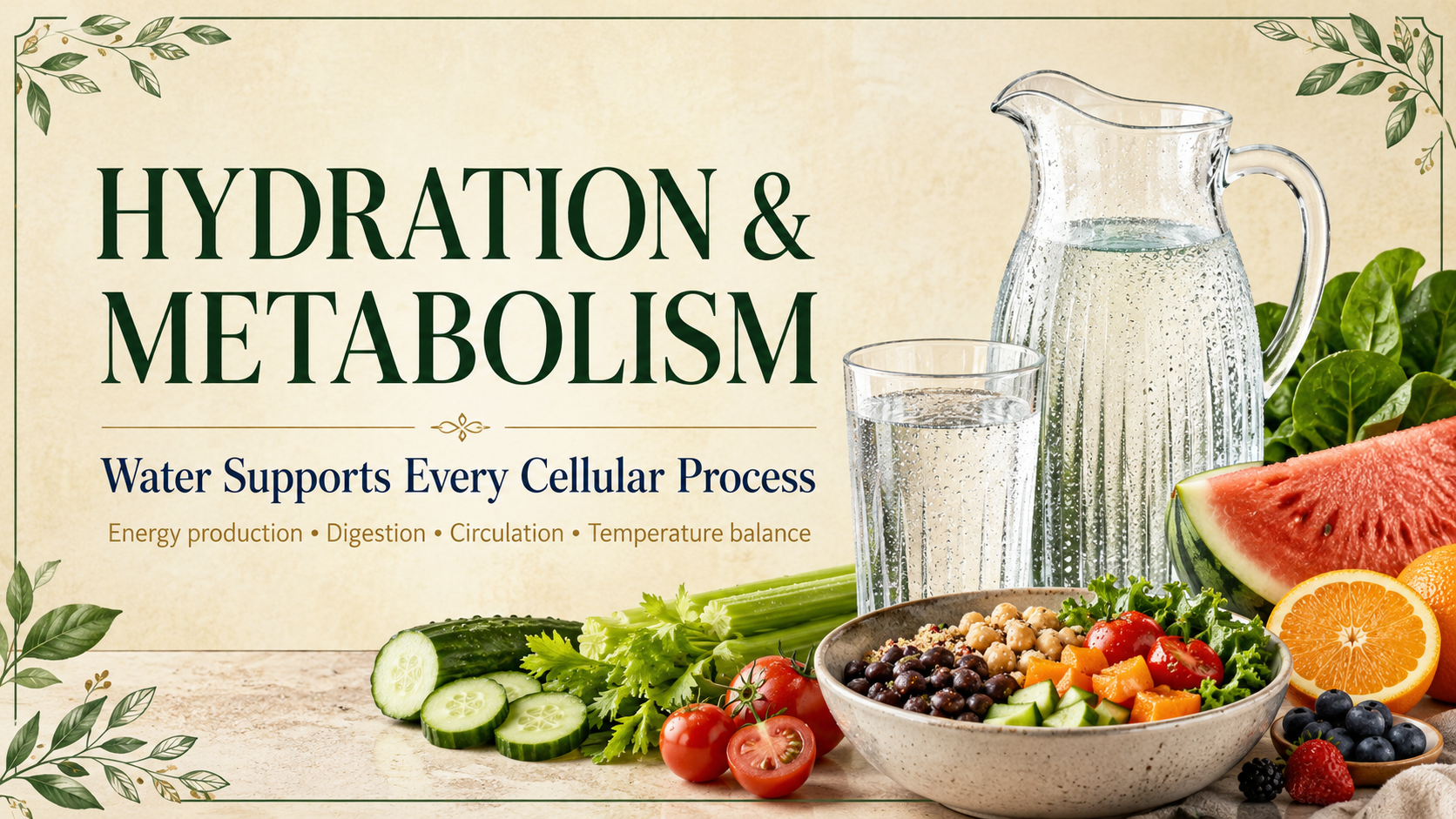
Water is the quiet hero of your health. It regulates temperature, aids digestion, transports nutrients, cushions joints, and supports an efficient metabolism. Even mild dehydration can affect your energy, focus, and mood. (Armstrong et al., 2012, pp. 382-388) Understanding how hydration works helps build habits that support steady energy and long-term health.
How Hydration Supports Your Metabolism
Your metabolism is all the chemical reactions that keep you alive—turning food into energy, repairing cells, and maintaining balance. Water is essential for almost all of these.
- Energy production: Water helps break down carbohydrates, fats, and proteins into usable fuel.
- Nutrient transport: It carries vitamins, minerals, and glucose to your cells.
- Temperature regulation: Sweating and circulation depend on adequate hydration.
- Waste removal: Your kidneys rely on water to filter toxins and maintain electrolyte balance.
- Water aids stomach acid production, enzyme function, and smooth intestinal movement for efficient digestion.
Even slight dehydration slows your metabolism, making basic functions harder. (Zaplatosch & Adams, 2020)
Signs You May Not Be Drinking Enough
Hydration needs vary, but your body gives clear signals when it’s running low:
- Low energy or afternoon fatigue
- Headaches or difficulty concentrating.
- Dry mouth or dry skin
- Dark yellow urine
- Muscle cramps
- Feeling hungry soon after eating
These symptoms often resolve quickly with regular water intake.
With those symptoms in mind, you might wonder how much water you actually need to feel your best
There isn’t one ideal amount, but most adults feel best with 6–10 cups daily, depending on: (Staff, 2026)
- Activity level
- Climate and temperature
- Diet (high‑fiber and high‑protein diets require more water)
- Age and overall health
Fruits, vegetables, soups, and herbal teas count toward your daily hydration.
A simple guide: Drink enough to produce pale yellow urine and maintain steady energy.
Hydration and Digestion
Water plays a major role in digestion from start to finish:
- Helps break down food
- Supports stomach acid and digestive enzymes
- Softens stool and prevents constipation
- Helps fiber do its job effectively
If you increase fiber, drink more water—fiber needs it to bulk and move smoothly through your digestive tract. (Gill et al., 2021)
Hydration and Blood Sugar Balance
Water helps your body maintain stable blood sugar by:
- Supporting the transport of glucose into cells
- Helping the kidneys remove excess sugar
- Slowing digestion when paired with fiber‑rich foods
Even mild dehydration can raise blood sugar since the bloodstream becomes more concentrated. (Enhörning et al., 2019, pp. 1-10)
Hydration and Weight Management
Water supports a healthy weight in several ways:
- Helps regulate appetite
- Reduces cravings mistaken for hunger
- Supports metabolism and fat oxidation
- Improves digestion and nutrient absorption
- Replaces sugary drinks that spike blood sugar
Drinking water before meals helps you tune into true hunger and fullness cues. (Sayegh & Ratcliffe, 2012)
Simple Ways to Stay Hydrated
- Start your morning with a glass of water.
- Keep a reusable bottle with you throughout the day.
- Drink a glass of water before each meal.
- Choose water or herbal tea instead of sugary drinks.
- Eat water‑rich foods like cucumbers, berries, melons, and leafy greens.
- Increase water intake during heat, exercise, or illness.
Consistent, small steps lead to lasting hydration habits.
The Bottom Line
Hydration supports the systems that keep you energized, clear-headed, and resilient. When your body has adequate fluid, digestion and nutrient transport function properly, and your metabolism works efficiently. Building steady habits, such as drinking water in the morning and choosing hydrating foods, can make a lasting difference.
You don’t need perfection. Just be consistent. Every sip helps your body function at its best. Start where you are, build a rhythm that fits your life, and let hydration be an easy way to support long‑term health.
Author’s Note
Water is a simple, powerful tool for health—often overlooked. I wrote this post to clarify how hydration affects energy, metabolism, digestion, and well‑being. When you give your body water, everything works better—from your cells to your mood to your clarity. I hope this guide encourages you to make hydration a daily, natural habit.
— Robert
Continue The Conservation
Every wellness journey is unique, and we can learn a great deal from one another's experiences.
What stood out to you in this article?
Have you faced similar challenges, discovered helpful strategies, or gained insights of your own?
I invite you to share your thoughts in the comments below. Your experience may encourage someone else who is taking the next step on their own journey.
Remember, meaningful change often begins with a single step—and none of us has to walk the path alone.
Reference List
- Popkin, B.M. et al. “Water, Hydration, and Health.” Nutrition Reviews, 2010.
- National Academies of Sciences. Dietary Reference Intakes for Water, Potassium, Sodium, Chloride, and Sulfate.
- National Institutes of Health. “Water: An Essential Nutrient.”
Hydration & Energy Regulation
- St‑Onge, M.‑P. et al. “Sleep and Diet: A Review.” Nutrients, 2016.
- Harvard Health Publishing. “Dehydration and Fatigue.”
Digestion, Detoxification & Temperature Regulation
- Mayo Clinic Staff. “Water: How Much Should You Drink Every Day?”
- Cleveland Clinic. “Why Hydration Matters for Digestion and Overall Health.”
Electrolytes & Fluid Balance
- American College of Sports Medicine. “Exercise and Fluid Replacement.”
- Sawka, M.N. et al. “Human Water Needs.” Journal of the American College of Nutrition, 2005.
Whole‑Food Sources of Hydration
- Harvard T.H. Chan School of Public Health. “Hydrating Foods and Beverages.”
- Academy of Nutrition and Dietetics. “Hydration and Healthy Eating.”
- Armstrong, L. E., Ganio, M. S., Casa, D. J., Lee, E. C., McDermott, B. P., Klau, J. F., Jimenez, L., Bellego, L. L., Chevillotte, E., & Lieberman, H. R. (2012). Mild dehydration affects mood in healthy young women. Journal of Nutrition 142(2), pp. 382-388. https://doi.org/10.3945/jn.111.142000
- Zaplatosch, M. E. & Adams, W. M. (2020). The Effect of Acute Hypohydration on Indicators of Glycemic Regulation, Appetite, Metabolism, and Stress: A Systematic Review and Meta-Analysis. Nutrients 12(9). https://doi.org/10.3390/nu12092526
- Staff, M. C. (2026). Water: How much should you drink every day?. Mayo Clinic. https://www.mayoclinic.org/healthy-lifestyle/nutrition-and-healthy-eating/in-depth/water/art-20044256?os=mfbj8
- Gill, S. K., Rossi, M., Bajka, B. & Whelan, K. (2021). Dietary fiber in gastrointestinal health and disease. Nature Reviews Gastroenterology & Hepatology 18. https://doi.org/10.1038/s41575-020-00375-4
- Enhörning, S., Tasevska, I., Roussel, R., Bouby, N., Persson, M., Burri, P., Bankir, L. & Melander, O. (2019). Effects of hydration on plasma copeptin, glycemia, and gluco-regulatory hormones: a water intervention in humans. European Journal of Nutrition 58(1), pp. 1-10. https://doi.org/10.1007/s00394-018-1740-0
- Sayegh, M. & Ratcliffe, B. (2012). Drinking water before a meal does not affect hunger or satiety ratings in young adults or older subjects. Proceedings of the Nutrition Societ
Disclaimer
The information provided in this article is for educational and informational purposes only and is not intended as medical, psychological, or professional advice. The content reflects general wellness principles and personal development concepts designed to encourage self-reflection and healthy lifestyle choices.
Individual circumstances vary, and readers should consult qualified healthcare professionals, mental health providers, or other appropriate experts regarding specific concerns or conditions. Never disregard professional advice or delay seeking help because of information contained in this article.
The author and publisher assume no responsibility for actions taken based on the information presented. Your health and well-being are ultimately your responsibility, and any changes to your lifestyle should be made thoughtfully and in consultation with appropriate professionals when necessary.