Why Real Food Supports Healthy Aging
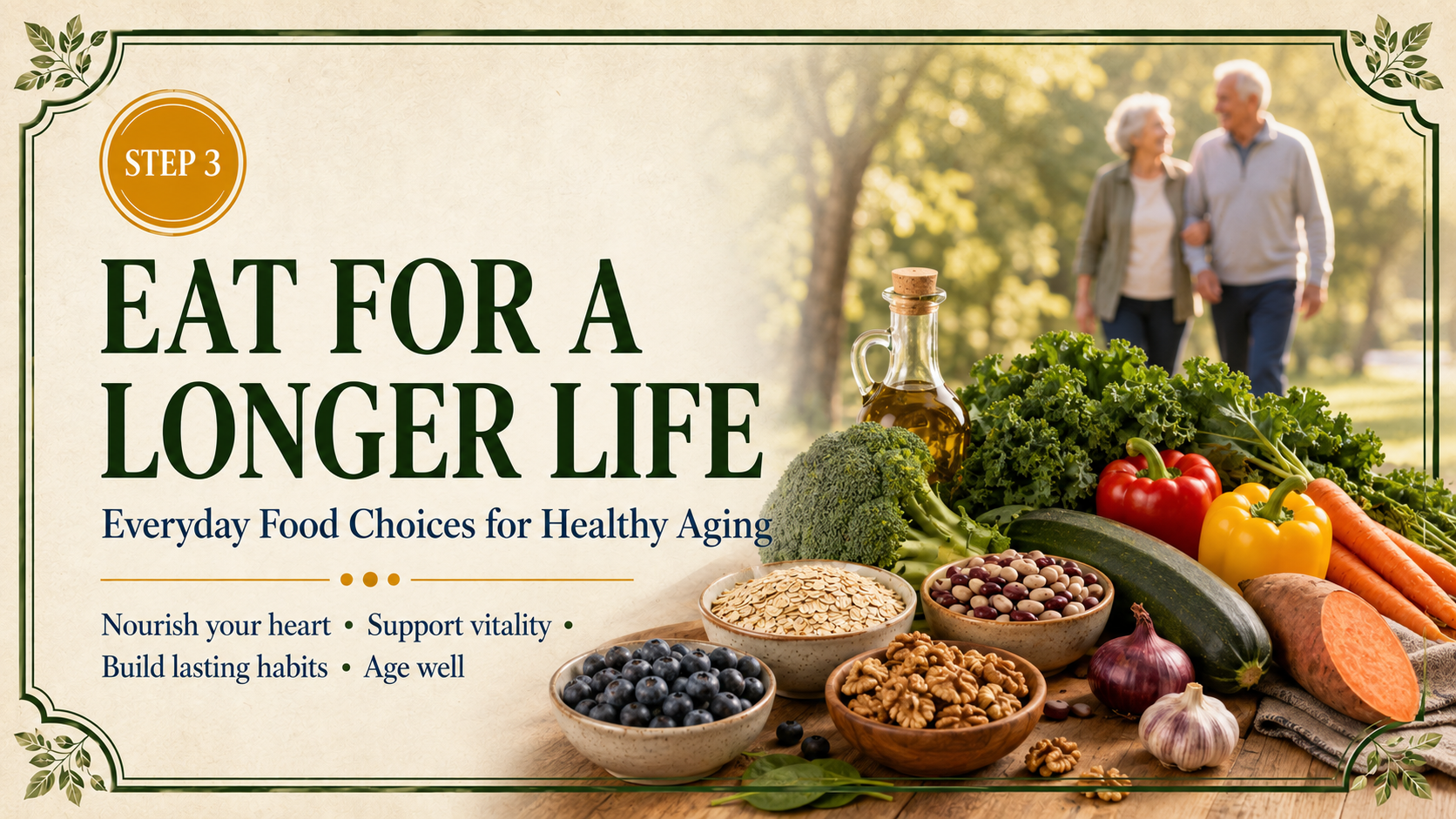
Most people want to live longer—but more importantly, they want to live better. More energy. More clarity. More mobility. More joy. While genetics play a role, everyday patterns—including food, movement, sleep, and social connection—also influence healthy aging. Food is one practical place to begin.
Eat real food, mostly plants, most of the time
Across the world’s longest‑living cultures, people build their meals around whole, minimally processed foods that nourish the body and support metabolic, cardiovascular, and cognitive health. These habits aren’t extreme. They’re sustainable, satisfying, and deeply rooted in tradition.
This guide distills the core principles of real‑food eating for a longer, healthier life—without fads, fear, or perfectionism.
Center Your Meals Around Plants
In every long‑living culture, plants aren’t a side dish—they’re the foundation. Vegetables, beans, whole grains, fruits, nuts, seeds, herbs, and spices provide the fiber, antioxidants, and phytonutrients that protect cells and reduce inflammation.
A simple rule: If it grew from the ground and still looks close to its natural form, it belongs on your plate.
Make Beans a Daily or Near‑Daily Habit
Beans are a common part of many traditional dietary patterns. They provide plant protein, fiber, and slowly digested carbohydrates that can support fullness, digestive health, and steadier energy.
Soups, stews, bowls, dips, salads—beans fit anywhere.
Choose Whole Grains Over Refined Ones
Whole grains such as oats, barley, quinoa, brown rice, and farro provide fiber and important nutrients. Because refined grains generally contain less fiber, they are often digested more quickly and may leave you feeling hungry sooner.
Eat With the Seasons
Eating seasonally can add variety to your meals and help you enjoy produce when it is plentiful. Freezing, canning, fermenting, or drying seasonal foods can also make nutritious choices available throughout the year.
You don’t need a garden—just choose seasonal produce when possible and enjoy simple preservation methods.
Eat Until You’re Satisfied, Not Stuffed
Many traditional cultures emphasize eating slowly and stopping when comfortably satisfied. Paying attention to hunger and fullness cues can support more mindful portions and a more comfortable eating experience.
Keep Processed Foods to a Minimum
You don’t need to eliminate anything forever. But reducing ultra‑processed foods—those high in added sugars, refined oils, artificial ingredients, and chemical additives—can dramatically improve long‑term health.
A simple filter: If the ingredient list reads like a science experiment, it’s not real food.
Hydrate Like It Matters
Hydration supports metabolism, cognitive function, digestion, joint health, and energy levels. Water, herbal teas, and naturally flavored infusions are excellent choices.
Pair Real Food With Real Living
Longevity isn’t just about what you eat. It’s about how you live.
Across long‑living cultures, people:
- Move naturally throughout the day
- Stay socially connected
- Manage stress with rituals and rest
- Maintain purpose and meaning
- Spend time outdoors
Food is one pillar—but it works best when supported by a lifestyle that nourishes the whole person.
A Simple, Sustainable Way to Support Healthy Aging
Eating real food isn’t a diet. It’s a return to what the human body understands: whole, vibrant, nourishing foods that support health at every age.
You don’t need perfection. You just need consistency.
Small changes—more greens, more beans, more whole grains, and more water—can become meaningful habits that support energy, well-being, and healthy aging.
Author’s Note
This article is part of my ongoing mission to help you build a life of lasting health—one grounded in real food, sustainable habits, and a sense of empowerment. You deserve to feel strong, clear, and capable at every stage of life
----- Robert
Conclusion: A Healthier Life, One Choice at a Time
Research consistently associates eating patterns rich in vegetables, fruits, whole grains, legumes, nuts, and seeds with better long-term health. Combined with regular movement, restorative rest, supportive relationships, and a sense of purpose, real food can be one important part of living well as you age.
Check out these great sources Plant-Based Nutrition, 2E (Idiot’s Guides),
Nutrition Facts: The Truth About Food, and
The Forks over Knifes, a simple plan that focuses on hearty comfort foods and does not involve portion control or worrying about obtaining single nutrients like protein and calcium.
Continue The Conversation
Every wellness journey is unique, and we can learn a great deal from one another's experiences.
What stood out to you in this article?
Have you faced similar challenges, discovered helpful strategies, or gained insights of your own?
I invite you to share your thoughts in the comments below. Your experience may encourage someone else who is taking the next step on their own journey.
Remember, meaningful change often begins with a single step—and none of us has to walk the path alone.
References
- Buettner, D. (2015). The Blue Zones Solution: Eating and Living Like the World’s Healthiest People. National Geographic.
- Willett, W., et al. (2019). Food in the Anthropocene: The EAT–Lancet Commission on healthy diets from sustainable food systems. The Lancet, 393(10170), 447–492. https://doi.org/10.1016/S0140-6736(18)31788-4
- Harvard T.H. Chan School of Public Health. (n.d.). Healthy Eating Plate. The Nutrition Source. Retrieved August 18, 2026, from https://nutritionsource.hsph.harvard.edu/healthy-eating-plate/
- Campbell, T. C., & Jacobson, H. (2013). Whole: Rethinking the Science of Nutrition. BenBella Books.
- essier, A.-J., Wang, F., Korat, A. A., et al. (2025). Optimal dietary patterns for healthy aging. Nature Medicine, 31, 1644–1652. https://doi.org/10.1038/s41591-025-03570-5
Disclaimer
The information provided in this article is for educational and informational purposes only and is not intended as medical, psychological, or professional advice. The content reflects general wellness principles and personal development concepts designed to encourage self-reflection and healthy lifestyle choices.
Individual circumstances vary, and readers should consult qualified healthcare professionals, mental health providers, or other appropriate experts regarding specific concerns or conditions. Never disregard professional advice or delay seeking help because of information contained in this article.
The author and publisher assume no responsibility for actions taken based on the information presented. Your health and well-being are ultimately your responsibility, and any changes to your lifestyle should be made thoughtfully and in consultation with appropriate professionals when necessary.