Introduction
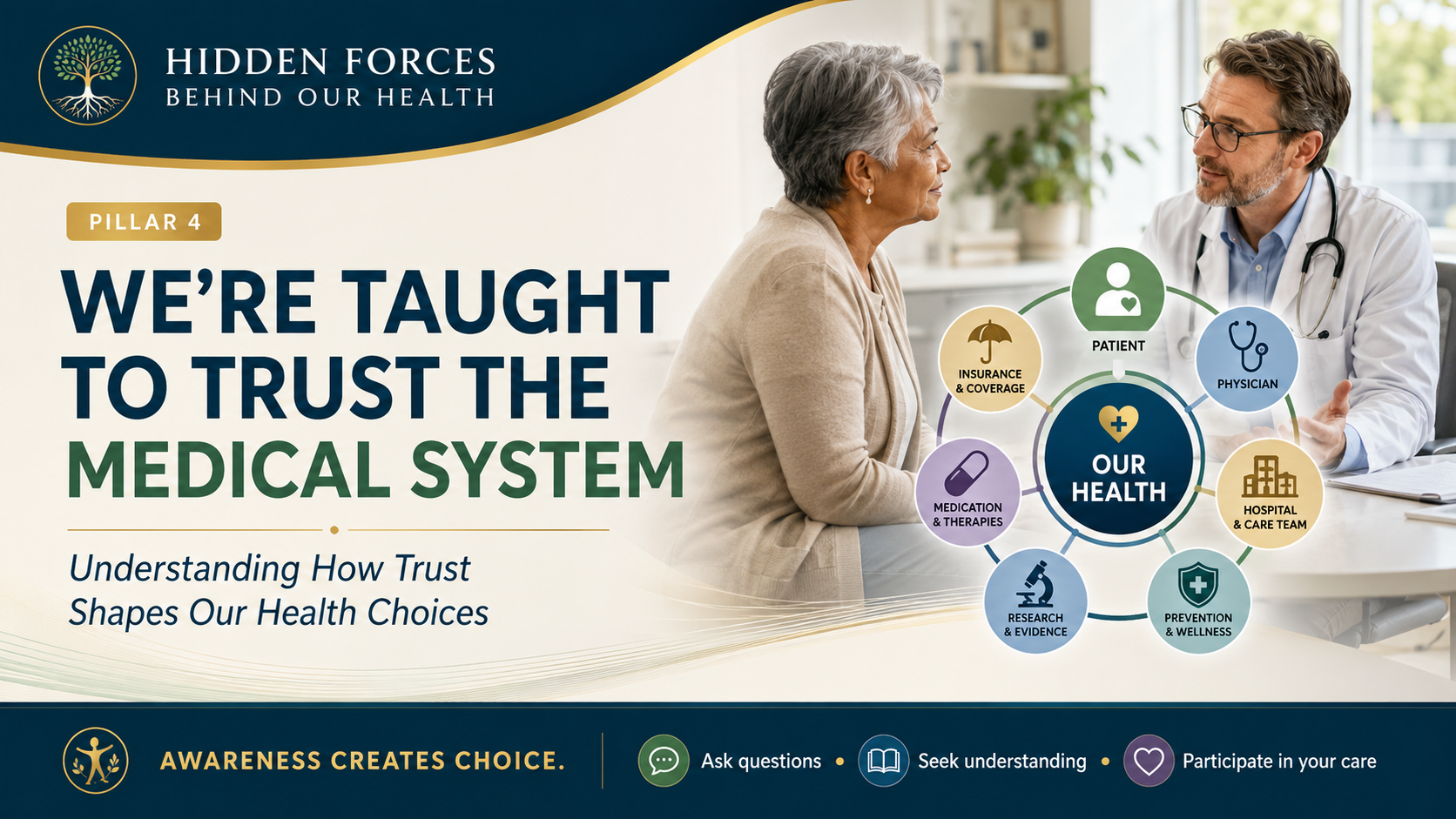
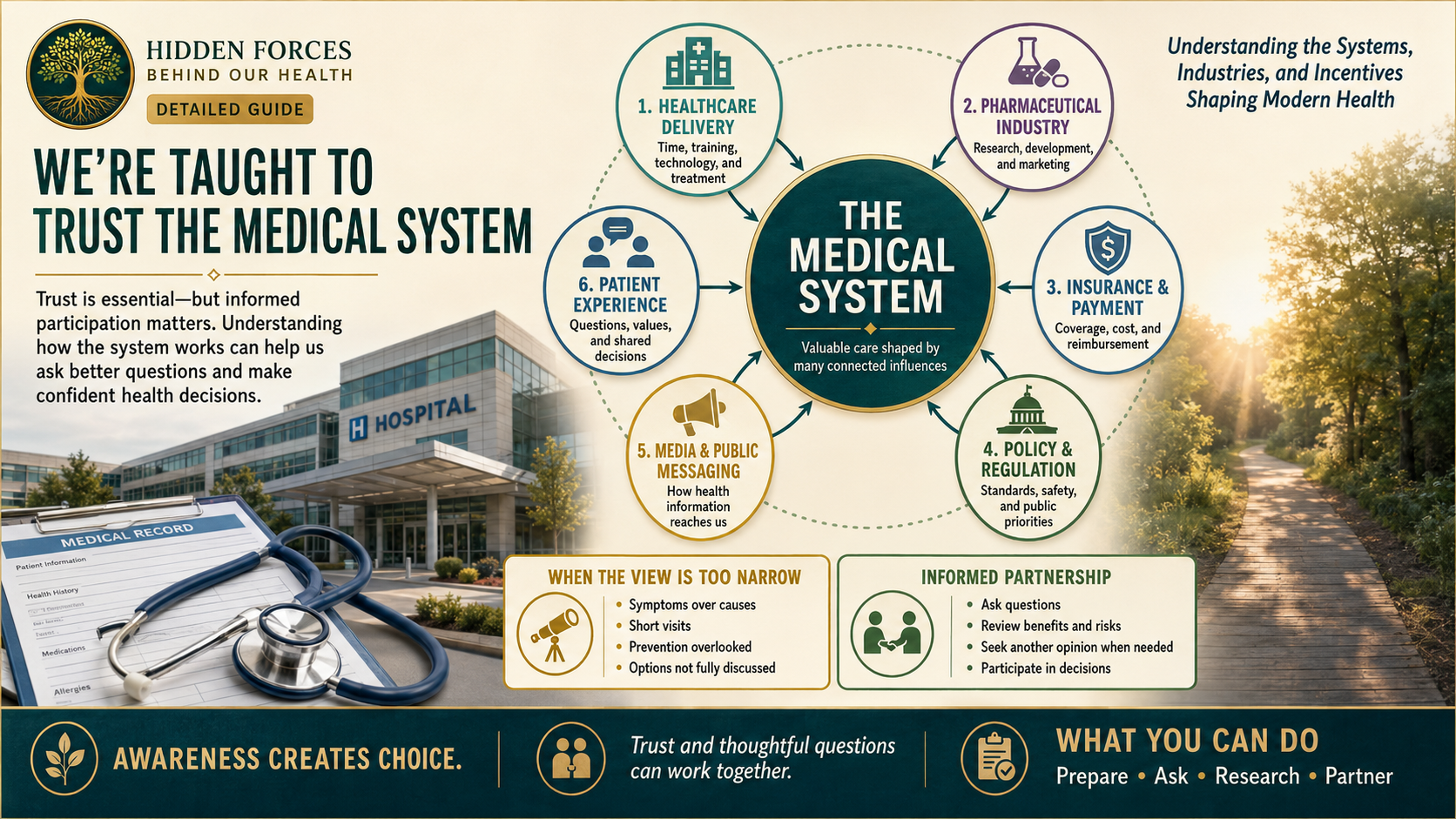
We are taught to trust the medical system, but it rarely seeks the root causes of illness. Despite many professionals' efforts to keep us healthy, the system’s incentives, funding flows, and priorities often undermine this mission.
This discussion does not blame individual doctors. Instead, it examines the broader system they work within.
A System Built on Treatment, Not Understanding
In engineering and technology, solving problems starts with finding the root cause. As a mechanic, I learned never to replace a part without knowing why it failed, or the problem would return.
Yet in modern medicine, analyzing root causes is frequently overlooked.
Instead of asking why this is happening,
- What is driving this illness?
- What environmental or lifestyle forces are shaping this condition?
…the system jumps straight to:
- prescriptions
- procedures
- injections
- lifelong “management”
This approach perpetuates illness rather than resolving it.
A system structured this way produces more patients, greater treatment volume, and higher revenue, but does not actually improve health outcomes. (Casalino et al., 2003, pp. 1560-1568)
The Incentives Are Misaligned
The medical industry spends billions on advertising and lobbying. Yet population health is stagnant, chronic diseases are rising, life expectancy is falling, and many families are accumulating medical debt. (Xu et al., 2026)
Why?
Profit increases when people remain unwell.
This profit dynamic results from structural factors, not malicious intent.
A healthcare model that profits from continuous treatment lacks inherent incentives to eliminate the need for such interventions. This represents a hidden force that is often overlooked. (Einav et al., 2018)
The Missing Conversation: What If We Actually Cured Something?
Cancer is one example. Huge sums go to awareness campaigns, fundraising, research, and drug development. Entire industries, careers, and organizations rely on the disease's persistence. (Sun et al., 2009, pp. 333-346)
Consider this candidly: What would happen to these institutions if a real cure were found?
The desire for cures isn’t lacking. The system doesn’t prioritize cures. Incentives and momentum favor ongoing treatment rather than true resolution.
We’re Not Being Served — We’re Being Managed
The reality is simple: people are not well served.
Not because medicine is bad.
Not because doctors don’t care.
The real issue is a system built on a flawed foundation.
A system that:
- treats symptoms instead of causes
- Rewards procedures over prevention
- normalizes lifelong medication
- and rarely asks why the illness is happening in the first place
Such a system cannot support a truly healthy population.
It creates patients, not lasting health.
A Path Forward: Reclaiming Our Role in Our Own Health
This post doesn’t aim to dismantle current structures. It clarifies what shapes our health and helps us make informed choices.
Understanding how the system works helps us recognize its limits and adjust our expectations.
You begin to:
- ask better questions
- look beyond quick fixes,
- explore root causes
- and take ownership of your wellbeing
This is the point at which genuine healing can commence.
Conclusion: Seeing the System Clearly
Reflect on what these observations reveal about the system we are taught to trust.
If we set aside assumptions, the misalignment with real healing becomes clear: the system emphasizes treatment over understanding, management over resolution, and dependence on ongoing intervention.
Recognizing limits empowers us. Adjusting expectations gives us agency and prompts deeper questions to support real wellbeing.
Moving forward means not rejecting medicine but refusing to surrender our health to a system with conflicting incentives. Instead, actively participate: ask questions, seek clarity, and steer your own healthcare choices.
Author’s Note
This post reveals hidden health forces to offer clarity, not fear. For years, I thought the system prioritized my well-being because it seemed authoritative. Only deeper questions showed me unseen influences on my health.
My hope is that you feel empowered to think differently, ask critical questions, and reclaim your agency. Starting today, take specific actions: research your health options, bring prepared questions to provider visits, reflect on possible root causes of symptoms, and make decisions with intention. Healing begins when you consciously direct your health journey.
— Robert.
Continue The Conversation
Every wellness journey is unique, and we can learn a great deal from one another's experiences.
What stood out to you in this article?
Have you faced similar challenges, discovered helpful strategies, or gained insights of your own?
I invite you to share your thoughts in the comments below. Your experience may encourage someone else who is taking the next step on their own journey.
Remember, meaningful change often begins with a single step—and none of us has to walk the path alone.
Reference List
Einav, L., Finkelstein, A. & Mahoney, N. (2018). Provider Incentives and Healthcare Costs: Evidence from Long-Term Care Hospitals. Econometrica 86(6). https://doi.org/10.3982/ECTA15022
Casalino, L., Gillies, R. R., Shortell, S. M., Schmittdiel, J. A., Bodenheimer, T., Robinson, J. C., Rundall, T., Oswald, N., Schauffler, H. & Wang, M. C. (2003). External Incentives, Information Technology, and Organized Processes to Improve Health Care Quality for Patients With Chronic Diseases. JAMA 289(12), pp. 1560-1568. https://doi.org/10.1001/jama.289.12.1560
Xu, J., Murphy, S. L., Kochanek, K. D. & Arias, E. (2026). Mortality in the United States, 2024. NCHS Data Brief No. 548. https://doi.org/10.15620/cdc/174641
Sun, E. C., Jena, A. B., Lakdawalla, D. N., Reyes, C. M., Philipson, T. J. & Goldman, D. P. (2009). An Economic Evaluation of the War on Cancer. Journal of Health Economics 29(3), pp. 333-346. https://doi.org/10.3386/w15574
Casalino, L., Gillies, R. R., Shortell, S. M., Schmittdiel, J. A., Bodenheimer, T., Robinson, J. C., Rundall, T., Oswald, N., Schauffler, H. & Wang, M. C. (2003). External Incentives, Information Technology, and Organized Processes to Improve Health Care Quality for Patients With Chronic Diseases. JAMA 289(4), pp. 434-441. https://doi.org/10.1001/jama.289.4.434
Disclaimer
The information provided in this article is for educational and informational purposes only and is not intended as medical, psychological, or professional advice. The content reflects general wellness principles and personal development concepts designed to encourage self-reflection and healthy lifestyle choices.
Individual circumstances vary, and readers should consult qualified healthcare professionals, mental health providers, or other appropriate experts regarding specific concerns or conditions. Never disregard professional advice or delay seeking help because of information contained in this article.
The author and publisher assume no responsibility for actions taken based on the information presented. Your health and well-being are ultimately your responsibility, and any changes to your lifestyle should be made thoughtfully and in consultation with appropriate professionals when necessary.