Introduction
Many people want to lose weight, feel better, and take control of their health, yet the world of dieting has never been more confusing. From keto to Mediterranean to intermittent fasting, the options can feel overwhelming. Research consistently points to one top approach for weight loss and lasting health: a whole‑food, plant‑based lifestyle. (Wright et al., 2017)
A plant‑based diet isn’t about restriction or perfection. It nourishes your body with foods that support a healthy weight, steady energy, and vibrant well‑being. Ideal weight comes from achieving ideal health. revolutionalizeurhealth.com
Research shows that whole‑food, plant‑based diets outperform many popular eating patterns — including the Mediterranean and keto diets — when it comes to losing weight and keeping it off. (Greger, 2020, pp. 500-510) revolutionalizeurhealth.com
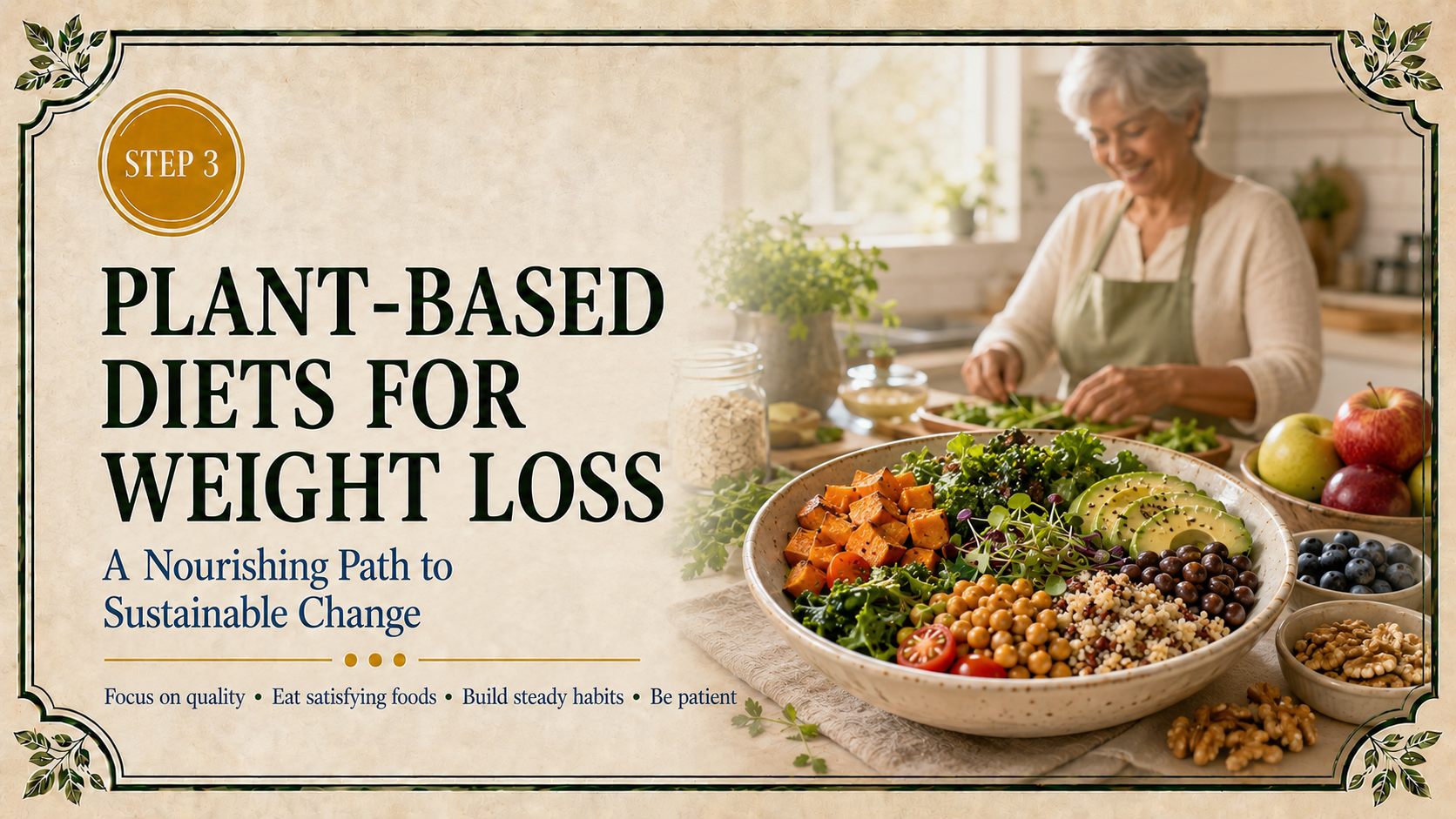
Plant‑Based Diets for Weight Loss: Benefits, Foods to Eat, and How to Start
High in Fiber
Fiber fills you up, helping you naturally control hunger.
Vegetables, fruits, legumes, and whole grains are rich in fiber, which helps you feel full longer and reduces cravings for sugary, high‑calorie foods. (Clark & Slavin, 2013, pp. 200-211)
Lower Calorie Density
Plant foods offer a high nutrient-to-calorie ratio, so you can eat larger, satisfying portions that help manage weight by reducing overall calorie intake.
Supports Metabolic Health
Plant-based eating supports a healthier metabolism by reducing the risk of heart disease, type 2 diabetes, and certain cancers, all of which can make achieving and maintaining a healthy weight easier. (Tran et al., 2020, pp. 3433-3448) revolutionalizeurhealth.com
Easy to Maintain
Plant-based eating encourages the enjoyment of a wider range of colorful, flavorful foods, making it easier to maintain healthy habits and stick with this approach for lasting weight loss. To Eat More Of
A plant‑based diet is about discovering foods that nourish and satisfy, not about giving things up. Eat More of:
1. Whole Grains
Brown rice, quinoa, millet, oats, barley
Studies show whole grains help reduce belly fat and support long‑term weight loss. (Pol et al., 2013, pp. 872-884) revolutionalizeurhealth.com
2. Vegetables
Especially non‑starchy vegetables like leafy greens, broccoli, cauliflower, peppers, mushrooms, and zucchini.
These foods are nutrient‑dense, high in fiber, and naturally low in calories. (Plant-Based Diets in the Reduction of Body Fat: Physiological Effects and Biochemical Insights, 2019)
3. Legumes
Beans, lentils, chickpeas, peas
Excellent sources of protein, iron, and slow‑digesting carbohydrates. (Mineral and trace element content in legumes (lentils, chickpeas and beans): Bioaccessibility and probabilistic assessment of the dietary intake, 2018, pp. 17-28)
4. Fruits
Fresh, frozen, or dried (in moderation).
Fruits help satisfy sweet cravings in a nutritious way, reducing the tendency to consume added sugars that can hinder weight loss. (Guyenet, 2019)
5. Nuts & Seeds
Walnuts, almonds, chia, flax, hemp
Nuts and seeds provide healthy fats that promote fullness and satisfaction, helping prevent overeating and supporting weight goals when enjoyed in moderation. (Akhlaghi et al., 2020, pp. 84-93)
What to Limit in Your Eating
1. Processed Foods
Vegan processed foods can also stall weight loss. (Kahleova et al., 2025)
2. Oils
They are calorie‑dense and easy to overuse. (Eshel, 2022)
3. Starchy Vegetables (in excess)
Potatoes, corn, squash — healthy foods but best enjoyed in balanced portions when weight loss is the goal. (Dietary Guidelines for Americans 2020-2025, n.d.) revolutionalizeurhealth.com
A Simple Sample Day of Eating
This isn’t a diet plan; it’s a gentle example of how plant‑based eating can look.
Breakfast
Oatmeal with berries, ground flaxseed, and a sprinkle of walnuts
Lunch
Quinoa bowl with mixed greens, chickpeas, roasted vegetables, and lemon‑tahini dressing
Snack
Apple slices with almond butter
Or
Carrot sticks with hummus
Dinner
Stir‑fry with tofu, broccoli, mushrooms, peppers, and brown rice
Dessert
Fresh fruit or a small square of dark chocolate
Common Mistakes to Avoid
1. Relying on processed vegan foods
They can be high in salt, sugar, and oils.
2. Undereating
Plant foods are lower in calories, so you may need more volume to feel satisfied. (Robinson et al., 2022)
3. Not getting enough variety
Mixing colors, textures, and food groups ensures you get all essential nutrients. (Add color to your diet for good nutrition, 2017)
4. Expecting overnight results
Plant‑based weight loss is steady and sustainable, rooted in long‑term health. (Tran et al., 2020, pp. 3433-3448)
How to Start Today
You don’t need to overhaul your entire diet overnight. Try one or two simple steps:
- Add one extra serving of vegetables to your day.
- Swap refined grains for whole grains.
- Try one plant‑based dinner this week.
- Explore a new legume or whole grain.
- Keep meals simple, colorful, and satisfying.
Small steps build big momentum.
Helpful Resources
https://revolutionalizeurhealth.com/plant-based-diets-for-weight-loss These resources can help you jump-start and provide background on why you may want to consider a lifestyle change.
Conclusion
Losing weight with a plant‑based approach isn’t about restriction; it’s about nourishment. Focusing on fiber‑rich foods helps your metabolism, stabilizes hunger, and makes healthy weight loss more natural and sustainable. (Warrilow et al., 2019) The science is clear: plant‑based eating supports long‑term health, energy, and a healthier relationship with food. (Key et al., 2022, pp. 190-198)
You don’t have to change everything at once. Start today—make a simple swap, add color to your plate, and pick meals that leave you energized. Commit to one new step now. Take charge of your health, use this guide as your foundation, and watch your progress grow. The journey starts with you—act today for a healthier, more energized life.
Author's Note
My own journey with plant‑based eating taught me something powerful: sustainable weight loss isn’t about restriction; it’s about nourishment. Shifting toward whole, fiber‑rich foods brings more energy, better digestion, and a sense of balance that makes healthy choices easier.
This guide was written to help you experience those same benefits. It brings together research, practical steps, and everyday foods that make plant‑based eating both satisfying and realistic. Whether you’re beginning your weight‑loss journey or refining your approach, I hope these insights help you build habits that support long‑term health, confidence, and well‑being.
---- Robert
Continue The Conversation
Reference List
Wright, N., Wilson, L., Smith, M., Duncan, B. & McHugh, P. (2017). The BROAD study: A randomized controlled trial using a whole food plant-based diet in the community for obesity, ischaemic heart disease, or diabetes. Nature Publishing Group 7(3). https://doi.org/10.1038/nutd.2017.3
Greger, M. (2020). A Whole Food Plant-Based Diet Is Effective for Weight Loss: The Evidence. American Journal of Lifestyle Medicine 14(5), pp. 500-510. https://doi.org/10.1177/1559827620912400
Clark, M. J. & Slavin, J. L. (2013). The Effect of Fiber on Satiety and Food Intake: A Systematic Review. Journal of the American College of Nutrition 32(3), pp. 200-211. https://doi.org/10.1080/07315724.2013.791194
Tran, E., Dale, H. F., Jensen, C. & Lied, G. A. (2020). Effects of Plant-Based Diets on Weight Status: A Systematic Review. Diabetes Metab Syndr Obes 13, pp. 3433-3448. https://doi.org/10.2147/DMSO.S272802
Pol, K., Christensen, R., Bartels, E. M., Raben, A., Tetens, I. & Kristensen, M. (2013). Whole grain and body weight changes in apparently healthy adults: a systematic review and meta-analysis of randomized controlled studies. American Journal of Clinical Nutrition 98(4), pp. 872-884. https://doi.org/10.3945/ajcn.113.064659
(2019). Plant-Based Diets in the Reduction of Body Fat: Physiological Effects and Biochemical Insights. PMC6893503. https://doi.org/10.3389/fnins.2019.00729
(2018). Mineral and trace element content in legumes (lentils, chickpeas, and beans): Bioaccessibility and probabilistic assessment of the dietary intake. Journal of Food Composition and Analysis 73, pp. 17-28. https://doi.org/10.1016/j.jfca.2018.07.007
Guyenet, S. J. (2019). Impact of Whole, Fresh Fruit Consumption on Energy Intake and Adiposity: A Systematic Review. Frontiers in Nutrition 6. https://doi.org/10.3389/fnut.2019.00066
Akhlaghi, M., Ghobadi, S., Zare, M. & Foshati, S. (2020). Effect of nuts on energy intake, hunger, and fullness: a systematic review and meta-analysis of randomized clinical trials. Crit Rev Food Sci Nutr 60(1), pp. 84-93. https://doi.org/10.1080/10408398.2018.1514486
Kahleova, H., Znayenko-Miller, T., Jayaraman, A., Motoa, G., Chiavaroli, L., Holubkov, R., & Barnard, N. D. (2025). Vegan diet, processed foods, and body weight: a secondary analysis of a randomized clinical trial. Nutrition & Metabolism 22. https://doi.org/10.1186/s12986-025-00912-5
Eshel, G. (2022). Health and environmental impacts of plant-rich dietary patterns: a US prospective cohort study. The Lancet Planetary Health 6(11). https://doi.org/10.1016/S2542-5196(22)00243-1
(n.d.). Dietary Guidelines for Americans 2020-2025. https://www.dietaryguidelines.gov/
Robinson, E., Khuttan, M., McFarland-Lesser, I. & Patel, Z. (2022). Calorie reformulation: a systematic review and meta-analysis examining the effect of manipulating food energy density on daily energy intake. International Journal of Behavioral Nutrition and Physical Activity 19. https://doi.org/10.1186/s12966-022-01287-z
(2017). Add color to your diet for good nutrition. Harvard Health Publishing. https://www.health.harvard.edu/staying-healthy/add-color-to-your-diet-for-good-nutrition
Warrilow, A., Mellor, D., McKune, A. & Pumpa, K. (2019). Dietary fat, fiber, satiation, and satiety—a systematic review of acute studies. European Journal of Clinical Nutrition 73. https://doi.org/10.1038/s41430-018-0295-7
Key, T. J., Papier, K., & Tong, T. Y. (2022). Plant-based diets and long-term health: findings from the EPIC-Oxford study. Proceedings of the Nutrition Society 81(2), pp. 190-198. https://doi.org/10.1017/S0029665121003748
Disclaimer
The information provided in this article is for educational and informational purposes only and is not intended as medical, psychological, or professional advice. The content reflects general wellness principles and personal development concepts designed to encourage self-reflection and healthy lifestyle choices.
Individual circumstances vary, and readers should consult qualified healthcare professionals, mental health providers, or other appropriate experts regarding specific concerns or conditions. Never disregard professional advice or delay seeking help because of information contained in this article.
The author and publisher assume no responsibility for actions taken based on the information presented. Your health and well-being are ultimately your responsibility, and any changes to your lifestyle should be made thoughtfully and in consultation with appropriate professionals when necessary.