Introduction
Most people don’t start thinking about heart health until their 40s, 50s, or later. But research shows something surprising — the way you eat in your teens, 20s, and 30s can shape the health of your arteries decades down the road.
That means every fresh choice you make today is an investment in the heart you’ll rely on for the rest of your life.
And the best part? It’s never too early, and it’s never too late, to start nourishing your heart with real, whole foods.
What the Research Shows About Young Adults and Heart Health
A long-term study called the CARDIA Study followed more than 2,500 young adults for 20 years. Researchers looked at their eating patterns early in life and then measured signs of plaque buildup in their arteries two decades later.
Here’s what they found:
- Young adults who ate the most fruits and vegetables (about 7–9 servings a day) were 26% less likely to have calcified plaque in their arteries later in life.
- Those who ate the least (2–3 servings a day) had a significantly higher risk.
- While the study was observational, the pattern was clear: A diet rich in whole, plant-based foods early in life supports a healthier heart later on.
This reinforces something powerful — your daily food choices matter more than you think.
Why Fresh, Whole Foods Protect Your Heart
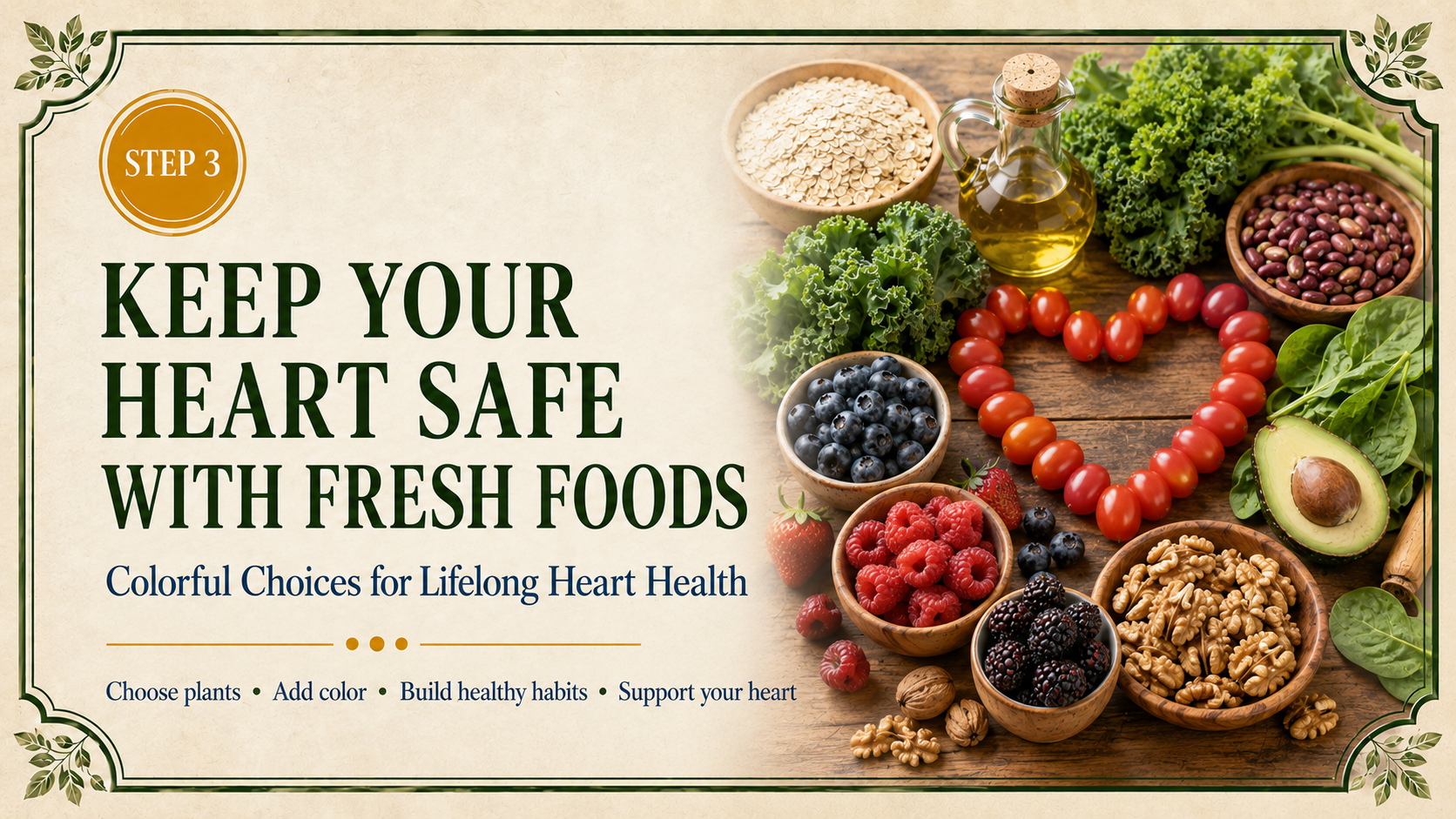
Fresh foods do more than fill you up. They deliver the nutrients, fiber, and antioxidants your heart depends on to stay strong.
Here are some heart-protective foods worth adding to your routine:
Berries
Raspberries, blueberries, strawberries, and blackberries are loaded with antioxidants and fiber that support healthy blood vessels and reduce inflammation.
Legumes
Chickpeas, lentils, black beans, and other legumes provide soluble fiber that helps lower LDL (“bad”) cholesterol. If using canned beans, choose low-sodium options and give them a quick rinse.
Oats and Whole Grains
Oats contain beta-glucan, a special type of fiber that helps lower cholesterol. Barley, quinoa, millet, and whole wheat offer similar benefits.
Fresh Fruits
Bananas, oranges, grapes, mangoes, cherries — all rich in vitamins, minerals, and potassium, which helps maintain healthy blood pressure.
Vegetables
Leafy greens, broccoli, cauliflower, carrots, and colorful veggies provide fiber, antioxidants, and essential nutrients that keep your heart resilient.
Starchy Vegetables and Tubers
Potatoes, yams, squash, peas, and corn offer energy and nutrients without the additives found in processed foods.
A Simple “Fresh Day of Eating” for Heart Health
Here’s an easy way to bring more heart-protective foods into your day:
- Breakfast: Oatmeal topped with berries and a sprinkle of walnuts
- Lunch: Big salad with chickpeas, greens, tomatoes, and a simple vinaigrette
- Snack: Fresh fruit or veggies with hummus
- Dinner: Stir-fry with colorful vegetables, tofu or beans, and brown rice
- Dessert: A handful of cherries or a sliced mango
Small steps add up — and your heart feels the difference.
It’s Never Too Late to Start Your Journey
Science continues to confirm what many physicians now recommend: A diet centered around whole, plant-based foods can support a healthier heart, more energy, and a longer, more vibrant life.
Whether you’re 20 or 70, your next meal is an opportunity to nourish your body and protect your future.
If you’re ready to explore more, here are some helpful resources:
Author’s Note
This post is part of the Nourish Your Body pillar of the Healthy Living series. It’s written to encourage readers of all ages to take simple, empowering steps toward long-term heart health through fresh, whole foods. The research shared here reflects a growing body of evidence that supports plant-forward eating patterns as a foundation for lifelong wellness. As always, the goal is clarity, encouragement, and practical action — not fear or perfection.
----- Robert
Continue The Conversation
Every wellness journey is unique, and we can learn a great deal from one another's experiences.
What stood out to you in this article?
Have you faced similar challenges, discovered helpful strategies, or gained insights of your own?
I invite you to share your thoughts in the comments below. Your experience may encourage someone else who is taking the next step on their own journey.
Remember, meaningful change often begins with a single step—and none of us has to walk the path alone.
Reference List
- Meyer KA, et al. (2015). Association of fruit and vegetable consumption during young adulthood with coronary artery calcium 20 years later: The CARDIA Study. Circulation. American Heart Association (ahajournals.org in Bing)
- Harvard T.H. Chan School of Public Health. The Nutrition Source: Vegetables and Fruits. hsph.harvard.edu (hsph.harvard.edu in Bing)
- Academy of Nutrition and Dietetics. Heart Health and Fiber. eatright.org (eatright.org in Bing)
- Cleveland Clinic. Heart-Healthy Foods: Shopping List. clevelandclinic.org (health.clevelandclinic.org in Bing)
- Forks Over Knives. The Forks Over Knives Plan. forksoverknives.com
- NutritionFacts.org. How Not to Die from Heart Disease. nutritionfacts.org (nutritionfacts.org in Bing)
Disclaimer
The information provided in this article is for educational and informational purposes only and is not intended as medical, psychological, or professional advice. The content reflects general wellness principles and personal development concepts designed to encourage self-reflection and healthy lifestyle choices.
Individual circumstances vary, and readers should consult qualified healthcare professionals, mental health providers, or other appropriate experts regarding specific concerns or conditions. Never disregard professional advice or delay seeking help because of information contained in this article.
The author and publisher assume no responsibility for actions taken based on the information presented. Your health and well-being are ultimately your responsibility, and any changes to your lifestyle should be made thoughtfully and in consultation with appropriate professionals when necessary.