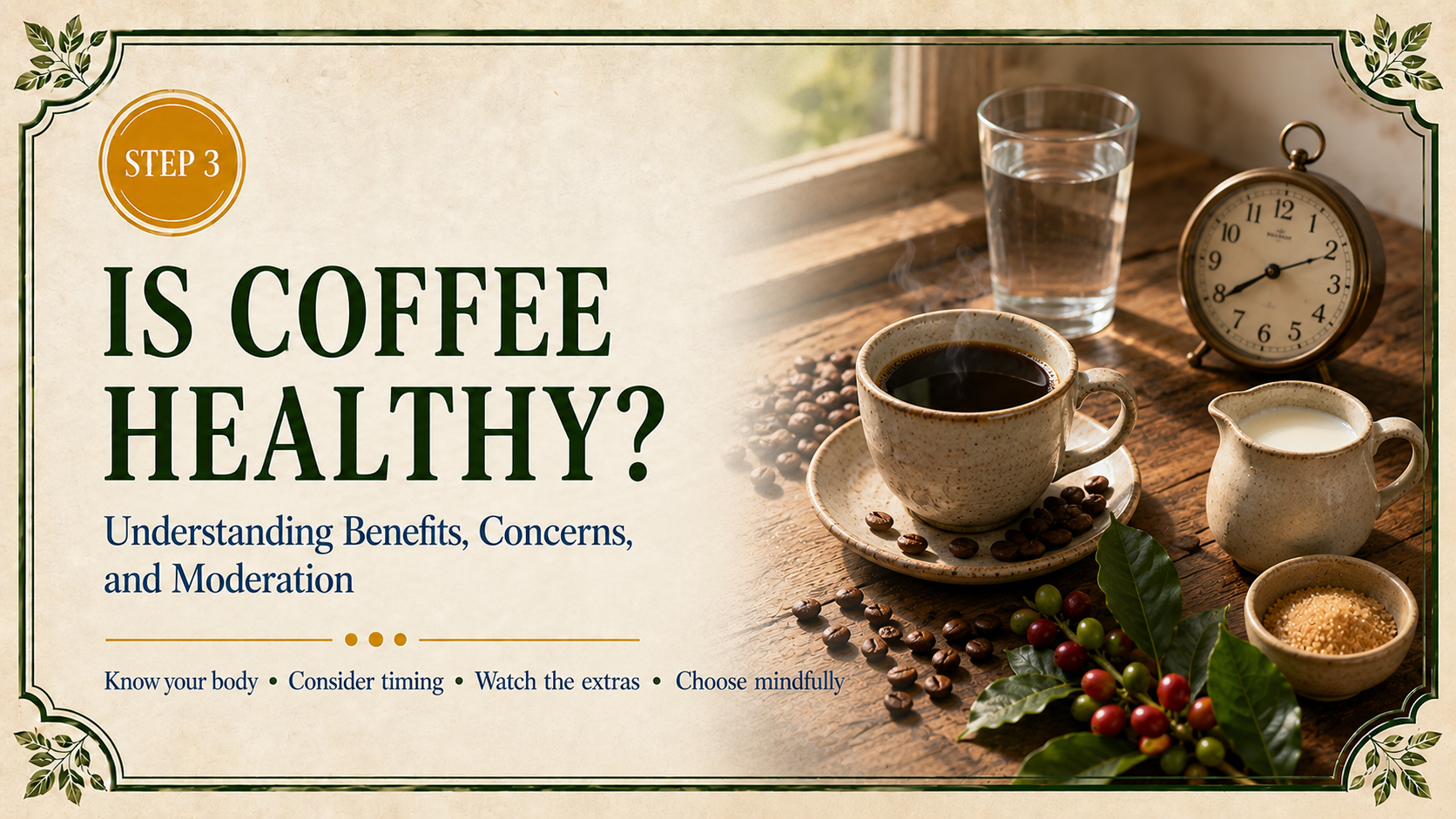
Is Coffee Healthy to Drink?
A Balanced Look at the Pros, the Cons, and How to Make Coffee Work for You
Coffee is one of the most beloved and debated beverages in the world. For decades, people were warned that coffee could stunt growth, raise blood pressure, or harm the heart. Today, research reveals a more nuanced understanding: for many adults, coffee may offer health benefits, but certain risks can outweigh these benefits for some individuals, depending on personal health factors.
Before diving in, let’s first examine the science behind coffee. Then, we’ll highlight key points to consider and discuss how to tailor your coffee habits for long-term health.
What Exactly Is Coffee?
Coffee comes from the roasted seeds of the Coffea plant. Once the berries ripen, the beans are harvested, dried, roasted, ground, and brewed. The result is a complex drink containing:
- Antioxidants
- Caffeine
- Polyphenols
- Minerals like magnesium and potassium
These compounds explain why coffee has both benefits and drawbacks.
The Potential Health Benefits of Coffee
1. Antioxidant Power
Coffee is one of the richest sources of antioxidants in the modern diet. (Yashin et al., 2013, pp. 230-245) These compounds help reduce oxidative stress and inflammation — two major drivers of chronic disease.
2. Improved Mental Alertness
Caffeine can enhance focus, reaction time, and cognitive performance. Many people feel more productive and mentally sharp after a cup.
3. Possible Protection Against Chronic Disease
Research suggests moderate coffee intake may be associated with a lower risk of:
- Type 2 diabetes
- Parkinson’s disease
- Alzheimer’s disease
- Liver disease, including cirrhosis
- Certain cancers
These benefits appear strongest with black coffee, not sugary specialty drinks. (LD, 2021)
4. Enhanced Physical Performance
Caffeine can temporarily boost metabolism and improve endurance, making it a common pre-workout choice. (CISSN, 2021)
The Downsides: When Coffee Isn’t So Healthy
Coffee isn’t universally beneficial. For some people, it can create more problems than it solves.
1. Anxiety, Jitters, and Sleep Disruption
Caffeine stimulates the nervous system. Too much can lead to:
- Restlessness
- Increased heart rate
- Trouble sleeping
- Heightened anxiety
If you’re sensitive to caffeine, even one cup may be too much.
2. Digestive Issues
Coffee increases stomach acid and can irritate the digestive tract, especially for those with:
- Acid reflux
- Ulcers
- IBS
3. Blood Pressure Spikes
Some individuals experience temporary increases in blood pressure after drinking coffee.
4. Hidden Calories in Specialty Drinks
A plain cup of black coffee is nearly calorie-free.
A 20‑ounce latte with whole milk, syrups, and whipped cream can exceed 400–600 calories.
That’s not coffee — that’s dessert.
5. Dependency
Regular caffeine use can lead to withdrawal symptoms such as headaches, fatigue, and irritability.
So, how do these pros and cons add up?
The next section explains how to decide whether coffee is healthy for you, taking individual differences into account.
The answer depends on your unique situation and coffee preparation, as the balance between potential benefits and risks is different for each person.
For many adults, 1–3 cups of black coffee per day can be part of a healthy lifestyle. (Poole et al., 2017)
For others, especially those sensitive to caffeine or struggling with anxiety, sleep, or digestive issues, coffee may not be the best choice.
How to Make Coffee Healthier
If you enjoy coffee, here are simple ways to keep it aligned with your wellness goals
1. Drink It Black or Nearly Black
Skip syrups, whipped cream, and heavy creamers.
If you need a little creaminess, try:
- Unsweetened almond milk
- Oat milk
- A splash of plant-based creamer
2. Avoid Drinking Coffee on an Empty Stomach
Pair your coffee with a fiber-rich breakfast to prevent jitters and stomach irritation.
3. Stop Caffeine Early in the Day
Stop consuming caffeine after 2 p.m. to help ensure better sleep.
4. Choose Quality Beans
Choose organic, fair-trade, or single-origin beans for fewer contaminants and better flavor.
5. Pay Attention to How You Feel
Pay attention to your body's response to coffee and make adjustments as needed.
Beyond personal health, coffee’s impact on the planet matters
The next section covers easy ways to make your coffee routine more sustainable.
Coffee grounds don’t need to end up in the trash. They can be:
- Added to compost
- Used as garden fertilizer
- Repurposed as a natural deodorizer or cleaning scrub
A small but meaningful step.
Conclusion
Coffee can be a powerful ritual, supplying antioxidants and boosting focus, but it is not universally beneficial. Your personal response is the priority. If coffee energizes you and improves your day, it fits your routine. If it disrupts sleep, heightens anxiety, or encourages unhealthy habits, it’s time to reconsider its value.
Reject one-size-fits-all advice—use your own experience. Balance coffee’s pros and cons and choose decisively what supports your health and goals. Enjoy coffee with awareness and purpose, responding to your body’s feedback to create habits that truly serve your life.
Author's Note
I wrote this post to help you cut through the noise and understand what coffee really means for your health. There’s a lot of conflicting information out there — some of it reassuring, some of it alarming — and my goal is always to bring clarity without adding stress. Coffee can be a comforting ritual, a source of antioxidants, and even a tool for better focus, but it can also affect sleep, digestion, and anxiety depending on your body’s needs. My hope is that this guide helps you make choices that feel balanced, informed, and supportive of your long‑term well‑being.
— Robert
Continue The Conversation
Every wellness journey is unique, and we can learn a great deal from one another's experiences.
What stood out to you in this article?
Have you faced similar challenges, discovered helpful strategies, or gained insights of your own?
I invite you to share your thoughts in the comments below. Your experience may encourage someone else who is taking the next step on their own journey.
Remember, meaningful change often begins with a single step—and none of us has to walk the path alone.
Reference List
Yashin, A., Yashin, Y., Wang, J. Y. & Nemzer, B. (2013). Antioxidant and Antiradical Activity of Coffee. Antioxidants (Basel) 2(4), pp. 230-245. https://doi.org/10.3390/antiox2040230
LD, S. S. (2021). Black Coffee: Benefits, Nutrition, and More. Healthline. https://www.healthline.com/nutrition/black-coffee
CISSN, R. M. (2021). How Caffeine Improves Exercise Performance. Healthline. https://www.healthline.com/nutrition/caffeine-and-exercise
(n.d.). Starbucks Venti Vanilla Latte with Whole Milk Nutrition Facts. Starbucks. https://fastfoodnutrition.org/starbucks/vanilla-latte-with-whole-milk/venti
(2024). Caffeine Withdrawal - StatPearls - NCBI Bookshelf. StatPearls Publishing. https://www.ncbi.nlm.nih.gov/books/NBK430790/
Poole, R., Kennedy, O. J., Roderick, P., Fallowfield, J. A., Hayes, P. C. & Parkes, J. (2017). Coffee consumption and health: umbrella review of meta-analyses of multiple health outcomes. BMJ 359. https://doi.org/10.1136/bmj.j5024
Sittipod, S., Schwartz, E., Paravisini, L., Tello, E., & Peterson, D. G. (2020). Identification of Compounds that Negatively Impact Coffee Flavor Quality Using Untargeted Liquid Chromatography/Mass Spectrometry Analysis. Journal of Agricultural and Food Chemistry 68(38), pp. 10424-10431. https://doi.org/10.1021/acs.jafc.0c01479
Disclaimer
The information provided in this article is for educational and informational purposes only and is not intended as medical, psychological, or professional advice. The content reflects general wellness principles and personal development concepts designed to encourage self-reflection and healthy lifestyle choices.
Individual circumstances vary, and readers should consult qualified healthcare professionals, mental health providers, or other appropriate experts regarding specific concerns or conditions. Never disregard professional advice or delay seeking help because of information contained in this article.
The author and publisher assume no responsibility for actions taken based on the information presented. Your health and well-being are ultimately your responsibility, and any changes to your lifestyle should be made thoughtfully and in consultation with appropriate professionals when necessary.