Introduction
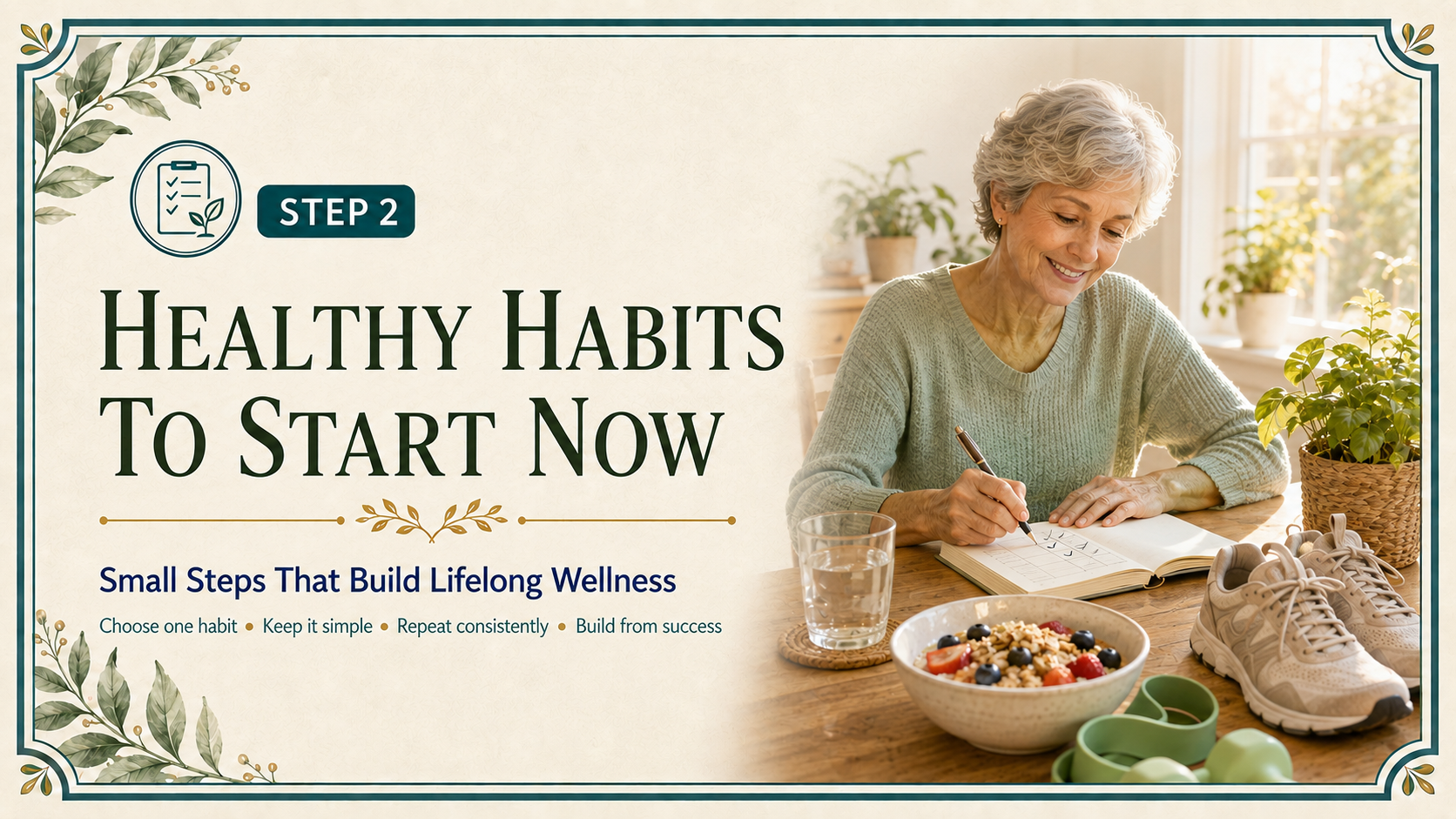
Healthy habits don’t begin on January 1st — they begin the moment you choose one small step toward feeling better. This guide shows you simple, sustainable habits that support your body, mind, and home, helping you build a foundation for lifelong wellness.
1. Eat More Whole, Plant‑Forward Foods
Why it matters
Plant‑forward eating supports:
- Better digestion
- Lower inflammation
- Healthy weight management
- Reduced risk of chronic disease
- A lighter environmental footprint
How to start
- Add one plant‑based meal per day
- Build meals around beans, greens, whole grains, and colorful veggies
- Keep fruit visible and accessible
- Try simple swaps (lentils for ground beef, oat milk for dairy)
Make it easy
You don’t need perfection — just consistency. Every plant‑powered choice counts.2. Build a Daily Rhythm That Supports You
Why routines matter
A steady rhythm reduces stress, increases energy, and helps your body feel safe and grounded.
Start with one anchor habit
- Morning hydration
- A 10‑minute walk
- A consistent bedtime
- A simple breakfast routine
Then add supportive habits
- Stretching
- Meal prep
- Evening wind‑down
- Daily planning
Small rhythms create big stability
3. Care for Your Mental and Emotional Health
Simple practices that make a difference
- Write down three things you’re grateful for
- Take five slow breaths before meals
- Spend time outdoors daily
- Practice gentle movement (yoga, walking, stretching)
- Limit doomscrolling and news overload
- Connect with someone you trust
Remember
Mental health is not a luxury — it’s a foundation.
4. Create a Home Environment That Supports Wellness
Start with your immediate surroundings
- Clear one surface
- Open windows for fresh air
- Add a plant or natural element
- Use simple, non‑toxic cleaners
- Let natural light in
A supportive environment makes healthy choices easier.
5. Choose Whole Foods More Often
Focus on foods that are:
- Close to their natural form
- Minimally processed
- Rich in fiber, vitamins, and minerals
Examples
- Beans, lentils, chickpeas
- Whole grains
- Fresh or frozen vegetables
- Fruits
- Nuts and seeds
Start small
Swap one processed item for a whole‑food option each day.
Conclusion
Healthy habits don’t begin with dramatic change — they begin with one small, intentional choice made consistently. When you focus on simple actions like nourishing meals, steady movement, better sleep, and moments of reflection, you create a foundation that supports every part of your wellbeing. Progress builds quietly, almost invisibly at first, and then one day you realize you feel clearer, stronger, and more capable than before.
Start with what feels doable today. Let your habits grow with you. And remember: every step you take toward caring for yourself is a step toward a healthier, more grounded life.
Author's Note
I wrote this guide because so many people believe they need a perfect plan before they can begin living healthier. In reality, the most meaningful changes come from small shifts — the kind you can start right now, without pressure or overwhelm. My hope is that these habits feel approachable and encouraging, especially during seasons when life feels busy or uncertain.
Thank you for showing up for yourself and for being willing to explore what healthier living can look like in your daily life. It’s a privilege to support you on this journey toward clarity, strength, and intentional wellbeing.
----- Robert
Continue The Conversation
Every wellness journey is unique, and we can learn a great deal from one another's experiences.
What stood out to you in this article?
Have you faced similar challenges, discovered helpful strategies, or gained insights of your own?
I invite you to share your thoughts in the comments below. Your experience may encourage someone else who is taking the next step on their own journey.
Remember, meaningful change often begins with a single step—and none of us has to walk the path alone.
Reference List
Curated for clarity, credibility, and practical relevance
- Harvard T.H. Chan School of Public Health. “Healthy Living Guide.”
https://www.hsph.harvard.edu/nutritionsource/healthy-living-guide (hsph.harvard.edu in Bing) - Centers for Disease Control and Prevention (CDC). “How to Build Healthy Habits.”
https://www.cdc.gov/healthyweight/healthy_eating/index.html (cdc.gov in Bing) - National Institutes of Health (NIH). “Small Steps to Health and Wealth.”
https://www.nih.gov/news-events/news-releases/small-steps-health-wealth (nih.gov in Bing) - Mayo Clinic. “Healthy Lifestyle: Nutrition and Fitness.”
https://www.mayoclinic.org/healthy-lifestyle (mayoclinic.org in Bing) - American Psychological Association. “Making Lifestyle Changes That Last.”
https://www.apa.org/topics/behavioral-health/lifestyle-changes (apa.org in Bing) - Blue Zones. “Power 9: Lifestyle Habits of the World’s Healthiest People.”
https://www.bluezones.com - Cleveland Clinic. “How to Create a Healthy Daily Routine.”
https://health.clevelandclinic.org/how-to-create-a-healthy-daily-routine (health.clevelandclinic.org in Bing) - World Health Organization (WHO). “Healthy Diet Fact Sheet.”
https://www.who.int/news-room/fact-sheets/detail/healthy-diet (who.int in Bing)
Disclaimer
The information provided in this article is for educational and informational purposes only and is not intended as medical, psychological, or professional advice. The content reflects general wellness principles and personal development concepts designed to encourage self-reflection and healthy lifestyle choices.
Individual circumstances vary, and readers should consult qualified healthcare professionals, mental health providers, or other appropriate experts regarding specific concerns or conditions. Never disregard professional advice or delay seeking help because of information contained in this article.
The author and publisher assume no responsibility for actions taken based on the information presented. Your health and well-being are ultimately your responsibility, and any changes to your lifestyle should be made thoughtfully and in consultation with appropriate professionals when necessary