Foods to Limit
Making Informed Choices for Better Health
Healthy eating is not just about choosing nourishing foods. It is also about understanding which foods and ingredients may work against your health goals.
Many highly processed foods contain ingredients that can contribute to inflammation, disrupt blood sugar balance, reduce energy levels, or make it more difficult to maintain long-term wellness.
This resource page is designed to help you become a more informed consumer by understanding common foods and ingredients that deserve closer attention.
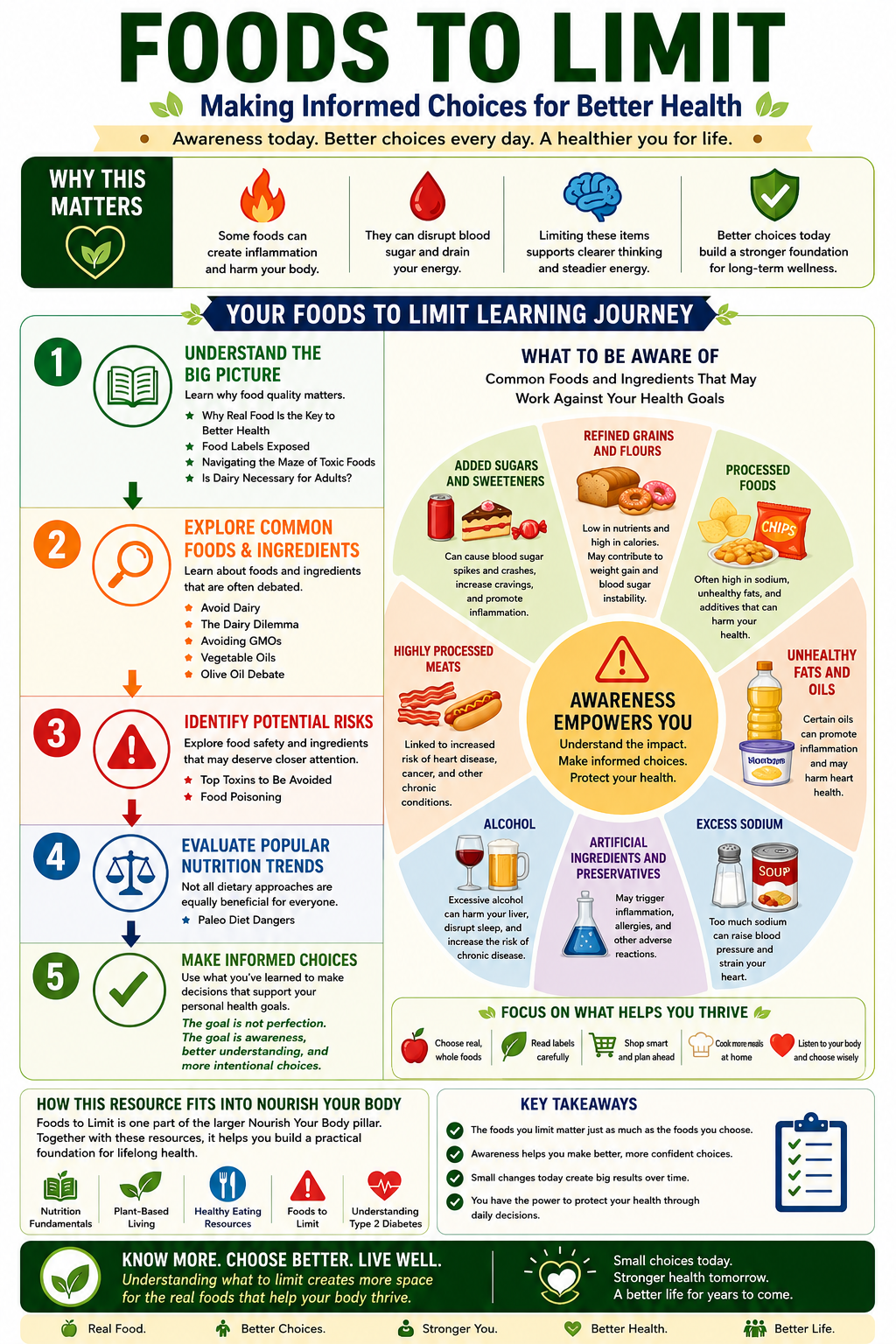
Why This Matters
The foods you limit are just as important as the foods you choose.
Reducing foods and ingredients that may negatively affect your health creates more room for whole, nutrient-dense foods that support energy, vitality, and well-being.
The goal is not perfection or fear. The goal is awareness, understanding, and better choices.
The resources below are organized as a learning pathway to help you identify potential concerns and make informed decisions.
Foods to Limit - awareness
Awareness • Better Choices • Reducing Confusion
Good health often begins with understanding what is on your plate.
Learning how to recognize potentially problematic foods and ingredients can help you make choices that align with your long-term health goals.
Your Foods to Limit Learning Journey
Step 1: Understand the Big Picture
Begin with Why Real Food Is the Key to Better Health to understand the difference between nourishing whole foods and highly processed products, then explore the remaining articles to learn how labels, ingredients, and common food choices can affect your health.
- Why Real Food Is the Key to Better Health
- Food Labels Exposed
- Navigating the Maze of Toxic Foods
- Is Dairy Necessary for Adults?
These resources provide a foundation for understanding how food choices affect health.
Step 2: Explore Common Foods and Ingredients
Begin with The Dairy Dilemma for a balanced introduction to questions surrounding dairy, then explore the remaining articles to examine dairy choices, GMOs, vegetable oils, and olive oil more closely and end with Meat.
Step 3: Identify Potential Risks
Begin with Top Toxins to Be Avoided for a broad look at potentially harmful substances that may appear in everyday life, then explore Food Poisoning to learn more about food-safety risks and prevention.
Step 4: Evaluate Popular Nutrition Trends
Not all dietary approaches are equally beneficial for everyone.
Learn how to think critically about nutrition trends and dietary claims.
Step 5: Make Informed Choices
Use what you have learned throughout this page to make choices that support your personal health goals.
You do not need to eliminate everything at once. Begin by noticing the foods and ingredients you consume most often, reading labels more carefully, and choosing a healthier alternative when it feels practical.
The goal is not perfection. It is greater awareness, better understanding, and more intentional choices—one small step at a time.
Continue Your Journey
Now that you have explored foods and ingredients that may deserve closer attention, take the next small step by learning how food choices, blood sugar, and insulin resistance relate to Type 2 diabetes.
Author's Note
I created this page to help simplify a topic that often feels confusing and overwhelming. My goal is not to tell you what you can or cannot eat, but to provide information that helps you make informed decisions with confidence.
When you understand how foods and ingredients affect your body, you gain the ability to choose more intentionally. Small changes, made consistently over time, can have a powerful impact on your long-term health and well-being.
----- Robert