Introduction
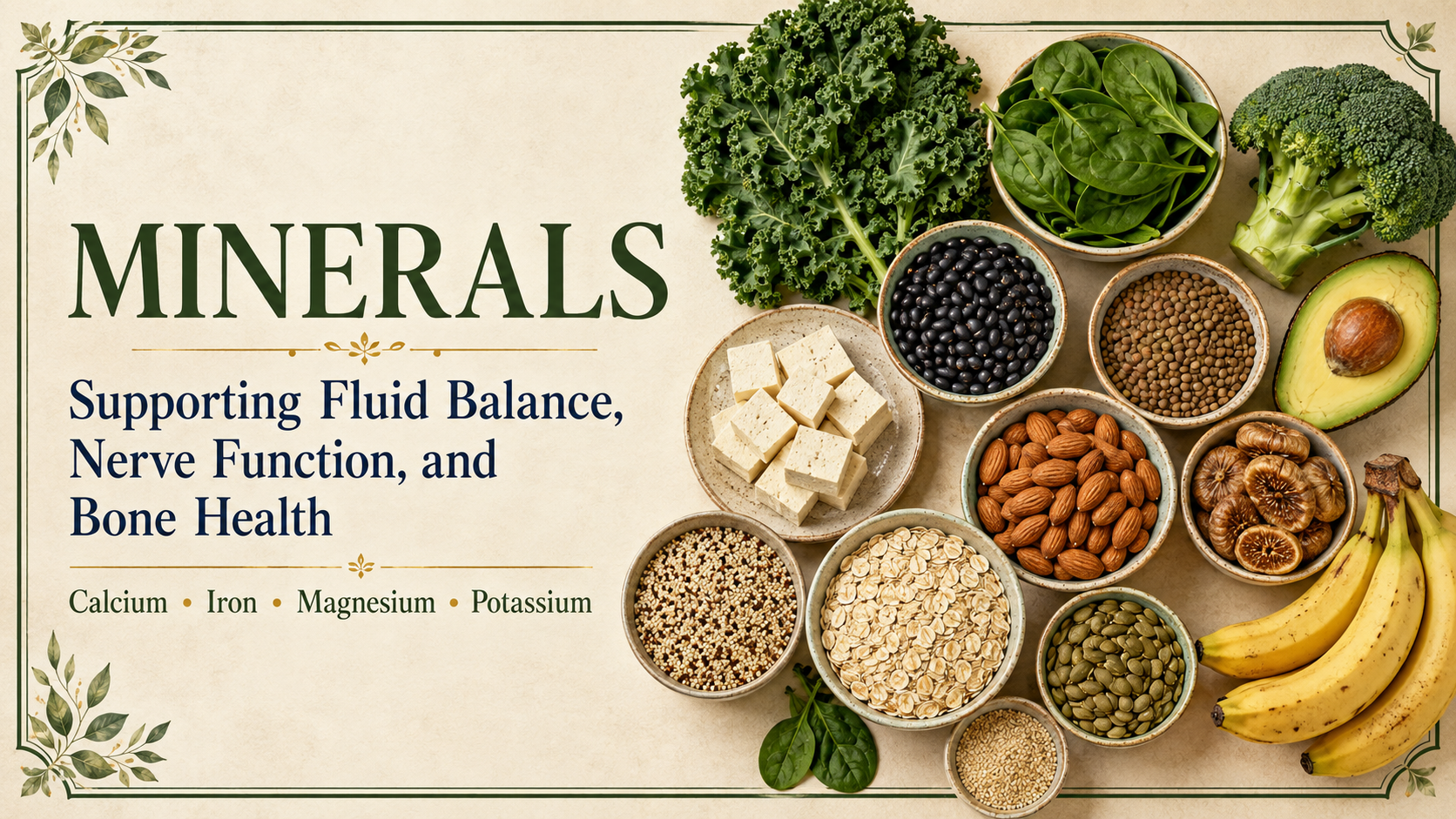
Minerals are one of the six essential nutrients, along with carbohydrates, protein, fat, vitamins, water, and sometimes fiber. Are you getting enough of the key minerals your body needs to function at its best? For many, the answer is no. Minerals regulate fluid balance, nerve function, and bone strength. Leafy greens, legumes, nuts, and seeds provide excellent coverage.
Minerals Overview
Minerals are divided into two main categories based on how much your body needs:
Macrominerals (needed in larger amounts)
- Magnesium – Enzyme function, DNA synthesis, antioxidant production
- Phosphorus – Bone repair, muscle contraction, nerve function
- Potassium – Fluid balance, brain health, stroke prevention
- Sodium – Nerve impulses, muscle contraction, fluid control
- Chloride – Digestion (stomach acid), fluid balance
Trace Minerals (needed in smaller amounts)
- Zinc – Immune support, wound healing, DNA synthesis
- Copper – Red blood cell formation, neurotransmitter regulation
- Iodine – Thyroid hormone production
- Selenium – Antioxidant defense, thyroid function
- Chromium – Blood sugar regulation
- Manganese – Bone formation, metabolism of amino acids, and cholesterol
Dietary Sources
- Magnesium – Nuts, seeds, legumes, whole grains
- Iron – Red meat, legumes, spinach
- Zinc – Meat, shellfish, legumes
- Iodine – Seaweed, iodized salt, dairy
- Selenium – Brazil nuts, seafood, grains
What are the essential minerals
Minerals are elements on earth and in foods that our bodies need to develop and function normally. Essential minerals directly impact bone health, nerve signaling, immune strength, and metabolism. Those essential for health include calcium, phosphorus, potassium, sodium, chloride, magnesium, iron, zinc, iodine, chromium, copper, fluoride, molybdenum, manganese, and selenium. Source: National Institutes of Health, Office of Dietary Supplements

Why You Need Minerals
Wondering what happens if you don’t get enough essential minerals? Because minerals directly support processes like energy production, nerve communication, and bone strength, lacking them can affect every aspect of your health. With today’s highly processed, fast-food style eating, many people aren’t getting the proper nutrition they need. (Costa et al., 2024) Here’s why you need the essential minerals.
The purpose of food is to provide your body with the nutrients needed to function. Not eating enough or eating too many empty calories means you’re not giving your body the fuel it needs to perform mentally or physically.
Are You Getting Enough of These Minerals?
Below are some of the most common mineral deficiencies. We’ll look at why these deficiencies occur, their effects on the body, and ways to address them.
Calcium
Dairy products typically come to mind when you think of calcium. While a vegan wouldn’t down a glass of calcium-rich milk, there are plenty of non-dairy options for calcium intake.
Shirmohammadi, the registered holistic nutritionist, recommends:
- Dark leafy greens like kale and collards.
- Vegetables such as broccoli, Chinese cabbage, and bok choy.
- Seaweeds like kelp, nori, spirulina, and chlorella.
- Organic tempeh.
- Tahini
- Almonds and almond butter.
Why is calcium important?
Among other things, minerals like calcium build strong bones and teeth, help clot blood, and transmit nerve signals, according to the U.S. National Library of Medicine. These functions are vital for mobility, injury recovery, and overall health.
Iron
Registered dietitian Rene Ficek notes that iron deficiency is common in vegans. While grains and cereals are sometimes fortified with iron, the form found in red meat is most easily absorbed.
Red meat is not an option for vegans, so they need alternative iron sources. Clinical nutritionist Tara Coleman explains that iron from plants (non-heme) is harder to absorb than iron from animals (heme). Vegans should increase their intake of plant-based iron-rich foods—like beans, lentils, chickpeas, dark leafy greens, organic tempeh, blackstrap molasses, quinoa, nuts, and seeds—and pair them with vitamin C-rich produce to aid absorption.
Why is iron important?
Iron is essential for blood production; about 70 percent is found in your red blood cells (hemoglobin) and muscle cells (myoglobin). Low iron intake can cause fatigue, weakness, and reduced work performance.
Magnesium
Magnesium is naturally present in many foods, added to other food products, available as a supplement, and present in some medicines. It helps regulate muscle and nerve function, blood sugar, and blood pressure, and supports protein, bone, and DNA synthesis. Source: National Institutes of Health, Office of Dietary Supplements.
Nutrition surveys show that men often consume about 80 percent of the recommended 400 mg of magnesium a day. (Health, 2022) Dr. Dana King, a professor of family medicine, explains that inadequate magnesium makes it harder for cells to generate energy.
To increase magnesium, add more magnesium-rich foods like halibut and navy beans. Most men need supplements to reach 400 mg daily, and Dr. King suggests a 250 mg supplement as support. (Health, 2024)
When choosing a supplement, always check the ingredient list to ensure it includes magnesium. Look for products that use magnesium citrate, which is well absorbed by the body.
Potassium
Potassium is a mineral that cells, nerves, and muscles need to function properly. It helps your body regulate blood pressure, heart rate, cell water content, and digestion. Potassium’s critical role supports healthy cardiovascular and muscular systems. Most people get the needed potassium from food and drink; it is also available as a supplement. Source: NIH MedlinePlus
Selenium
Selenium is a mineral that the body needs to stay healthy. It is important for reproduction, thyroid hormone activity, and DNA production. Selenium also helps protect the body from free radical damage and supports immune defense. Dietary selenium maintains many critical body systems. Source: National Institutes of Health, Office of Dietary Supplements
Zinc
Zinc, found in cells throughout the body, helps the immune system fight bacteria and viruses. It is needed to make proteins and DNA, supports proper growth during pregnancy and childhood, helps wounds heal, and is important for taste and smell. Zinc is present in many foods and most multivitamin/mineral supplements. Source: National Institutes of Health, Office of Dietary Supplements.
Vitamins and Minerals
The difference between vitamins and minerals
Although they are all considered micronutrients, vitamins and minerals differ in basic ways. Vitamins are organic and can be broken down by heat, air, or acid. Minerals are inorganic and retain their chemical structure.
So why does this matter? It means the minerals in soil and water can easily enter your body through the plants, fish, animals, and fluids you consume. But it’s tougher to shuttle vitamins from food and other sources into your body because cooking, storage, and simple exposure to air can inactivate these more fragile compounds.
Interacting—in good ways and bad
Many micronutrients interact. Vitamin D enables your body to pluck calcium from food sources passing through your digestive tract rather than harvesting it from your bones. Vitamin C helps you absorb iron.
The interplay of micronutrients isn’t always cooperative, however. For example, vitamin C blocks your body’s ability to assimilate the essential mineral copper. And even a minor overload of the mineral manganese can worsen iron deficiency. – via Vitamins and Minerals – Are You Getting What You Need?
Should you take a supplement
If you want to take a supplement, you should but make sure that it is a “good” supplement. Many supplements are specified as vitamin supplements, but many include minerals. The problem with most traditional nutritional supplements is that their ingredients are combined with fillers, binders, and other additives, making them difficult for the body to recognize and absorb. They’re also likely degraded by digestive fluids and enzymes in the digestive tract. (Martinez et al., 2022, pp. 1551-1561)
Final Thoughts
Your body relies on minerals every moment of every day—for balancing fluids, powering nerve signals, and strengthening bones. Minerals also influence your energy, immune defenses, muscle movement, and more. While supplements can be helpful in specific situations, most people can meet their needs through a varied, whole‑food diet rich in leafy greens, legumes, nuts, seeds, whole grains, and mineral‑dense vegetables. The key is consistency. When you nourish your body with mineral‑rich foods—and stay mindful of nutrients that are easy to fall short on—you provide the foundation for steady energy, resilience, and overall, well‑being.
Author's Note
Minerals may not receive as much attention as vitamins, but they play a key role in supporting nearly every function in the body. The goal of this guide is to make these essential nutrients approachable and understandable. By understanding which minerals do what and where to find them, you can make informed choices to support your energy, mood, immunity, and long-term health. Building small, steady habits with minerals can make a noticeable difference, and this guide aims to help you do just that with clarity and confidence.
---- Robert
Continue The Conversation
Every wellness journey is unique, and we can learn a great deal from one another's experiences.
What stood out to you in this article?
Have you faced similar challenges, discovered helpful strategies, or gained insights of your own?
I invite you to share your thoughts in the comments below. Your experience may encourage someone else who is taking the next step on their own journey.
Remember, meaningful change often begins with a single step—and none of us has to walk the path alone.
Reference List
- National Institutes of Health, Office of Dietary Supplements. Magnesium Fact Sheet for Consumers.
- National Institutes of Health, Office of Dietary Supplements. Iron Fact Sheet for Consumers.
- National Institutes of Health, Office of Dietary Supplements. Zinc Fact Sheet for Consumers.
- National Institutes of Health, Office of Dietary Supplements. Selenium Fact Sheet for Consumers.
- NIH MedlinePlus. Potassium.
- U.S. National Library of Medicine. Calcium – Health Information.
- UCSF Medical Center. Iron and Red Blood Cell Production.
- Harvard T.H. Chan School of Public Health. Vitamins and Minerals: Are You Getting What You Need?
- Academy of Nutrition and Dietetics. Minerals and Your Health.
Costa, R. M., Oliveira, A. G., Torres, K. G., Souza, A. M., Pereira, G. S. & Bezerra, I. W. (2024). Quantitative Assessment of the Inadequate Intake of Macronutrients, Minerals, and Vitamins Associated with Ultra-Processed Food Consumption. International Journal of Environmental Research and Public Health 21(7). https://doi.org/10.3390/ijerph21070888
Health, O. o. (2022). Magnesium - Health Professional Fact Sheet. Office of Dietary Supplements. https://ods.od.nih.gov/factsheets/Magnesium-HealthProfessional/
Health, O. o. (2024). Magnesium Fact Sheet for Consumers. Office of Dietary Supplements. https://ods.od.nih.gov/factsheets/Magnesium-Consumer
Martinez, M. N., Sinko, B., Wu, F., Flanagan, T., Borbás, E., Tsakalozou, E., & Giacomini, K. M. (2022). A Critical Overview of the Biological Effects of Excipients (Part I): Impact on Gastrointestinal Absorption. Journal of Pharmaceutical Sciences 111(5), pp. 1551-1561. https://doi.org/10.1208/s12248-022-00711-3
Disclaimer
The information provided in this article is for educational and informational purposes only and is not intended as medical, psychological, or professional advice. The content reflects general wellness principles and personal development concepts designed to encourage self-reflection and healthy lifestyle choices.
Individual circumstances vary, and readers should consult qualified healthcare professionals, mental health providers, or other appropriate experts regarding specific concerns or conditions. Never disregard professional advice or delay seeking help because of information contained in this article.
The author and publisher assume no responsibility for actions taken based on the information presented. Your health and well-being are ultimately your responsibility, and any changes to your lifestyle should be made thoughtfully and in consultation with appropriate professionals when necessary.