
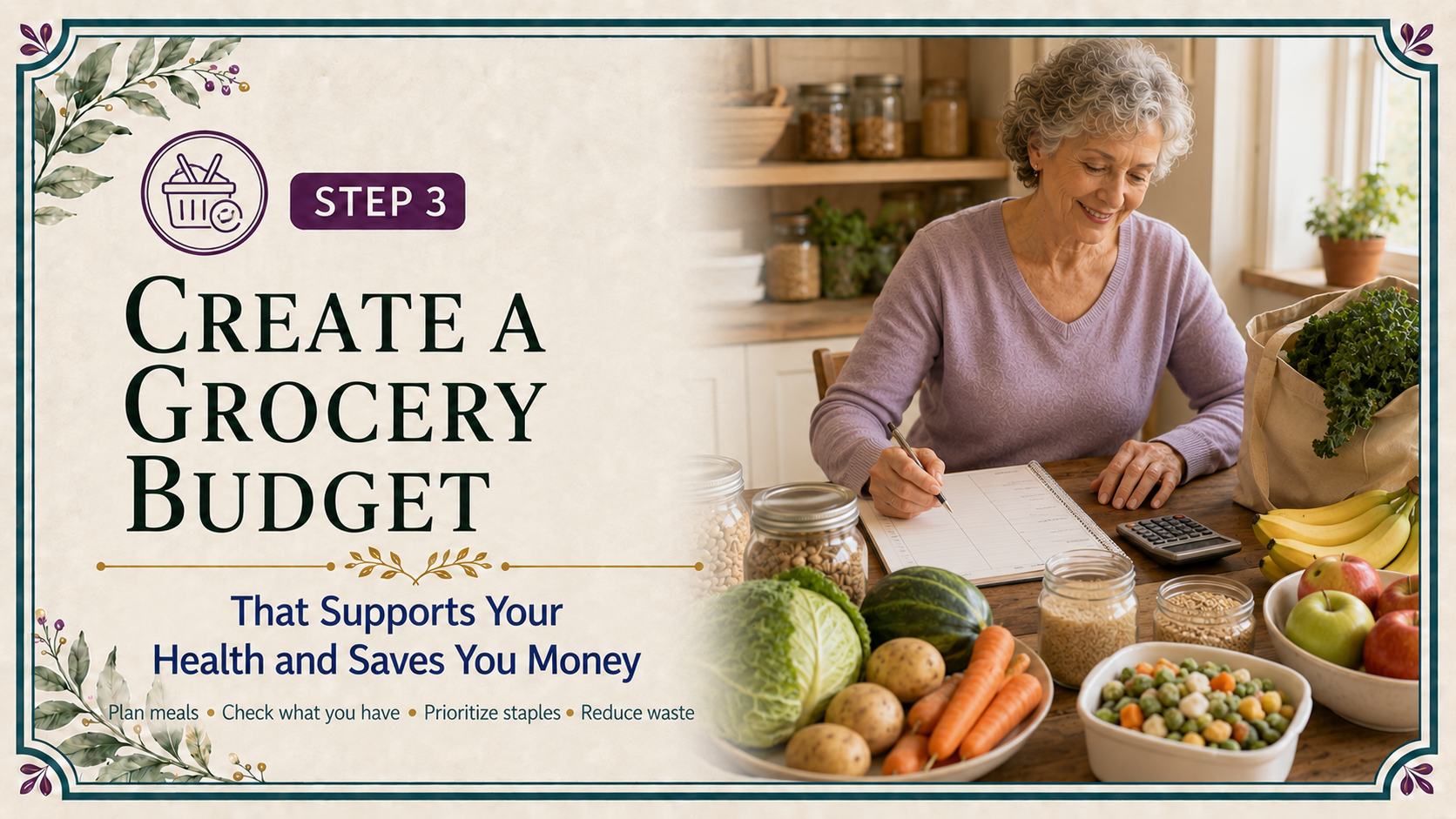
Create a Grocery Budget That Supports Your Health
A practical guide to eating well without overspending — even in uncertain times
Food prices have changed dramatically in recent years, and for many families, grocery shopping has become a source of stress. But with a little planning, you can build a grocery budget that supports your health, honors your values, and helps you stay financially grounded.
This guide will walk you through how to create a grocery budget that works — one that’s realistic, flexible, and focused on nourishing your body without breaking the bank.
1. Know Your Numbers
Before you set a grocery budget, take a clear look at your overall finances. Start with your fixed expenses — rent or mortgage, utilities, insurance, transportation — and then identify how much is left for flexible spending.
Your grocery budget should reflect both your financial reality and your health goals. If you’re trying to eat more whole foods or shift toward a plant-based diet, make space for those priorities.
Tip: Use a simple spreadsheet or budgeting app to track your monthly food spending. This helps you spot patterns and adjust as needed.
2. Build Your Budget Around Real Habits
What does your household actually eat? Start by listing your most-used ingredients and favorite meals. This helps you focus your budget on foods that truly get used — and avoid spending on items that sit untouched.
Smart swaps to save money:
- Bread your own chicken instead of buying pre-breaded
- Buy whole carrots and chop them yourself
- Choose bulk grains and legumes over packaged mixes
- Use frozen vegetables for convenience and savings
Prepared foods often cost more. Doing a little prep at home can stretch your budget while keeping meals nutritious.
3. Plan for Repeat Purchases
Some foods — like milk, bread, and fresh produce — get used quickly and need to be replenished throughout the month. Build your budget with these repeat purchases in mind.
Tip: Create a “core grocery list” of items you buy every week. This helps you estimate costs more accurately and avoid impulse buys.
4. Rethink Snacks
Snacks are often the budget-breakers. They’re convenient, but they’re also expensive — and not always nourishing.
Better snack strategies:
- Make popcorn at home
- Prep fruit and veggie slices in advance
- Choose snacks that double as mini-meals (like hummus and veggies)
- Limit packaged snacks to one or two favorites
If you do buy snacks, look for options that offer real nutrition and value.
5. Stick With It — and Adjust as Needed
Budgets aren’t meant to be perfect. They’re meant to guide you. Once you set your grocery budget, give it a few weeks to settle in. Track your spending, notice where you go over, and adjust thoughtfully.
Tip: If you consistently overspend in one area (like snacks or specialty items), look for ways to trim or substitute. The goal isn’t restriction — it’s clarity and control.
Video Cooking with a plant-based diet
Conclusion
Creating a grocery budget that supports your health isn’t about restriction — it’s about intention. When you plan ahead, choose nutrient‑dense staples, and shop with clarity, you give yourself the freedom to eat well without financial stress. Small, consistent habits like comparing prices, buying in-season produce, and building meals around whole foods can make a meaningful difference over time. Your budget becomes more than a spending plan; it becomes a tool that helps you nourish your body, protect your resources, and live with greater purpose and stability.
Author’s Note
I wrote this guide to help you feel more grounded and confident in the choices you make at the grocery store. Rising food costs can feel overwhelming, but you have more control than you think — and simple, thoughtful strategies can stretch your budget while still supporting your health. My goal is always to offer practical steps that feel doable, encouraging, and aligned with the life you’re working to build. Thank you for showing up for your well‑being and for choosing to live with intention, one meal at a time.
— Robert
Share Your Thoughts and Experiences
Comment Invitation
I’d love to hear from you.
What stood out to you in this post? What questions or experiences would you add?
Share your thoughts below — your voice helps others on their journey too.
Reference List
- USDA. 10 Tips Nutrition Education Series. https://www.myplate.gov/resources/graphics/10-tips-nutrition-education-series
- Harvard T.H. Chan School of Public Health. Healthy Eating Plate. https://www.hsph.harvard.edu/nutritionsource/healthy-eating-plate/
- American Heart Association. Budget-Friendly Grocery Shopping. https://www.heart.org/en/healthy-living/healthy-eating/eat-smart/nutrition-basics/budget-friendly-grocery-shopping
- National Institutes of Health. Tips for Saving Money on Healthy Food. https://www.nhlbi.nih.gov/health/educational/wecan/downloads/tip-money.pdf
- Dr. Pete Hinz. How to Eat Healthy on a Budget (linked in original post)
Disclaimer
The information provided in this article is for educational and informational purposes only and is not intended as medical, psychological, or professional advice. The content reflects general wellness principles and personal development concepts designed to encourage self-reflection and healthy lifestyle choices.
Individual circumstances vary, and readers should consult qualified healthcare professionals, mental health providers, or other appropriate experts regarding specific concerns or conditions. Never disregard professional advice or delay seeking help because of information contained in this article.
The author and publisher assume no responsibility for actions taken based on the information presented. Your health and well-being are ultimately your responsibility, and any changes to your lifestyle should be made thoughtfully and in consultation with appropriate professionals when necessary