Carbohydrates: Yours Body's Primary Source of Energy
Carbohydrates are one of the six essential nutrients required for life. They provide the body with energy and the raw materials needed for growth, repair, and daily function. That’s why they’re called essential — our bodies can’t thrive without them.
Clearing Up the Confusion
There’s a lot of misinformation about carbohydrates. Popular diets often encourage cutting carbs or obsessively counting them. But the real issue isn’t how many carbs you eat — it’s what kind.
Focus on quality, not restriction.
Healthy carbohydrate-rich foods nourish the body. Highly processed ones do not.
Where Carbohydrates Come From
Carbohydrates are found in a wide range of foods — some nourishing, others not:
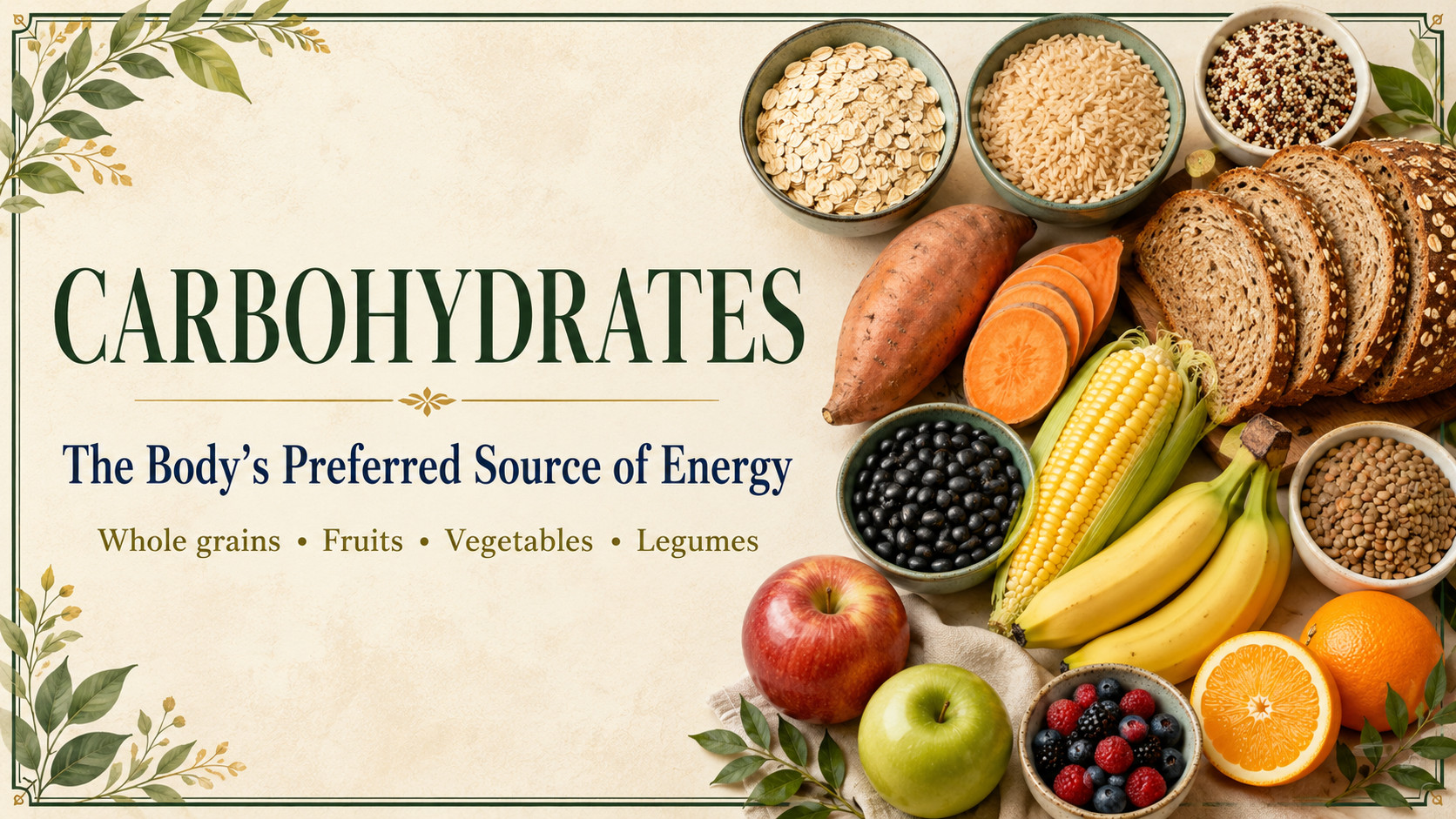
Healthy sources: whole grains, beans, fruits, vegetables, legumes
Unhealthy sources: sodas, pastries, white bread, candy, processed snacks
Why Carbohydrates Matter
Carbohydrates are the body’s primary fuel source. They’re broken down into glucose, which powers everything from brain function to physical movement.
“Carbohydrates are macronutrients — one of the three main ways the body obtains energy.”
— Paige Smathers, Registered Dietitian
The American Diabetes Association confirms: carbohydrates are the body’s main source of energy.
Types of Carbohydrates
Simple Carbohydrates
- Found in: sugar, syrups, soda, candy, pastries
- Cause: rapid spikes in blood sugar
- Problem: lack essential nutrients, linked to chronic disease
Complex Carbohydrates
- Found in: whole grains, fruits, vegetables, legumes
- Benefit: slower digestion, steady energy, rich in fiber, vitamins, and minerals
- Support: digestive health, blood sugar balance, long-term wellness
The Truth About Carbs
Carbohydrates have been unfairly demonized. Many books and articles claim they cause weight gain or disease. But science tells a different story.
Carbs are not the enemy.
Whole, plant-based carbohydrates are essential for health and vitality.
Physicians Supports Whole-Food Carbs
A growing number of physicians recommend a plant-based diet rich in whole carbohydrates to prevent and even reverse chronic conditions like:
- Type 2 diabetes
- Heart disease
- Obesity
- Certain cancers
- “A diet rich in whole, plant-based foods can help you live to the fullest.”
— Forks Over Knives
Time to focus on good carbs
Science confirms that a diet rich in whole, plant-based foods can help you live to the fullest and still get adequate protein. In fact, a growing number of physicians advocate a completely plant-based diet for many of their patients who suffer from diabetes, heart disease, and cancer. Check out these great sources:
- Plant-Based Nutrition, 2E (Idiot’s Guides),
- Nutrition Facts: The Truth About Food
- The Forks Over Knives Plan - a simple plan that focuses on hearty comfort foods and does not involve portion control or worrying about obtaining single nutrients like protein, carbs, and calcium.
Final Thoughts
Carbohydrates are not the enemy—they are a cornerstone of human nutrition. When you choose whole grains, fruits, vegetables, and legumes, you’re choosing foods that support your energy, your metabolism, and your long‑term health. Small, consistent shifts toward whole‑food carbohydrates can make a meaningful difference in how you feel every day. Your body is designed to thrive on real, nourishing fuel—and you deserve to feel that vitality.
Author's Note
Carbohydrates have been misunderstood for far too long. In truth, they are one of the body’s most essential sources of fuel—powering your brain, muscles, and every system that keeps you alive and thriving. I wrote this guide to help you cut through the confusion and reconnect with the simple truth: when you choose whole, unprocessed carbohydrate foods, you’re giving your body steady energy, vital nutrients, and long‑term support. My hope is that this article helps you feel more confident, more informed, and more at peace with the foods that truly nourish you.
---- Robert
Continue The Conversation
Every wellness journey is unique, and we can learn a great deal from one another's experiences.
What stood out to you in this article?
Have you faced similar challenges, discovered helpful strategies, or gained insights of your own?
I invite you to share your thoughts in the comments below. Your experience may encourage someone else who is taking the next step on their own journey.
Remember, meaningful change often begins with a single step—and none of us has to walk the path alone.
Reference List
- American Diabetes Association. “Carbohydrates and Diabetes: What You Need to Know.”
- Harvard T.H. Chan School of Public Health. “Carbohydrates and Blood Sugar.”
- National Institutes of Health, Office of Dietary Supplements. “Carbohydrates: Functions and Sources.”
- World Health Organization. “Healthy Diet: Carbohydrate Recommendations.”
- Academy of Nutrition and Dietetics. “Understanding Carbohydrates.”
- Centers for Disease Control and Prevention. “Nutrition Basics: Carbohydrates and Energy.”
.
Disclaimer
The information provided in this article is for educational and informational purposes only and is not intended as medical, psychological, or professional advice. The content reflects general wellness principles and personal development concepts designed to encourage self-reflection and healthy lifestyle choices.
Individual circumstances vary, and readers should consult qualified healthcare professionals, mental health providers, or other appropriate experts regarding specific concerns or conditions. Never disregard professional advice or delay seeking help because of information contained in this article.
The author and publisher assume no responsibility for actions taken based on the information presented. Your health and well-being are ultimately your responsibility, and any changes to your lifestyle should be made thoughtfully and in consultation with appropriate professionals when necessary.