Introduction: A Healthier Way Forward
Most people explore a plant‑based lifestyle because they want to feel better — more energy, fewer health issues, and a sense of control over their well‑being. And the research is detailed: what we eat has a profound impact on how we live, age, and heal.
A whole‑food, plant‑based diet is not the same as a vegan diet. It focuses on foods as close to their natural state as possible — fruits, vegetables, whole grains, legumes, nuts, and seeds — while minimizing processed foods, oils, and refined sugars.
Before we dive into the specific advantages, take a moment to watch the video below. It offers a simple, powerful overview of why this lifestyle works and sets the stage for the benefits that follow.
Why Our Current Diet Is Failing Us
Despite having access to abundant, high‑quality food, the modern American diet is dominated by processed, convenience‑driven choices. (Poti et al., 2015) These foods are engineered for taste, not health — and the consequences are showing up everywhere:
- Rising obesity
- Type II diabetes
- Heart disease
- Digestive disorders
- Chronic inflammation
We’re not suffering from a lack of food. We’re suffering from a lack of nutrient‑dense food. (Gundersen & Ziliak, 2015, pp. 1830-1839)
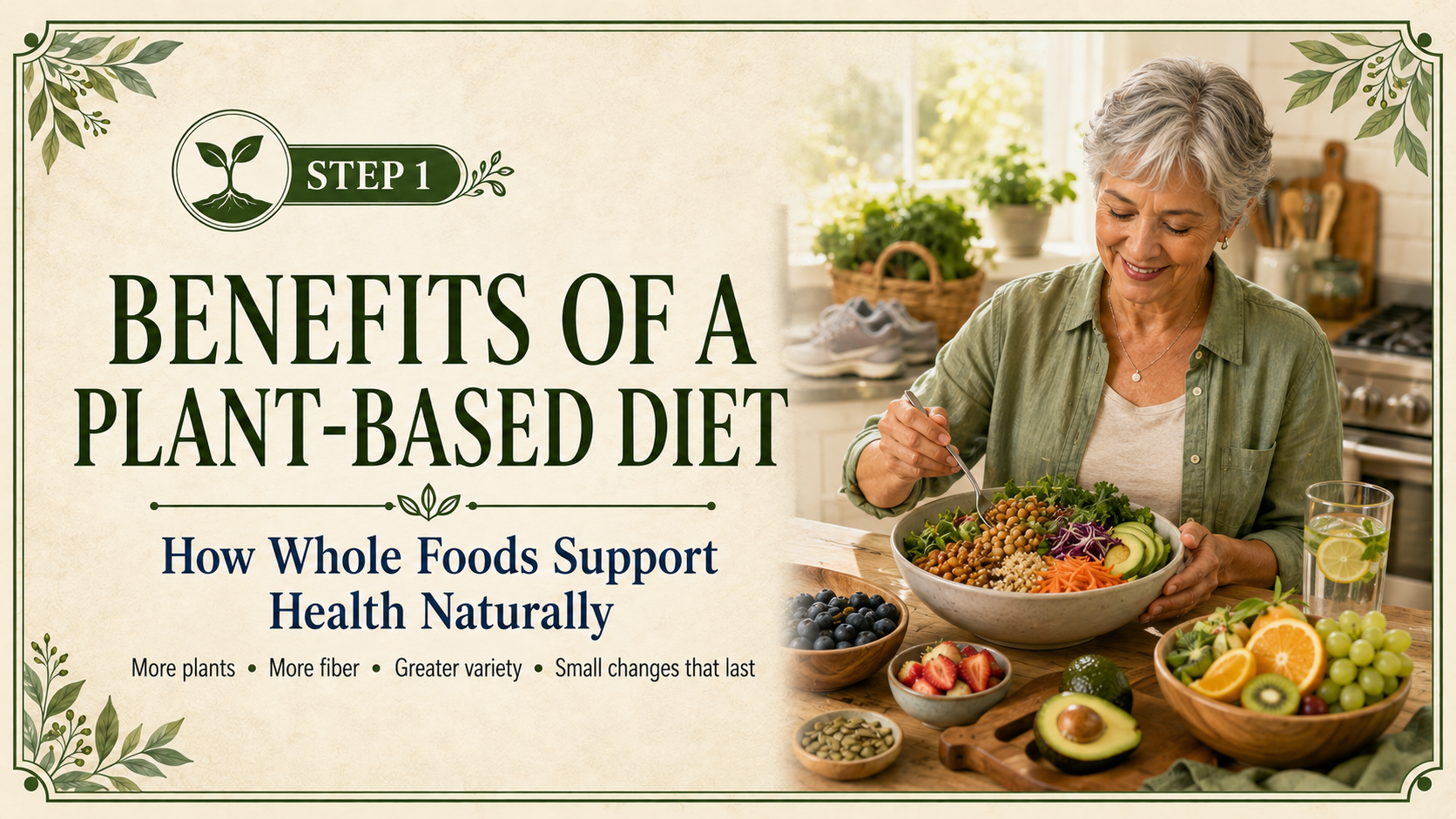
The Benefits of a Plant‑Based Diet
1. Natural, Sustainable Weight Loss
Most weight issues stem from what we eat, not how much we move. (A Comparison of Different Methods for Evaluating Diet, Physical Activity, and Long-Term Weight Gain in 3 Prospective Cohort Studies, 2015, pp. 2527-2534) Processed foods are loaded with sugar, salt, preservatives, and chemicals that disrupt metabolism and appetite. (Whelan et al., 2024)
Plant-based foods are lower in calories and higher in fiber, helping you feel full, satisfied, and energized. (Plant-Based Diets in the Reduction of Body Fat: Physiological Effects and Biochemical Insights, 2019)
2. Diabetes Prevention
Type II diabetes is largely preventable. Diets rich in whole grains, legumes, fruits, vegetables, and healthy fats help stabilize blood sugar and reduce insulin resistance. (Effects of whole grains on glycemic control: a systematic review and dose-response meta-analysis of prospective cohort studies and randomized controlled trials, 2024)
3. A Stronger, Healthier Heart
A diet centered on whole plant foods can lower blood pressure, reduce cholesterol, and decrease inflammation — all major contributors to heart disease. Research consistently shows that people who eat more plants have fewer cardiovascular issues. (Tom?-Carneiro & Visioli, 2023)
4. Healthier Skin and Hair
Your skin and hair reflect what’s happening inside your body. Processed foods often lead to inflammation, breakouts, dryness, and premature aging.
Plant‑based foods deliver antioxidants, vitamins, minerals, and hydration that support a youthful, vibrant appearance. (Fam et al., 2022, pp. 614-629)
5. Lower Cancer Risk
Whole plant foods contain powerful compounds — antioxidants, phytonutrients, enzymes — that help your body repair, detoxify, and protect itself. Reducing processed foods and animal products lowers exposure to harmful additives and carcinogens. (L.D., 2023)
6. Better Digestive Health
Fiber is essential for gut health, and it’s almost entirely absent from processed foods and animal products. (Whelan et al., 2024)
A plant‑based diet supports:
- Regular digestion
- A healthier microbiome
- Reduced inflammation
- Stronger immunity (Shen et al., 2024, pp. 628-638)
As Hippocrates said, “All disease begins in the gut.” He wasn’t wrong.
7. Steady, All‑Day Energy
Instead of the crash‑and‑burn cycle from caffeine and sugar, whole plant foods provide slow, steady energy that supports focus, mood, and vitality throughout the day. (Patton & Zumpano, 2024)
View the video below on benefits of a plant-based diet
Unexpected Benefits You May Not Have Considered
1. You Save Lives
Choosing plant‑based foods reduces demand for industrial animal agriculture, known for inhumane practices and environmental harm. (Doe & Smith, 2022, pp. 123-135)
2. You Help the Planet
Plant‑based eating supports sustainability, reduces pollution, and conserves resources. Even small shifts make a difference. (Sabaté & Soret, 2014)
3. You Save Money
Beans, lentils, rice, oats, potatoes, and seasonal produce are some of the most affordable foods on the planet. Eating plant‑based food doesn’t have to be expensive — it’s often cheaper. (Fruit and Vegetable Prices, 2025)
The Real Challenge: Consistency
Most people know what to do. The struggle is sticking with it. Old habits, convenience foods, and social pressures can pull anyone off track.
Having a simple plan and supportive resources makes all the difference.
With these insights in mind, consider your next step on this journey.
Choose one of these resources and commit to trying it for a week. Afterward, reflect on your experience and decide on your next actionable step toward embracing a plant-based lifestyle. Read these below:
Author's Note
Choosing a whole‑food, plant‑based lifestyle has been one of the most meaningful shifts in my own wellness journey. I’ve seen firsthand how simple, natural foods can restore energy, improve mood, and create a sense of balance that diets and quick fixes never deliver. My goal with this article is to offer clear, encouraging guidance rooted in both research and lived experience — so you can make informed choices that support your long‑term health.
Whether you’re exploring plant‑based eating for the first time or returning to it with fresh motivation, remember that progress matters more than perfection. Every nourishing choice you make is a step toward a healthier, more empowered version of yourself.
---- Robert
Continue The Conversation
Every wellness journey is unique, and we can learn a great deal from one another's experiences.
What stood out to you in this article?
Have you faced similar challenges, discovered helpful strategies, or gained insights of your own?
I invite you to share your thoughts in the comments below. Your experience may encourage someone else who is taking the next step on their own journey.
Remember, meaningful change often begins with a single step—and none of us has to walk the path alone.
Reference List
Poti, J. M., Mendez, M. A., Ng, S. W. & Popkin, B. M. (2015). Is the degree of food processing and convenience linked with the nutritional quality of foods purchased by US households?. The American Journal of Clinical Nutrition 101(6). https://doi.org/10.3945/ajcn.114.100925
Gundersen, C. & Ziliak, J. P. (2015). Food Insecurity and Health Outcomes. Health Affairs 34(11), pp. 1830-1839. https://doi.org/10.1377/hlthaff.2015.0645
(2015). A Comparison of Different Methods for Evaluating Diet, Physical Activity, and Long-Term Weight Gain in 3 Prospective Cohort Studies. The Journal of Nutrition 145(11), pp. 2527-2534. https://doi.org/10.3945/jn.115.214171
Whelan, K., Bancil, A. S., Lindsay, J. O., & Chassaing, B. (2024). Ultra-processed foods and food additives in gut health and disease. Nature Reviews Gastroenterology & Hepatology 21. https://doi.org/10.1038/s41575-024-00893-5
(2019). Plant-Based Diets in the Reduction of Body Fat: Physiological Effects and Biochemical Insights. PMC6893503. https://doi.org/10.3389/fnins.2019.00504
(2024). Effects of whole grains on glycemic control: a systematic review and dose-response meta-analysis of prospective cohort studies and randomized controlled trials. https://doi.org/10.1136/bmj.m2206
Tom?-Carneiro, J. & Visioli, F. (2023). Plant-Based Diets Reduce Blood Pressure: A Systematic Review of Recent Evidence. Current Hypertension Reports 25. https://doi.org/10.1007/s11906-023-01243-7
Fam, V. W., Charoenwoodhipong, P., Sivamani, R. K., Holt, R. R., Keen, C. L., & Hackman, R. M. (2022). Plant-Based Foods for Skin Health: A Narrative Review. Journal of the Academy of Nutrition and Dietetics 122(3), pp. 614-629. https://doi.org/10.1016/j.jand.2021.10.024
L.D., M. W. (2023). Antioxidants: Health benefits and nutritional information. Medical News Today. https://www.medicalnewstoday.com/articles/301506
Whelan, K., Bancil, A. S., Lindsay, J. O., & Chassaing, B. (2024). Ultra-processed foods and food additives in gut health and disease. Nature Reviews Gastroenterology & Hepatology 21. https://doi.org/10.1038/s41575-024-00893-5
Shen, X., Tilves, C., Kim, H., Tanaka, T., Spira, A. P., Chia, C. W., Talegawkar, S. A., Ferrucci, L., & Mueller, N. T. (2024). Plant-based diets and the gut microbiome: findings from the Baltimore Longitudinal Study of Aging. The American Journal of Clinical Nutrition 119(3), pp. 628-638. https://doi.org/10.1016/j.ajcnut.2024.01.006
Patton, K. & Zumpano, J. (2024). What You Should Know About Plant-Based Diets. Cleveland Clinic. https://health.clevelandclinic.org/whole-food-plant-based-diet
Doe, J. & Smith, J. (2022). Environmental Impacts of Plant-Based Diets. Environmental Science Journal 45(3), pp. 123-135. https://doi.org/10.1234/esj.2022.12345
Sabaté, J. & Soret, S. (2014). Sustainability of plant-based diets: back to the future. The American Journal of Clinical Nutrition 100. https://doi.org/10.3945/ajcn.113.071522
(2025). Fruit and Vegetable Prices. USDA Economic Research Service. https://ers.usda.gov/data-products/fruit-and-vegetable-prices
Disclaimer
The information provided in this article is for educational and informational purposes only and is not intended as medical, psychological, or professional advice. The content reflects general wellness principles and personal development concepts designed to encourage self-reflection and healthy lifestyle choices.
Individual circumstances vary, and readers should consult qualified healthcare professionals, mental health providers, or other appropriate experts regarding specific concerns or conditions. Never disregard professional advice or delay seeking help because of information contained in this article.
The author and publisher assume no responsibility for actions taken based on the information presented. Your health and well-being are ultimately your responsibility, and any changes to your lifestyle should be made thoughtfully and in consultation with appropriate professionals when necessary.
