Introduction
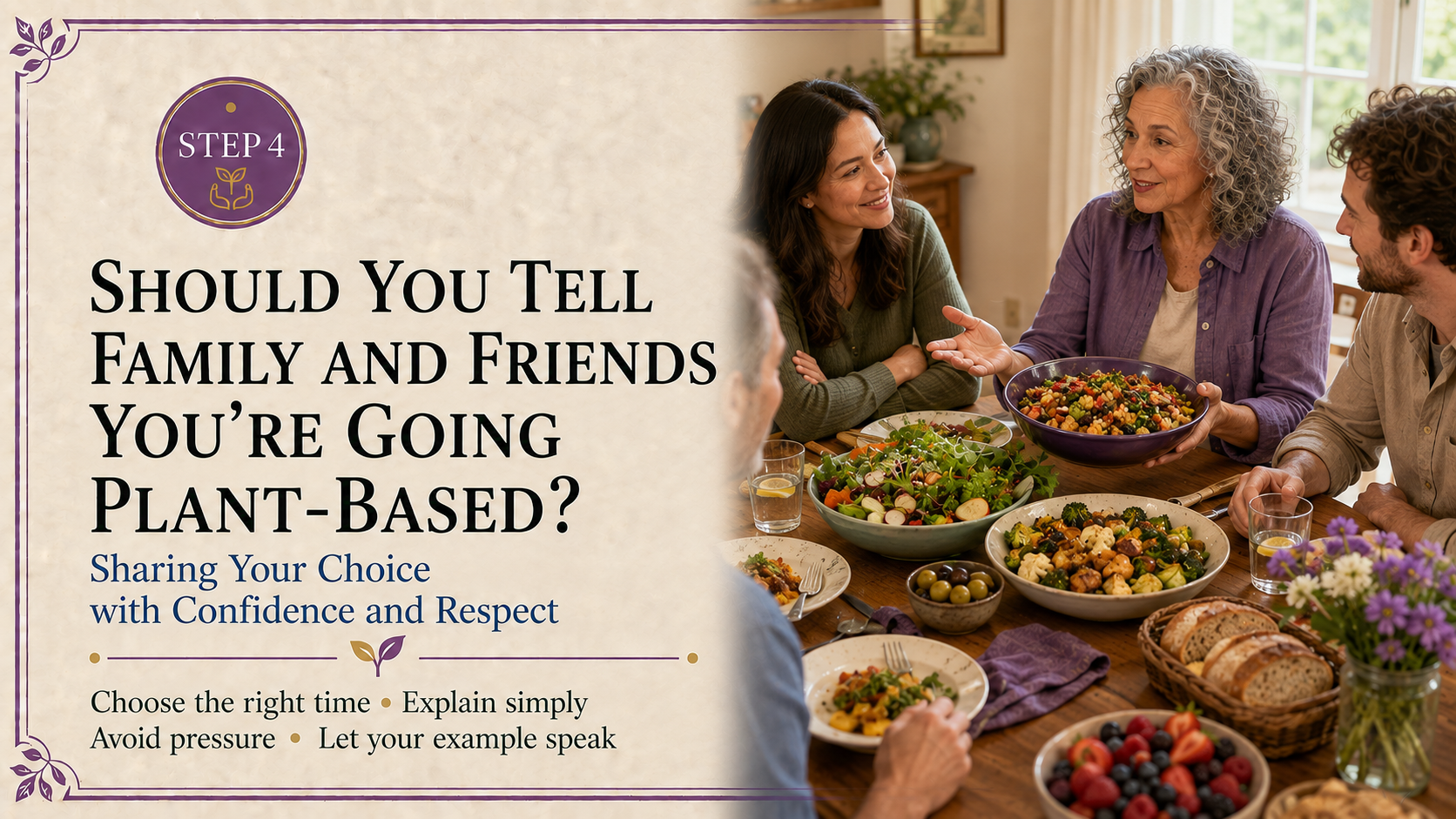
Choosing a plant-based lifestyle is personal and often misunderstood. Whether it's for health, compassion, or sustainability, one question always arises: Do I tell family and friends, or just quietly make the change?
While there’s no single right answer, you can approach this in several ways. Here are a few thoughtful ways to navigate the conversation—or choose silence.
Option 1: Don’t Announce — Just Begin
Sometimes the best way to start is simply to start.
- Eat the way you want without fuss.
- Bring your own food to gatherings if needed.
- Avoid debates or explanations unless asked.
This approach lets you experiment and commit without pressure or judgment. If your choices shift, no one’s counting.
Option 2: Tell One Supportive Friend
You don’t need a crowd. You need a cheerleader.
- Share your goals with someone who supports your journey.
- Lean on them when cravings or doubts arise.
- Celebrate small wins together.
If no one fits that role, join a local plant-based group or find support online. A virtual buddy can help.
Option 3: Be Ready When They Notice
Eventually, people will ask—especially if your health improves or your plate changes.
Instead of defending your choice, encourage curiosity:
- Share a favorite book or documentary.
- Offer a recipe they might enjoy.
- Keep the tone light, respectful, and open.
You’re not trying to convert anyone. You’re simply sharing what’s working for you.
Why This Matters
Our beliefs about food form early through family, culture, and tradition (Scrob, 2016, pp. 95-103). Challenging these norms can feel threatening—even quietly (Stamkou et al., 2020, pp. 74-79).
That’s why compassion matters—for others and yourself.
Final Thought: You Don’t Owe Anyone an Explanation
Your health is your responsibility. Your choices are yours.
Whether you share your journey or keep it private, feeling empowered, supported, and aligned with your values matters most.
Author's Notes
Choosing more plant-based foods is personal, and telling family and friends can feel emotional. Food ties to culture, identity, and connection, so reactions vary. My goal is to help you through these conversations with clarity and confidence—without pressure, guilt, or defensiveness.
You deserve choices that support your health and values, and relationships that respect them. Whether you share your transition openly, gradually, or not at all, I hope you feel grounded, supported, and empowered to move forward as you choose.
---- Robert
Continue The Conversation
Every wellness journey is unique, and we can learn a great deal from one another's experiences.
What stood out to you in this article?
Have you faced similar challenges, discovered helpful strategies, or gained insights of your own?
I invite you to share your thoughts in the comments below. Your experience may encourage someone else who is taking the next step on their own journey.
Remember, meaningful change often begins with a single step—and none of us has to walk the path alone.
Reference List
- Academy of Nutrition and Dietetics. “Position of the Academy of Nutrition and Dietetics: Vegetarian Diets.” Journal of the Academy of Nutrition and Dietetics.
- Harvard T.H. Chan School of Public Health. “Plant-Based Diets: What You Need to Know.”
- Mayo Clinic. “Plant-Based Diet: What to Know Before You Start.”
- American Psychological Association (APA). “Why People Resist Change: Understanding Reactions to Lifestyle Shifts.”
- Cleveland Clinic. “How to Talk to Loved Ones About Lifestyle Changes.”
- National Institutes of Health (NIH). “Motivation and Behavior Change: Understanding Social Support.”
- Physicians Committee for Responsible Medicine (PCRM). “Benefits of a Plant-Based Diet.”
- The Vegan Society. “Communicating Your Lifestyle Choices with Others.”
- Forks Over Knives. “Navigating Social Situations on a Plant-Based Diet.”
Disclaimer
The information provided in this article is for educational and informational purposes only and is not intended as medical, psychological, or professional advice. The content reflects general wellness principles and personal development concepts designed to encourage self-reflection and healthy lifestyle choices.
Individual circumstances vary, and readers should consult qualified healthcare professionals, mental health providers, or other appropriate experts regarding specific concerns or conditions. Never disregard professional advice or delay seeking help because of information contained in this article.
The author and publisher assume no responsibility for actions taken based on the information presented. Your health and well-being are ultimately your responsibility, and any changes to your lifestyle should be made thoughtfully and in consultation with appropriate professionals when necessary.