Introduction
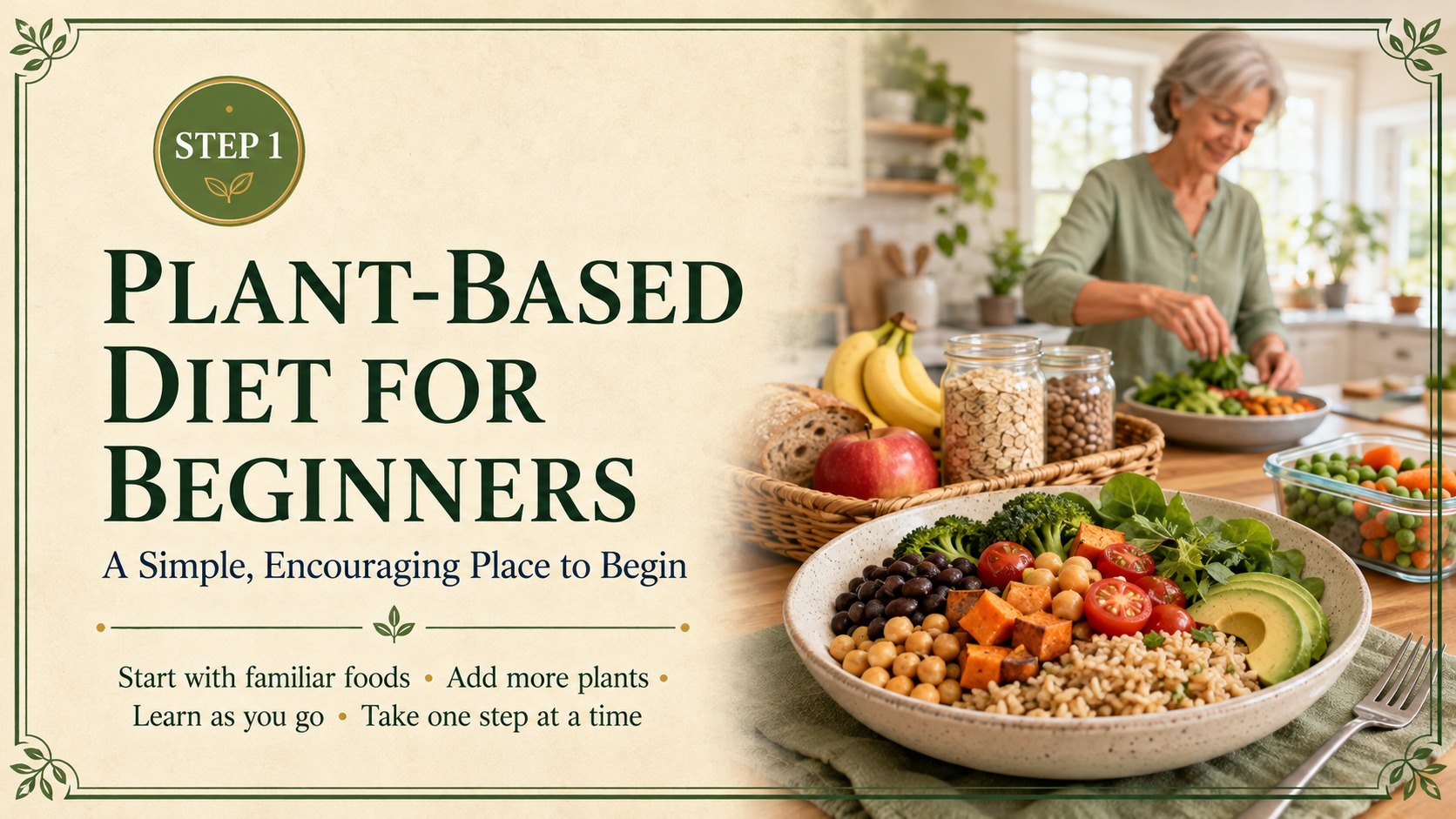
Starting a plant‑based diet is simple. With a few easy changes, you can boost your energy, enjoy vibrant meals, and nourish your body. This guide covers the basics—what to eat, kitchen essentials, and small steps for better health.
Explore why starting a plant‑based diet can be such a positive step
A plant‑based lifestyle can improve your health, help the environment, and simplify meals. Focus on whole foods to increase fiber, vitamins, minerals, and antioxidants, supporting immunity and energy.
A plant‑based diet centers on fruits, vegetables, whole grains, legumes, nuts, and seeds while minimizing or eliminating animal products and highly processed foods. Research consistently shows that plant‑forward eating patterns are associated with lower risks of heart disease, type 2 diabetes, obesity, and certain cancers. (A Narrative Review of Weight Management Strategies: From Lifestyle Interventions to Emerging Pharmacotherapies, 2026)
Choosing plant‑based meals supports the planet. Producing plant foods usually uses fewer resources and emits less greenhouse gas than animal agriculture. Each meal has a positive impact.
Plant‑based eating often simplifies life. Exploring new ingredients lets you enjoy food in fresh ways.
1. Choose Your Path
There’s no one “right” way to eat plant‑based. Start where you feel comfortable and refine your approach over time. Here are four popular ways to eat plant-based foods. There’s no single way to eat plant‑based. Start from where you’re comfortable and adjust as you go.
Plant Based
Here are four common options: some people include small amounts of animal products, but plants remain the foundation of every meal.
Vegan
A vegan diet is an eating pattern that includes only plant‑based foods—such as vegetables, fruits, whole grains, legumes, nuts, and seeds—while excluding all animal‑derived foods, including meat, poultry, fish, dairy, eggs, and even honey.
Vegetarian Diet
Excludes meat, poultry, and fish but may include dairy and/or eggs. When thoughtfully planned, it provides abundant nutrients and excludes meat, poultry, and fish but may allow dairy and eggs. When planned well, it’s nutritious and benefits long‑term health. (Tomé-Carneiro & Visioli, 2023) vitamins, minerals, and phytonutrients. (Catanese, 2024)
Whole‑Food / Plant‑Strong
Emphasizes unprocessed or minimally processed plant foods while avoiding oils, refined sugars, white flour, and packaged foods. Design emphasizes unprocessed plant foods and avoids oils, refined sugars, white flour, and packaged foods. Designed for top nutrient density and disease prevention. (The right plant-based diet for you, 2021)
Quick Comparison
| Eating Pattern | Animal Products | Processed Foods | Flexibility | Health Emphasis |
|---|---|---|---|---|
| Plant‑Based | Optional/minimal | Limited | High | Strong |
| Vegan | None | Varies | Moderate | Depends on choices |
| Vegetarian | Dairy/eggs allowed | Varies | High | Moderate–strong |
| Whole‑Food / Plant‑Strong | None | Avoided | Low | Very strong |
2. Stock Your Kitchen with the Basics
Whole Grains
Brown rice, quinoa, and oats are rich in fiber and minerals; they provide steady energy and support digestion.
Legumes
Lentils, brown rice, quinoa, and oats provide fiber and minerals for steady energy and good digestion. Chia and flaxseed deliver protein, fiber, and key nutrients.
Leafy greens, cruciferous veggies, and colorful fruits are packed with vitamins, minerals, and antioxidants.
Flavor Boosters
Herbs, Leafy greens, cruciferous veggies, and colorful fruits offer vitamins, minerals, and antioxidants.
Tip: Keep frozen fruits and veggies—they’re nutritious, affordable, and great for quick meals.
3. Simple Swap Ideas
Tip: Stock frozen fruits and vegetables—they’re nutritious, affordable, and convenient for quick meals. Replace ground beef with lentils or mushrooms in tacos or pasta sauces.
- Use cauliflower rice instead of white rice.
- Try a nut‑free pesto made with peas or spinach.
Start with one plant‑based meal per day and build from there.
4. Meet Your Nutritional Needs
A well‑planned plant‑based diet provides. Begin with one plant‑based meal each day and progress from there.on:
Protein
Legumes, tofu, tempeh, seitan
Iron
Spinach, lentils, and pumpkin seeds. Pair with vitamin C for better absorption.
Calcium
Fortified plant milks, kale, almonds
5. Learn from Trusted Experts
These resources offer guidance, recipes, and science‑based insights:
6. Take the First Step
Adopting a plant‑based lifestyle is a journey, not a race. Try:
- One fully plant‑based day per week
- A simple Sunday meal‑prep session
- A weekly recipe challenge
Celebrate every win — each plant‑powered meal supports your health and the planet.
You can also join the Physicians Committee’s 21-Day Challenge. Celebrate each win—every plant‑powered meal supports you and the planet.
Author's Note
Helping people start plant‑based living is one of my favorite parts of this work. Even small, steady changes—like adding fruits, simple meals, or trying new flavors—build real momentum and confidence.
This guide was written to make the journey feel approachable and encouraging, not overwhelming. You don’t need to change everything. This guide was written to make the journey approachable and encouraging. You don’t need perfection or to change everything at once. Just a willingness to explore and nourish your body for long‑term health. That feels good, sustainable, and aligned with your goals.
— Robert
Continue The Conversation
Reference List
- Harvard T.H. Chan School of Public Health. (2024).
Plant‑Based Diets: What They Are and Why They Matter.
Evidence on health outcomes, nutrient density, and beginner guidance. - Mayo Clinic Staff. (2024).
Plant‑Based Diet for Beginners: Tips, Benefits, and Getting Started.
Practical steps, nutrient considerations, and simple meal ideas. - Cleveland Clinic. (2024).
How to Start a Whole‑Food, Plant‑Based Diet.
Beginner‑friendly overview of WFPB principles and common challenges. - National Institutes of Health. (2024).
Plant‑Based Eating Patterns and Chronic Disease Prevention.
Research on heart health, metabolic benefits, and long‑term outcomes. - Academy of Nutrition and Dietetics. (2024).
Vegetarian Diets Across the Lifespan: Evidence‑Based Guidance.
Authoritative nutrient guidance for beginners and families. - American Heart Association. (2024).
Plant‑Rich Eating for Heart Health.
Clear, accessible recommendations for increasing whole plant foods. - Greger, M. (2023).
How Not to Die: Evidence‑Based Nutrition for Beginners.
Research‑backed explanations of why plant‑forward eating supports health. - Campbell, T. C., & Campbell, T. M. (2023).
The China Study (Updated Edition).
Foundational research supporting whole‑food, plant‑based nutrition. - (2026). A Narrative Review of Weight Management Strategies: From Lifestyle Interventions to Emerging Pharmacotherapies. PMC13075284. https://doi.org/10.1016/j.pcad.2023.02.0033
Xu, X., Sharma, P., Shu, S., Lin, T., Ciais, P., Tubiello, F. N., Smith, P., Campbell, N. & Jain, A. K. (2021). Global greenhouse gas emissions from animal-based foods are twice those of plant-based foods. Nature Food 2(9), pp. 724-732. https://doi.org/10.1038/s43016-021-00358-x
Tomé-Carneiro, J. & Visioli, F. (2023). Plant-Based Diets Reduce Blood Pressure: A Systematic Review of Recent Evidence. Curr Hypertens Rep. 2023 Jul;25(7):127-150.. https://doi.org/10.1007/s11906-023-01243-7
Catanese, L. (2024). Foods high in fiber: Boost your health with fiber-rich foods. Harvard Health. https://www.health.harvard.edu/diet-and-nutrition/foods-high-in-fiber-boost-your-health-with-fiber-rich-foods
(2021). The right plant-based diet for you. Harvard Health Publishing. https://www.health.harvard.edu/staying-healthy/the-right-plant-based-diet-for-you
Rosenfeld, R. M., Juszczak, H. M., & Wong, M. A. (2023). Scoping review of the association of plant-based diet quality with health outcomes. Frontiers in Nutrition 10. https://doi.org/10.3389/fnut.2023.1211535
Solan, M. (August 31, 2023). Is it okay to take multivitamins?. Harvard Health. https://www.health.harvard.edu/staying-healthy/is-it-okay-to-take-multivitamins
Disclaimer
The information provided in this article is for educational and informational purposes only and is not intended as medical, psychological, or professional advice. The content reflects general wellness principles and personal development concepts designed to encourage self-reflection and healthy lifestyle choices.
Individual circumstances vary, and readers should consult qualified healthcare professionals, mental health providers, or other appropriate experts regarding specific concerns or conditions. Never disregard professional advice or delay seeking help because of information contained in this article.
The author and publisher assume no responsibility for actions taken based on the information presented. Your health and well-being are ultimately your responsibility, and any changes to your lifestyle should be made thoughtfully and in consultation with appropriate professionals when necessary.