Introduction
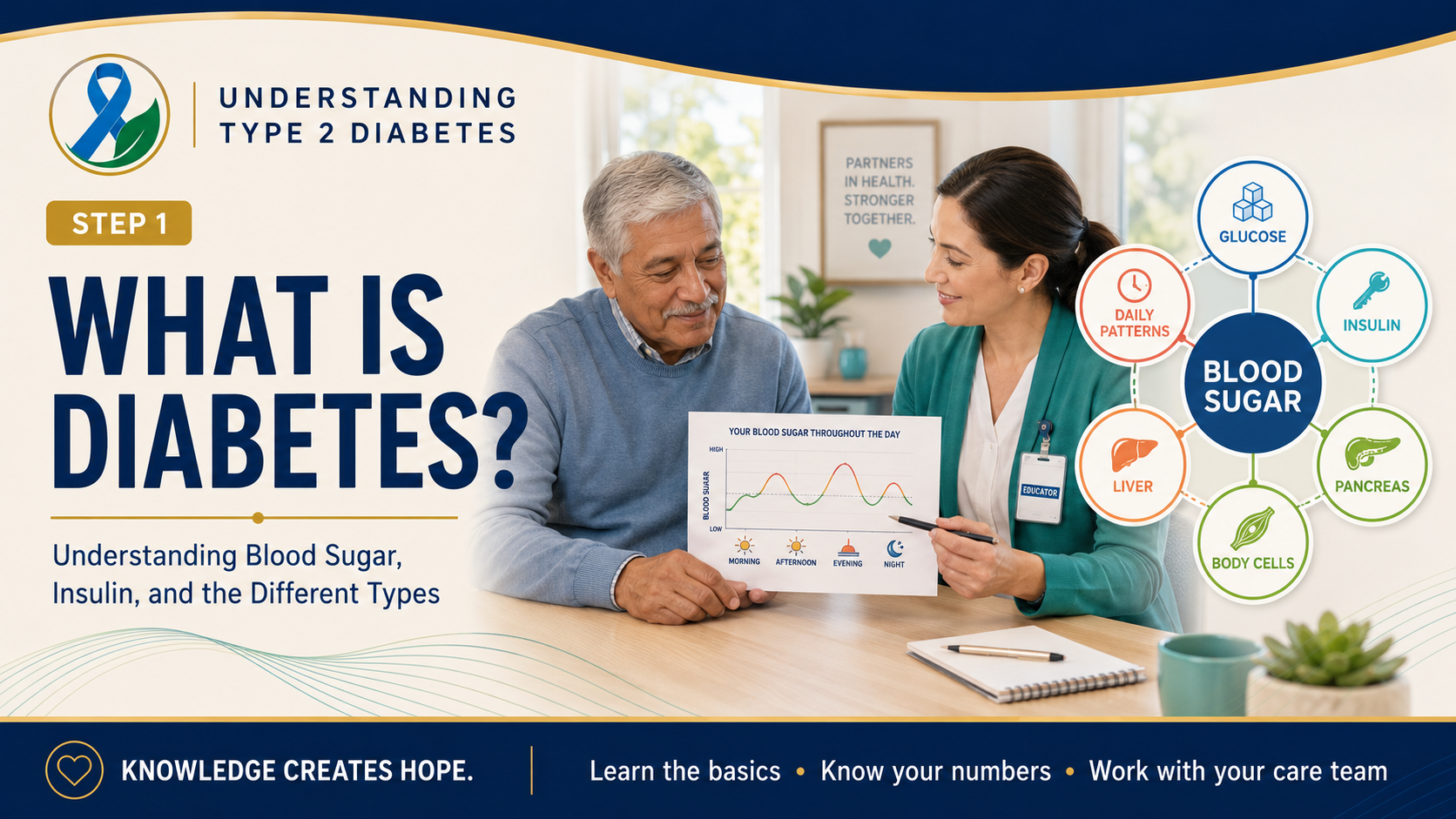
Understanding diabetes is the first step toward taking control of your health. Diabetes is common worldwide, but many people aren’t sure how it develops or what it means for their long‑term wellness. At its core, diabetes affects how your body uses glucose, the fuel every cell depends on. When this system stops working, blood sugar rises, and complications can follow. This guide explains these concepts in clear, simple terms to help you feel confident and empowered as you move forward.
Understanding what diabetes is helps you take control of your health.
Diabetes is one of the most common health conditions worldwide, yet most people don’t fully understand what it is. (Diabetes prevalence, 2024) At its core, diabetes affects how your body uses glucose, the sugar that fuels every cell. When this system stops working properly, blood sugar rises, energy drops, and long‑term complications can develop.
The good news is that understanding diabetes is the first step toward managing it with confidence. This guide covers the basics so you can feel empowered and in control.
What Is Diabetes? A Clear, Simple Explanation
Diabetes is a chronic condition where the body has trouble regulating blood sugar. This happens for one of two reasons:
The body doesn’t make enough insulin.
The body can’t use insulin effectively.
Insulin is a hormone made by the pancreas. Its job is simple: It helps glucose move from your bloodstream into your cells, where it can be used for energy.
When insulin isn’t working properly, glucose builds up in the blood rather than entering cells. Over time, high blood sugar can damage blood vessels, nerves, and organs. (Nerve Damage, 2024) This is why understanding and managing diabetes is so important.
How Insulin Works (In Simple Terms)
Think of insulin as a key.
Glucose is the fuel.
Your cells are the locked doors.
Insulin is the key that opens the door so glucose can get inside.
When the key is missing or the lock is jammed, glucose stays in the bloodstream. This is diabetes.
The Two Main Types of Diabetes
Type 1 Diabetes
- The body makes little or no insulin.
- Caused by an autoimmune reaction
- Usually diagnosed in childhood or young adulthood.
- Requires insulin therapy
Type 1 is not caused by diet or lifestyle. (Type 1 Diabetes, 2024)
Type 2 Diabetes
- The body still makes insulin, but the cells don’t respond well to it.
- This is called insulin resistance.
- The pancreas tries to keep up by making more insulin.
- Over time, it can’t keep up, and blood sugar rises.
Type 2 is much more common and often develops gradually over many years. (Type 2 Diabetes | Diabetes | CDC, 2024)
What Is Insulin Resistance?
Insulin resistance means your cells stop responding to insulin’s unlocking signal. The pancreas works overtime to produce more insulin but eventually can’t keep up.
This is the earliest stage of Type 2 diabetes — and it’s often reversible with lifestyle changes. (Prevent Type 2 Diabetes: Talking to Your Patients About Lifestyle Change, 2024)
Common Symptoms of Diabetes
Some people have symptoms. Others feel nothing at all. Here are the most common signs:
- Increased thirst
- Frequent urination
- Fatigue
- Blurred vision
- Slow‑healing cuts
- Tingling in hands or feet
- Unexplained weight loss (more common in Type 1)
If you notice these symptoms, it’s important to talk with a healthcare professional.
How Diabetes Is Diagnosed
Doctors use simple blood tests to diagnose diabetes:
Test | What It Measures | Diabetes Range |
A1C | Average blood sugar over 3 months | 6.5% or higher |
Fasting Glucose | Blood sugar after 8 hours without food | 126 mg/dL or higher |
Oral Glucose Tolerance Test | Blood sugar 2 hours after drinking glucose | 200 mg/dL or higher |
Random Glucose | Blood sugar at any time | 200 mg/dL or higher with symptoms |
Why Blood Sugar Matters
Glucose powers your brain, muscles, and organs. When blood sugar stays too high for too long, it can damage:
- Blood vessels
- Eyes
- Kidneys
- Nerves
- Heart
This is why early understanding and consistent management make such a difference.
What Causes Type 2 Diabetes?
Type 2 diabetes develops from a combination of factors:
- Genetics
- Insulin resistance
- Inflammation
- Diet patterns
- Low physical activity
- Stress and sleep issues
- Age
It’s not caused by one single thing — and it’s not a personal failure. It’s a metabolic condition with many influences.
Lifestyle Habits That Support Healthy Blood Sugar
1. Eating Balanced Meals
Meals that combine fiber, protein, and healthy fats help stabilize blood sugar.
2. Moving Your Body Daily
A 10‑minute walk after meals improves insulin sensitivity. (Positive impact of a 10-min walk immediately after glucose intake on postprandial glucose levels, 2025, pp. 1234-1242)
3. Prioritizing Sleep
Poor sleep increases insulin resistance. (Zuraikat et al., 2024, pp. 117-125)
4. Managing Stress
Stress hormones raise blood sugar. Calming practices help. (Cotey, 2024)
5. Choosing Whole, Plant‑Rich Foods
Fiber slows glucose absorption and supports gut health. (The role of fiber in gut health and chronic diseases: a comprehensive review, 2023)
Can Diabetes Be Prevented or Reversed?
Type 1 cannot be prevented. Type 2 can often be delayed, prevented, or improved through lifestyle changes, especially in the early stages. (Prevent Type 2 Diabetes: Talking to Your Patients About Lifestyle Change, 2024)
Small improvements in diet, movement, and daily habits can lead to meaningful changes in blood sugar and overall health.
Final Thoughts
Understanding what diabetes is and how it affects the body is the first step toward taking back clarity and control. When you know how insulin works, why blood sugar matters, and what’s happening beneath the surface, the condition becomes less overwhelming and more manageable.
Diabetes doesn’t define a person. It’s a health condition that can be understood, monitored, and supported with daily choices that strengthen the body rather than stress it. With the right knowledge, small lifestyle shifts, and a willingness to stay curious about your health, you can build a path forward that feels steady, hopeful, and doable.
This foundational understanding sets the stage for everything that comes next, whether it’s learning about symptoms, exploring nutrition, or building habits that support long‑term well‑being. You’re not alone on this journey, and every bit of clarity you gain becomes a powerful tool for lasting change.
Author’s Note
This guide is part of my mission to help you understand your body in clear, simple terms. If you’re living with diabetes or supporting someone who is, you deserve information that empowers you, not overwhelms you. I hope this post gives you clarity, confidence, and a sense of calm as you move forward.
---- Robert
Want More Support?
Explore the rest of the Understanding Type 2 Diabetes series for practical, easy‑to‑follow guidance on blood sugar, nutrition, and daily habits.
Continue The Conversation
Every wellness journey is unique, and we can learn a great deal from one another's experiences.
What stood out to you in this article?
Have you faced similar challenges, discovered helpful strategies, or gained insights of your own?
I invite you to share your thoughts in the comments below. Your experience may encourage someone else who is taking the next step on their own journey.
Remember, meaningful change often begins with a single step—and none of us has to walk the path alone.
Reference List
American Diabetes Association. (2026). Standards of Care in Diabetes—2026. Diabetes Care, 49(S1), S27–S49. https://doi.org/10.2337/dc26-S002
Centers for Disease Control and Prevention. (2026). Diabetes Basics. https://www.cdc.gov/diabetes/basics/index.html (cdc.gov in Bing)
Mayo Clinic. (2026). Diabetes: Symptoms, Causes, and Diagnosis. https://www.mayoclinic.org/diseases-conditions/diabetes/symptoms-causes/syc-20371444 (mayoclinic.org in Bing)
Cleveland Clinic. (2025). Type 1 vs. Type 2 Diabetes: What’s the Difference? https://my.clevelandclinic.org/health/diseases/7104-diabetes (my.clevelandclinic.org in Bing)
National Institute of Diabetes and Digestive and Kidney Diseases (NIDDK). (2025). What Is Diabetes? https://www.niddk.nih.gov/health-information/diabetes/overview/what-is-diabetes (niddk.nih.gov in Bing)
American Heart Association. (2024). Living Healthy with Diabetes. https://www.heart.org/en/health-topics/diabetes/living-healthy-with-diabetes (heart.org in Bing)
Healthline. (2025). Type 1 vs. Type 2 Diabetes: Differences, Symptoms, and Management. https://www.healthline.com/health/type-1-vs-type-2-diabetes (healthline.com in Bing)
Disclaimer
The information provided in this article is for educational and informational purposes only and is not intended as medical, psychological, or professional advice. The content reflects general wellness principles and personal development concepts designed to encourage self-reflection and healthy lifestyle choices.
Individual circumstances vary, and readers should consult qualified healthcare professionals, mental health providers, or other appropriate experts regarding specific concerns or conditions. Never disregard professional advice or delay seeking help because of information contained in this article.
The author and publisher assume no responsibility for actions taken based on the information presented. Your health and well-being are ultimately your responsibility, and any changes to your lifestyle should be made thoughtfully and in consultation with appropriate professionals when necessary.
