Introduction: What Does It Mean to Nourish Your Body Without Meat?
Most of us grew up hearing that meat — beef, chicken, pork — is the “center of the plate” and the foundation of a healthy diet. We were told it’s the best source of protein, strength, and energy. But when we step back and look at what the body actually needs to thrive, a different picture emerges.
Nourishment isn’t about tradition or habit. It’s about giving your body the nutrients that help it repair, protect, and energize itself. And the truth is simple:
You do not need meat to nourish your body.
In fact, many of the nutrients your body depends on most — fiber, antioxidants, phytochemicals, anti-inflammatory compounds — are found only in plants.
This post isn’t about judgment. It’s about clarity, empowerment, and understanding what the science really shows.
What True Nourishment Looks Like
When we talk about nourishment, we’re talking about:
- Vitamins and minerals that support immunity and cellular repair
- Fiber that feeds the gut microbiome
- Antioxidants that reduce inflammation
- Phytochemicals that protect against chronic disease
- Healthy fats that support the brain and heart
- Complex carbohydrates that provide steady energy
These are the building blocks of long-term health — and they come overwhelmingly from whole plant foods.
What the Science Says About Meat and Health
Research from major health organizations consistently shows that high consumption of red and processed meats is linked to increased risk of:
- Heart disease
- Type 2 diabetes
- Certain cancers
- Chronic inflammation
- Weight gain
- Gut microbiome imbalance
This doesn’t mean a single burger will harm you. It means that patterns matter, and diets centered around meat tend to push out the foods that protect us most.
What Happens When You Shift Toward Plants
Large-scale studies show that people who eat more plant-centered diets experience:
- Lower inflammation
- Better heart health
- Improved digestion
- More stable energy
- Lower risk of chronic disease
- Healthier body weight
- A more diverse, resilient gut microbiome
And importantly:
You don’t have to be vegan or vegetarian to benefit.
Every shift toward whole plant foods nourishes your body.
But What About Protein?
This is the most common question — and the easiest to answer.
All protein ultimately comes from plants. Animals are simply the middlemen.
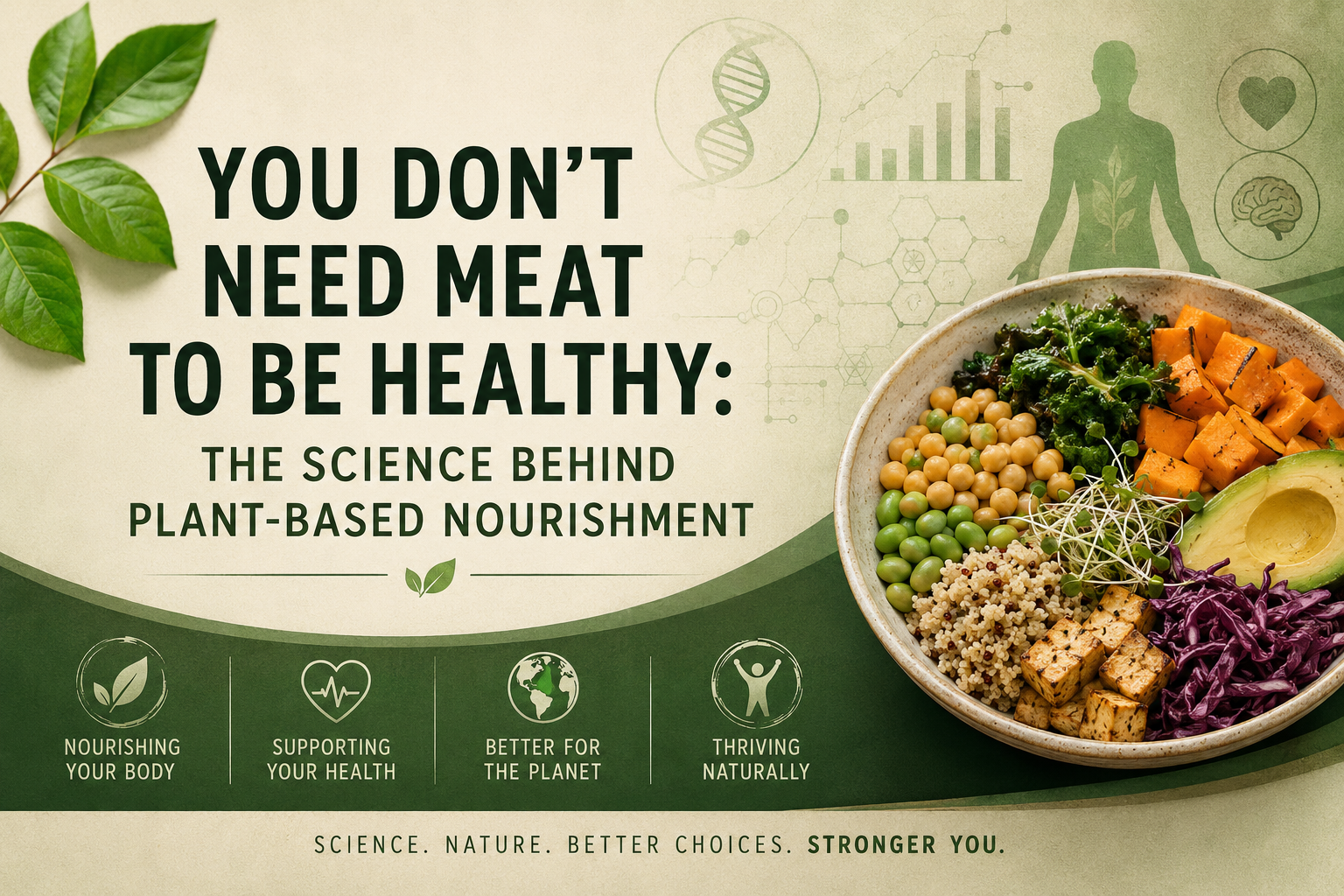
Plant foods rich in protein include:
- Beans
- Lentils
- Peas
- Soy foods
- Whole grains
- Nuts and seeds
These foods also deliver fiber, antioxidants, and minerals — things meat does not provide.
Most adults easily meet their protein needs without meat once they include a variety of plant foods.
A More Complete Picture of Nourishment
When you build your meals around:
- Vegetables
- Fruits
- Whole grains
- Legumes
- Nuts and seeds
You’re giving your body the full spectrum of nutrients it needs to thrive.
This isn’t about restriction. It’s about expansion — opening the door to foods that truly support your long-term health.
Why This Matters
Understanding that you don’t need meat to be nourished gives you freedom.
Freedom to explore new foods.
Freedom to choose what aligns with your values.
Freedom to nourish your body in a way that supports your future.
You’re not giving something up — you’re gaining clarity, energy, and a deeper connection to your health.
A Gentle First Step
Try one plant-centered meal this week.
Notice how your body feels — lighter, clearer, more energized.
Small steps create big change.
And you deserve to feel nourished.
Conclusion
Choosing to eat less meat isn’t about giving something up — it’s about discovering how powerfully your body responds when you nourish it with whole, plant‑based foods. The science is clear: plants provide the fiber, antioxidants, and nutrients that support energy, digestion, immunity, and long‑term metabolic health. You don’t need meat to thrive; you simply need a variety of colorful, nutrient‑dense foods that work with your body rather than against it.
As you explore plant‑based meals, remember that change doesn’t have to be dramatic to be meaningful. Small shifts — a plant‑powered breakfast, a meatless dinner, a new recipe you enjoy — create momentum. Over time, these choices build a way of eating that feels natural, sustainable, and deeply supportive of your well‑being. Let this knowledge empower you to move forward with confidence, curiosity, and a renewed sense of what’s possible for your health.
Author Notes
My goal with this article is simple: to help you feel informed, supported, and encouraged as you explore a more plant‑centered way of eating. For years, I believed meat was essential for strength and health — until I learned how powerfully the body responds when we shift toward whole, unprocessed plant foods. That shift changed my energy, my clarity, and my long‑term health in ways I never expected.
You don’t have to overhaul your life or adopt a label. Just start with one step, one meal, one choice that feels doable. Over time, those small decisions add up to something meaningful. I’m here to offer guidance, clarity, and encouragement as you find the version of plant‑based living that works for you.
— Robert
Share Your Thoughts and Experiences
Before You Go…
Reference List
(General, credible, non-medical-advice sources)
- Harvard T.H. Chan School of Public Health – Nutrition Source
- World Health Organization – Diet and Chronic Disease Reports
- American Heart Association – Dietary Guidance
- Physicians Committee for Responsible Medicine – Plant-Based Nutrition Resources
- Academy of Nutrition and Dietetics – Position Paper on Vegetarian Diets
- Blue Zones Research – Longevity and Dietary Patterns
Disclaimer
This article is for educational and informational purposes only. It is not intended to diagnose, treat, cure, or prevent any disease. The content reflects current research on nutrition, chronic disease, and dietary patterns in the United States, but it should not replace personalized guidance from a qualified healthcare professional.
Everyone’s health situation is unique. If you have medical concerns, dietary restrictions, or chronic conditions, please consult your physician, registered dietitian, or another licensed healthcare provider before making significant changes to your diet or lifestyle.