Introduction
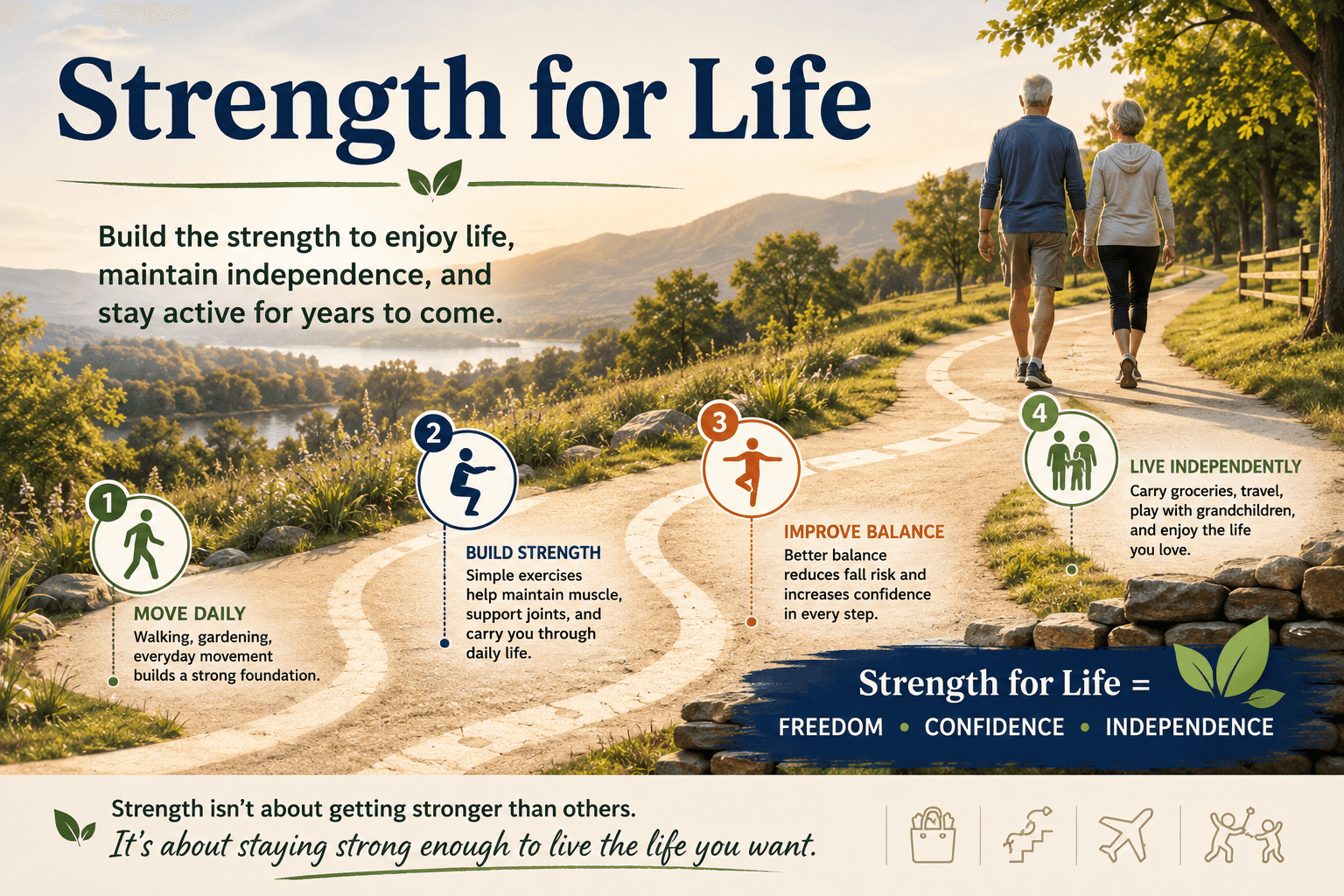
Strength is not about lifting the heaviest weight. It is about building the ability to live life fully. Whether carrying groceries, climbing stairs, traveling, or playing with grandchildren, strength supports independence, confidence, and quality of life at every age.
Strength isn’t just lifting heavy weights. It means having a body that endures and adapts at every stage. Simple habits make daily life more joyful.
As you embark on this journey, remember that strength training shouldn’t feel intimidating. Sustained change comes from small, consistent actions that help your body feel stronger and more resilient. This guide shows you how to build approachable, lasting strength for long‑term health. Let’s explore why building strength matters at every age—and how you can get started right where you are.
Why Strength Matters at Every Age
- Supports joints and reduces everyday aches
- Improves balance and reduces fall risk
- Boosts metabolism and energy
- Helps maintain independence as you age
- Builds confidence and body awareness (Staff, 2023)
Strength is about the freedom to move comfortably, carry groceries, climb stairs, play with grandkids, and remain active in the life you love. Now, let’s look at the core principles that support building lasting strength, no matter your starting point.
Core Principles of Strength for Life
1. Start With Your Foundation
Your core, hips, and legs are the pillars of everyday movement. Strengthening these areas improves posture, stability, and ease in daily tasks. (Staff, 2025)
Examples:
- Sit‑to‑stand practice
- Wall sits
- Gentle core activation
- Hip bridges
2. Use Your Body Weight First
You don’t need equipment to get strong. Body‑weight movements teach control, alignment, and confidence. (Seidi et al., 2020)
Examples:
- Modified push‑ups
- Step‑ups
- Supported squats
- Planks (even 10 seconds count)
3. Build Strength Through Daily Life
Strength training doesn’t have to happen in a workout. Everyday activities count. (What Counts as Physical Activity for Adults, 2023)
Examples:
- Carrying groceries with intention
- Taking stairs with slow, controlled steps
- Doing a few calf raises while brushing your teeth.
- Standing up from a chair without using your hands
These micro‑moments add up and help strengthen your lifestyle.
4. Keep It Slow, Safe, and Sustainable
Your goal isn’t intensity — it’s longevity. Slow, controlled movement builds strength more effectively than rushing. (Vatovec et al., 2024)
Guiding ideas:
- Move through a full, comfortable range of motion.
- Stop before pain
- Rest when needed
- Celebrate small improvements
5. Consistency Over Perfection
Two minutes of strength work is better than none. Five minutes is better than two. The goal is to build a rhythm that feels natural and manageable. (Adult Activity: An Overview, 2023)
A Simple At‑Home Strength Routine
Warm‑Up (1 minute)
March in place, shoulder rolls, gentle twists.
Lower Body (2 minutes)
- 10–12 sit‑to‑stands
- 10–12 supported lunges or step‑backs
Upper Body (2 minutes)
- 8–10 wall push‑ups
- 10–12 rows with a resistance band or towel
Core & Balance (2 minutes)
- 10–15 hip bridges
- 20–30 seconds single‑leg balance (each side)
Cool Down (1 minute)
Slow breathing, gentle stretching.
This routine is intentionally short because short routines get done. Even a few minutes can make a noticeable difference in your strength journey. Curious where this fits into your bigger wellness picture?
Where This Fits in Your Wellness Journey
Strength for Life is a core part of the Move With Purpose pillar. It pairs beautifully with:
- Mobility & Flexibility → Keep your joints comfortable.
- Low‑Impact Cardio → Support heart health without strain
- All these approaches work together to support a well-rounded wellness journey. In closing, let’s reflect on what building a supportive, strong body truly means.
Conclusion
Building a supportive body is about confidence, ease, and resilience. Simple, sustainable strength habits invest in your future self.
Strength grows over time. A few minutes of movement and better balance add up. With consistency, these choices build a body that supports your life and independence. You don’t need a gym—just commitment to start and keep moving with purpose.
Author's Notes
This piece comes from years of watching people discover that strength isn’t reserved for athletes or the young—it’s available to all of us, at any age, with the right approach. I’ve seen how simple, consistent movement can transform confidence, mobility, and overall, well‑being. And I’ve experienced firsthand how empowering it feels to build a body that supports your life rather than limits it.
My goal is to help you see strength training not as a chore, but as an act of self‑respect. A way to care for your future, protect your independence, and feel more capable in your everyday life. Whether you’re just beginning or returning after a long pause, you’re not behind. You’re right on time. And every step you take toward strength is a step toward a healthier, more confident you.
---- Robert
Continue The Conversation
Every wellness journey is unique, and we can learn a great deal from one another's experiences.
What stood out to you in this article?
Have you faced similar challenges, discovered helpful strategies, or gained insights of your own?
I invite you to share your thoughts in the comments below. Your experience may encourage someone else who is taking the next step on their own journey.
Remember, meaningful change often begins with a single step—and none of us has to walk the path alone.
Reference List
- Centers for Disease Control and Prevention (CDC). “Physical Activity and Health: Strength Training for All Ages.”
- National Institute on Aging. “Exercise and Physical Activity: Strength, Balance, and Flexibility.”
- American Council on Exercise (ACE). “Functional Strength Training for Everyday Life.”
- Harvard Health Publishing. “The Importance of Strength Training as You Age.”
- Mayo Clinic. “Strength Training: How It Helps You Stay Healthy.”
- World Health Organization (WHO). “Physical Activity Guidelines for Health and Well‑Being.”
- American College of Sports Medicine (ACSM). “Foundations of Strength Training and Functional Movement.”
Everyone’s health situation is unique. If you have medical concerns, dietary restrictions, or chronic conditions, please consult your physician, registered dietitian, or another licensed healthcare provider before making significant changes to your diet or lifestyle.
Staff, M. C. (2023). Strength training: Get stronger, leaner, healthier. Mayo Clinic. https://www.mayoclinic.org/healthy-lifestyle/fitness/in-depth/strength-training/art-20046670?53061b3a_page=6&e4d7314d_page=1&pg=1
Staff, M. C. (2025). Core exercises: Why you should strengthen your core muscles. Mayo Clinic. https://www.mayoclinic.org/healthy-lifestyle/fitness/in-depth/core-exercises/art-20044751?reDate=09032020
Seidi, F., Bayattork, M., Minoonejad, H., Andersen, L. L. & Page, P. (2020). A comprehensive corrective exercise program improves alignment, muscle activation, and movement patterns in men with upper crossed syndrome: a randomized controlled trial. Scientific Reports 10. https://doi.org/10.1038/s41598-020-77571-4
(2023). What Counts as Physical Activity for Adults. Centers for Disease Control and Prevention. https://www.cdc.gov/physical-activity-basics/adding-adults/what-counts.html
Vatovec, R., Grandovec, A., Kozinc, Ž. & Voglar, M. (2024). Effects of foam rolling on hamstrings stiffness in damaged and non-damaged muscle states. Frontiers in Physiology 15. https://doi.org/10.3389/fphys.2024.1396361
(2023). Adult Activity: An Overview. Centers for Disease Control and Prevention. https://www.cdc.gov/physical-activity-basics/guidelines/adults.html
(October 8, 2025). Exercise 'snacks' can make you fitter and stronger in just two minutes, according to a new study. Tom's Guide. https://www.tomsguide.com/wellness/fitness/could-snacktivity-be-the-next-big-fitness-trend-new-study-suggests-short-bursts-of-exercise-can-improve-your-health-and-fitness
(2024). Moving Matters for Older Adults. Centers for Disease Control and Prevention. https://www.cdc.gov/moving-matters/older-adults/index.html
Davis, N. (2026). Why Functional Fitness Is Important for Everyone. Healthline. https://www.healthline.com/health/fitness/functional-fitness-adults
Disclaimer
The information provided in this article is for educational and informational purposes only and is not intended as medical, psychological, or professional advice. The content reflects general wellness principles and personal development concepts designed to encourage self-reflection and healthy lifestyle choices.
Individual circumstances vary, and readers should consult qualified healthcare professionals, mental health providers, or other appropriate experts regarding specific concerns or conditions. Never disregard professional advice or delay seeking help because of information contained in this article.
The author and publisher assume no responsibility for actions taken based on the information presented. Your health and well-being are ultimately your responsibility, and any changes to your lifestyle should be made thoughtfully and in consultation with appropriate professionals when necessary.