Introduction
Start Today by Making a Commitment to Yourself
Getting healthy isn’t about perfection — it’s about intention. Before you change a single habit, take a moment to Find Your Why. Why do you want to feel better? What would a healthier life allow you to do? When your “why” is clear, your choices become easier, and your motivation becomes real.
If you’re unsure where to begin, consider how the Standard American Diet may be affecting your energy, digestion, weight, and long‑term health. Awareness is often the spark that leads to transformation.
Why a Plant‑Based Diet Is a Powerful First Step
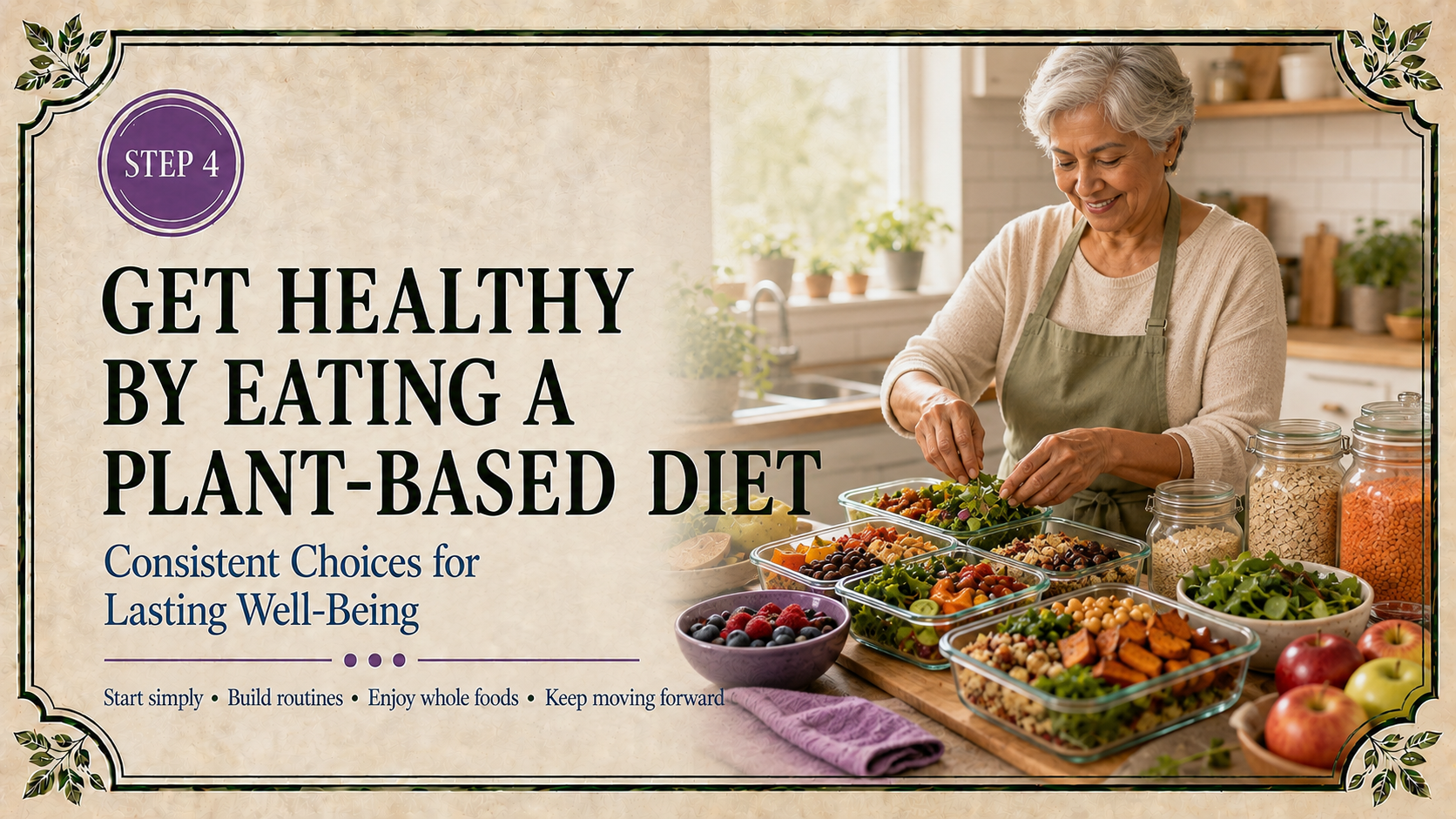
One of the most effective ways to improve your health is to shift toward a whole‑food, plant‑based lifestyle. Not all plant‑based diets are the same, so it helps to explore the different approaches and find the one that fits your life.
Science consistently shows that meals built around vegetables, fruits, whole grains, beans, nuts, and seeds can support:
- Healthy weight loss
- Lower cholesterol
- Better blood pressure
- Improved blood sugar
- Increased energy and digestion
- Reduced risk of chronic disease (Patton & Zumpano, 2024)
As one guide puts it, when you remove foods high in fat and low in fiber and replace them with foods naturally rich in nutrients, your body responds quickly. (Neuenschwander et al., 2023) Many people notice improvements in just a few weeks. (Neuenschwander et al., 2023)
Simple Steps to Begin Your Healthy Living Journey
You don’t need to overhaul your entire life overnight. Start with foundational habits: Eat whole, nutrient-dense foods.
- Lose weight if needed, gently and sustainably.
- Move your body regularly.
- Practice positive thinking and stress reduction.
- Build supportive relationships
- Drink plenty of water.
- Get consistent, restorative sleep
Small steps compound into big change.
Now is the time to act
A growing number of physicians recommend a plant‑based lifestyle to help patients manage — and sometimes reverse — conditions like diabetes, heart disease, and obesity. (Heart Disease, n.d.) You deserve to feel your best, and the path forward is simpler than you might think.
If you want a structured, practical way to get started, resources like The Forks Over Knives Plan offer meal‑by‑meal guidance that focuses on comfort foods rather than restriction. Many people find that once they begin, they feel better than they expected — and that feeling becomes its own motivation.
f you’re seeking more detailed direction, consider these resources:
Whether you’re already a convert and just want a dietary reboot, or you’re trying a plant-based diet for the first time, The Forks Over Knives Plan makes it easier than ever to transition to this healthiest way of eating…and to maintain it for life. (Neuenschwander et al., 2023)
Conclusion
Getting healthy with a whole‑food, plant‑based lifestyle doesn’t require perfection or dramatic change — it starts with simple, consistent steps that support your body day after day. When you choose real, unprocessed foods, you give your body the nutrients, fiber, and energy it needs to function at its best. Over time, these small choices build momentum, helping you feel clearer, lighter, and more grounded in your wellbeing.
The beauty of this lifestyle is its flexibility. You can begin anywhere — one meal, one swap, one new habit — and grow from there. Every step you take toward whole, plant‑based foods is a step toward better health, more vitality, and a stronger sense of control over your future. Trust the process, stay curious, and let these simple habits guide you toward a healthier, more vibrant life.
Author's Note
My goal with this guide is to help you see that a whole-food, plant-based lifestyle doesn’t have to be complicated or intimidating. For years, I believed healthy eating required strict rules or dramatic changes — but what transformed my wellbeing were the small, consistent habits I could return to each day. Simple choices made the biggest difference.
You don’t need to overhaul your life to feel better. Start with a doable step and build from there. These small shifts create momentum and help you feel more energized and in control. I’m here to support you as you explore what this lifestyle can look like for you.
— Robert
Continue The Conversation
Reference List
- Harvard T.H. Chan School of Public Health. Plant-Based Diets: Healthy and Sustainable.
- Mayo Clinic Staff. Plant-Based Diet: What Is It and Why Should You Try It?
- Esselstyn, Caldwell B. “A Plant-Based Diet and Coronary Artery Disease.” The American Journal of Cardiology, 2014.
- Satija, Ambika et al. “Plant-Based Dietary Patterns and Risk of Chronic Disease.” Journal of the American College of Cardiology, 2017.
- Tomova, Alexandra et al. “The Effects of Vegetarian and Vegan Diets on Gut Microbiota.” Frontiers in Nutrition, 2019.
- Harvard Health Publishing. Foods That Fight Inflammation.
- Hall, Kevin D. et al. “Ultra-Processed Diets Cause Excess Calorie Intake and Weight Gain.” Cell Metabolism, 2019.
- U.S. Department of Agriculture. Dietary Guidelines for Americans 2020–2025.
- Patton, K. & Zumpano, J. (2024). What You Should Know About Plant-Based Diets. Cleveland Clinic. https://health.clevelandclinic.org/whole-food-plant-based-diet
- Neuenschwander, M., Stadelmaier, J., Eble, J., Grummich, K. & Szczerba, E. (2023). Substitution of animal-based with plant-based foods on cardiometabolic health and all-cause mortality: a systematic review and meta-analysis of prospective studies. BMC Medicine 21. https://doi.org/10.1186/s12916-023-03093-1
- Neuenschwander, M., Stadelmaier, J., Eble, J., Grummich, K., Szczerba, E., Kiesswetter, E., Schlesinger, S. & Schwingshackl, L. (2023). Substitution of animal-based with plant-based foods on cardiometabolic health and all-cause mortality: a systematic review and meta-analysis of prospective studies. BMC Medicine 21. https://doi.org/10.1186/s12916-023-03093-1
- (n.d.). Heart Disease. Physicians Committee for Responsible Medicine. https://www.pcrm.org/health-topics/heart-disease
Disclaimer
This article is for educational and informational purposes only. It is not intended to diagnose, treat, cure, or prevent any disease. The content reflects current research on nutrition, chronic disease, and dietary patterns in the United States, but it should not replace personalized guidance from a qualified healthcare professional.
Everyone’s health situation is unique. If you have medical concerns, dietary restrictions, or chronic conditions, please consult your physician, registered dietitian, or another licensed healthcare provider before making significant changes to your diet or lifestyle.