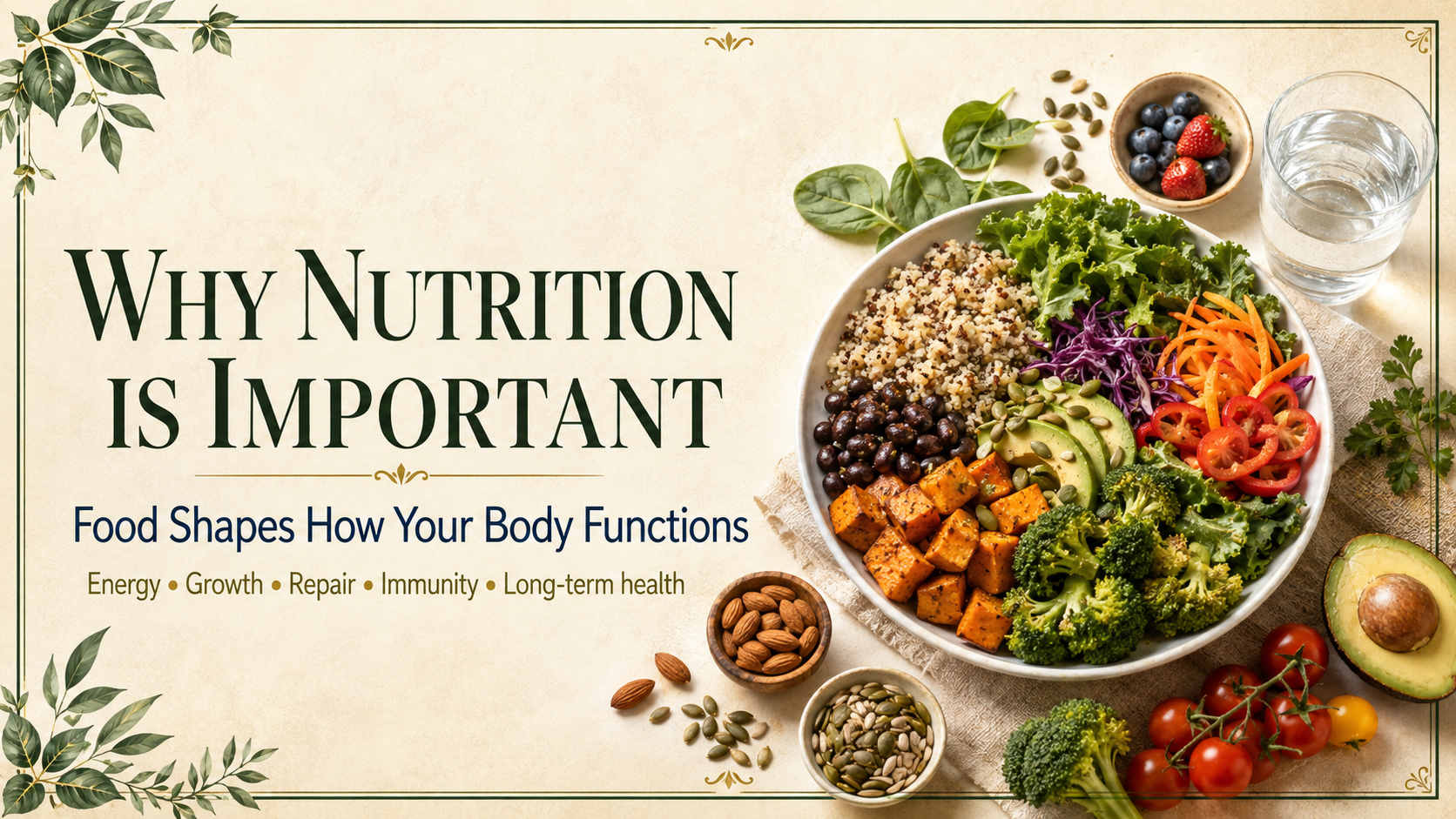
Why Nutrition Is Important
Good nutrition is the foundation of lifelong health. Every system in your body — your energy, immunity, mood, metabolism, and long‑term disease risk — is shaped by the foods you eat each day. When you nourish your body with whole, nutrient‑dense foods, you give yourself the best chance to thrive at every age.
Video -- Meals and Nutrition on a Plant-Based Diet
What Nutrition Really Does for You
Nutrition isn’t just about calories or weight. It’s about giving your body the raw materials it needs to function at its best.
- Energy & Vitality — Whole foods provide steady fuel that supports focus, stamina, and daily performance.
- Immune Strength — Vitamins, minerals, and antioxidants help your body defend against illness and inflammation.
- Healthy Metabolism — Balanced nutrition supports stable blood sugar, hormone balance, and long-term metabolic health.
- Longevity & Disease Prevention — A nutrient-rich diet lowers the risk of heart disease, diabetes, cancer, and cognitive decline.
- Emotional Well‑Being — Research shows strong links between diet quality and mood, anxiety, and resilience.
Why Whole, Plant‑Based Foods Make Such a Difference
A growing body of research shows that diets centered on whole, plant-based foods can dramatically improve health outcomes. These foods are naturally rich in fiber, phytonutrients, vitamins, and minerals — and low in the substances that drive inflammation and chronic disease.
Many physicians now recommend plant‑forward eating patterns to help manage or even reverse conditions such as:
- Type 2 diabetes
- Heart disease
- High blood pressure
- Chronic inflammation
- Certain cancers
This isn’t about perfection — it’s about choosing foods that help your body function the way it was designed to.
Simple Ways to Improve Your Nutrition Today
Small, consistent changes create powerful long-term results.
- Add more whole foods — fruits, vegetables, beans, whole grains, nuts, and seeds.
- Reduce ultra‑processed foods — packaged snacks, sugary drinks, fast food, and refined grains.
- Stay hydrated — water supports digestion, metabolism, and energy.
- Build balanced meals — include fiber, healthy fats, and plant-based proteins.
- Eat mindfully — slow down, enjoy your food, and listen to your body’s signals.
These steps are accessible, sustainable, and proven to support better health.
The Solution Is Good Nutrition
Science continues to confirm that a whole‑food, plant‑based approach can help you live a longer, healthier, more vibrant life. If you’re ready to explore this path, these resources offer excellent guidance:
- Plant-Based Nutrition, 2E (Idiot’s Guides)
- Nutrition Facts: The Truth About Food
- The Forks Over Knives Plan — a practical, meal-by-meal approach used by physicians Dr. Alona Pulde and Dr. Matthew Lederman.
Conclusion
Nutrition is one of the most powerful tools you have to support your long‑term health. When you consistently choose whole, nutrient‑dense foods, you strengthen your immune system, protect your heart, fuel your brain, and create the foundation for steady energy and well‑being. These benefits don’t come from perfection—they come from small, intentional steps repeated over time. My hope is that this guide helps you see nutrition not as a set of rules, but as an opportunity to care for yourself in meaningful, sustainable ways. Every meal is a chance to invest in your future health.
Author’s Note
Nutrition has always been more than information to me—it’s a pathway to living with clarity, strength, and purpose. I wrote this post to help you see how deeply your daily food choices shape your energy, immunity, mood, and long‑term health. When you nourish yourself with whole, plant‑forward foods, you give your body the chance to function the way it was designed to. My hope is that these insights encourage you to make small, meaningful changes that feel doable and empowering, not overwhelming. Every step you take toward better nutrition is a step toward a healthier, more vibrant life.
— Robert
Continue The Conversation
Reference List
Plant‑Forward Eating & Whole‑Food Nutrition
- Harvard T.H. Chan School of Public Health. “Plant‑Based Diets: Healthy and Sustainable.” revolutionalizeurhealth.com
- Mayo Clinic Staff. “Plant‑Based Diet: What Is It and Why Should You Try It?” revolutionalizeurhealth.com
- Cleveland Clinic. “Whole‑Food, Plant‑Based Diet: Benefits and Basics.” revolutionalizeurhealth.com
- Academy of Nutrition and Dietetics. “Plant‑Based Eating: A Guide to Better Health.” revolutionalizeurhealth.com
Inflammation, Immunity & Chronic Disease
- Harvard Health Publishing. “Foods That Fight Inflammation.” revolutionalizeurhealth.com
- Hu, F.B. “Plant‑Based Foods and Chronic Disease Prevention.” Journal of Nutrition, 2003.
Gut Health & Microbiome
- Tomova, A. et al. “The Effects of Vegetarian and Vegan Diets on Gut Microbiota.” Frontiers in Nutrition, 2019. revolutionalizeurhealth.com
Nutrition & Mental Well‑Being
- Jacka, F.N. et al. “Association of Diet Quality with Depression and Anxiety.” American Journal of Psychiatry, 2010. revolutionalizeurhealth.com
Nutrition, Sleep & Metabolic Health
- St‑Onge, M.‑P. et al. “Sleep and Diet: A Review.” Nutrients, 2016. revolutionalizeurhealth.com
Evidence‑Based Nutrition Education
- Greger, M. How Not to Die.
- Pulde, A. & Lederman, M. The Forks Over Knives Plan. (Referenced in your post.) revolutionalizeurhealth.com
Disclaimer
The information provided in this article is for educational and informational purposes only and is not intended as medical, psychological, or professional advice. The content reflects general wellness principles and personal development concepts designed to encourage self-reflection and healthy lifestyle choices.
Individual circumstances vary, and readers should consult qualified healthcare professionals, mental health providers, or other appropriate experts regarding specific concerns or conditions. Never disregard professional advice or delay seeking help because of information contained in this article.
The author and publisher assume no responsibility for actions taken based on the information presented. Your health and well-being are ultimately your responsibility, and any changes to your lifestyle should be made thoughtfully and in consultation with appropriate professionals when necessary.