Introduction
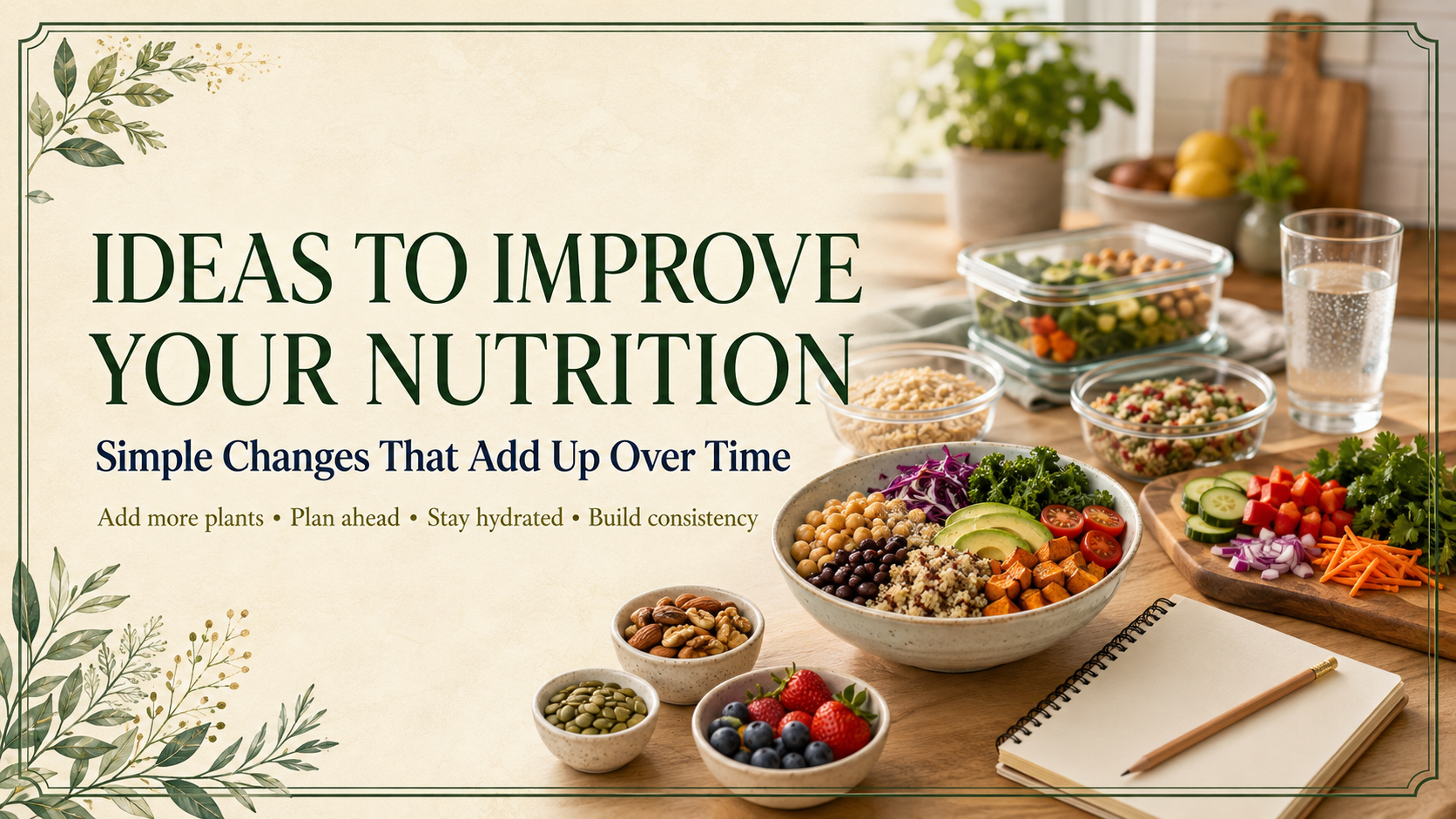
Eating nutritious foods can transform your physical and mental well‑being, support a healthy weight, and even help you save money over time. The good news is that improving your nutrition doesn’t require perfection — just simple, intentional steps. From meal‑prepping to choosing balanced snacks, these ideas can help you build a healthier, more energized life.
Things you can do and Should
Start with Simple Habit Shifts
Small changes add up. Choosing healthier snacks, adding more leafy greens, or swapping processed foods for whole foods can dramatically improve how you feel. Nuts, seeds, fruits, and vegetables are nutrient‑dense options that help keep your energy steady throughout the day. (Quick-start guide to nuts and seeds, 2024)
Nutrition isn’t about perfection — it’s about balance. Focusing only on what you “should” eat can create guilt, while eating only what you crave may lead to weight gain and low energy. Aim for balanced choices that honor nourishment and enjoyment.
Get Kids Involved in the Kitchen
If you want your children to eat better, bring them into the cooking process. Kids love to create, and when they help prepare meals, they’re far more likely to eat them. Cooking together builds confidence, curiosity, and a positive relationship with healthy food. (Center, 2017)
Choose Whole Grains Over Processed Carbs
Whole grains offer fiber, vitamins, and minerals that refined carbohydrates simply can’t match. (Staff, 2025) Look for foods labeled 100% whole wheat and choose options like:
- Whole‑grain bread
- Brown rice
- Whole‑wheat pasta
- Oats and barley
Avoid “white” refined products when possible — they’re stripped of nutrients and can spike blood sugar. (Refined Sugar: Downsides, Food Sources, and How to Avoid It, 2017)
For more on healthy fats.
Boost Your Fiber Intake
Fiber is essential for digestive and heart health, as well as for blood sugar stability. It helps lower cholesterol and keeps you feeling full longer. (Fiber: The Carb That Helps You Manage Diabetes, 2024) See Different Kinds of Fiber. Great sources include:
- Beans and lentils
- Whole grains
- Fruits and vegetables
- Nuts and seeds
Fiber is especially important for people managing diabetes, as it helps prevent sharp glucose spikes. (Fiber: The Carb That Helps You Manage Diabetes, 2024)
Be Mindful of Simple Carbohydrates
Simple carbs break down quickly into sugar, which can cause blood glucose to rise rapidly. (Carbohydrates and Blood Sugar, n.d.) If you’re diabetic or watching your blood sugar, choose whole grains and high‑fiber foods instead of refined carbs.
Understand Pesticides in Context
Pesticides are often portrayed as universally harmful, but farmers can offer a more nuanced perspective. Some fungicides and treatments are necessary to produce healthy crops, and many residues do not remain on the produce you buy. Washing and peeling can further reduce exposure. (Pesticides and Food: Healthy, Sensible Food Practices, 2024)
Start Your Day with Oatmeal
A bowl of oatmeal provides long‑lasting energy thanks to its fiber content. It keeps you full until lunch and supports heart health — a simple, powerful breakfast choice. (Merschel, 2022)
Protect Nutrients When Cooking
Fresh vegetables are packed with vitamins and minerals, but overcooking can cause nutrient loss. (Spritzler, 2025) To preserve their benefits:
- Steam instead of boiling
- Cook lightly
- Avoid soaking vegetables in water.
These small adjustments help you get the most from your food.
Build a Diet That Supports Long‑Term Health
A nutritious diet is one of the most powerful tools you have for preventing chronic disease. Reducing excess sugar, salt, unhealthy fats, and processed foods can dramatically improve how you feel day to day. (Dietary Guidelines for Americans 2020-2025, n.d.)
Remember: improving your nutrition is a journey. Even small steps can create meaningful change.
The solution is here if you act
Science continues to confirm that a diet rich in whole, plant‑based foods can help you live a longer, healthier life. Many physicians now recommend a fully plant‑based diet for patients with diabetes, heart disease, and even certain cancers. (Jafari et al., 2022)
Three excellent resources include:
- Plant‑Based Nutrition, 2E (Idiot’s Guides)
- Nutrition Facts: The Truth About Food
- The Forks Over Knives Plan
The Forks Over Knives Plan offers a simple, comforting, meal‑by‑meal approach used by Drs. Alona Pulde and Matthew Lederman, in their clinical practice, have no calorie counting, no portion control, just real food that supports healing.
Conclusion
Improving your nutrition begins with simple, intentional choices—adding more whole foods, staying hydrated, and choosing options that support how you want to feel. Over time, these shifts create powerful momentum.
When you nourish your body with care and consistency, you support clearer thinking, steadier energy, and long‑term health. Start with one doable idea and build from there. Each choice you make is a vote for the healthier life you’re creating.
Author’s Note
Thank you for taking the time to explore these simple ways to nourish your body. Nutrition isn’t about strict rules or chasing perfection — it’s about learning what helps you feel steady, energized, and supported in your daily life. Start with one small shift, practice it with patience, and let your confidence grow from there.
Your health is a journey. Every mindful choice builds a stronger, more vibrant you.
Thank you again for reading. If you’d like ongoing support, stay connected as your wellness journey continues.
Join the discussion groups and get updates, practical tips, and new wellness insights.
Your journey matters. You’re not alone.
--- Robert
Continue The Conservation
Every wellness journey is unique, and we can learn a great deal from one another's experiences.
What stood out to you in this article?
Have you faced similar challenges, discovered helpful strategies, or gained insights of your own?
I invite you to share your thoughts in the comments below. Your experience may encourage someone else who is taking the next step on their own journey.
Remember, meaningful change often begins with a single step—and none of us has to walk the path alone.
Reference List
2024). Quick-start guide to nuts and seeds. Harvard Health Publishing. https://www.health.harvard.edu/nutrition/quick-start-guide-to-nuts-and-seeds
Center, N. R. (April 23, 2017). Children who cook eat more greens, Nestlé study reveals. Nestlé Global. https://www.nestle.com/randd/news/allfeatures/children-vegetables
Staff, M. C. (2025). Whole Grains: Hearty Options for a Healthy Diet. Mayo Clinic. https://www.mayoclinic.org/healthy-lifestyle/nutrition-and-healthy-eating/in-depth/whole-grains/art-20047826
(2017). Refined Sugar: Downsides, Food Sources, and How to Avoid It. Healthline. https://www.healthline.com/nutrition/refined-sugar
(2024). Fiber: The Carb That Helps You Manage Diabetes. Centers for Disease Control and Prevention. https://www.cdc.gov/diabetes/healthy-eating/fiber-helps-diabetes.html
(n.d.). Carbohydrates and Blood Sugar. Harvard T.H. Chan School of Public Health. https://www.hsph.harvard.edu/nutritionsource/carbohydrates/carbohydrates-and-blood-sugar/
(2024). Pesticides and Food: Healthy, Sensible Food Practices. U.S. Environmental Protection Agency. https://www.epa.gov/safepestcontrol/pesticides-and-food-healthy-sensible-food-practices
Merschel, M. (August 31, 2022). Take a fresh look at oatmeal – it's not as simple as you think. American Heart Association. https://www.heart.org/en/news/2022/09/01/take-a-fresh-look-at-oatmeal-its-not-as-simple-as-you-think
Spritzler, F. (2025). How Cooking Affects the Nutrient Content of Foods. Healthline. https://www.healthline.com/nutrition/cooking-nutrient-content
(n.d.). Dietary Guidelines for Americans 2020-2025. https://www.dietaryguidelines.gov/
Jafari, S., Hezaveh, E., Jalilpiran, Y., Jayedi, A., Wong, A., Safaiyan, A., & Barzegar, A. (2022). Plant-Based Diets and Risk of Disease Mortality: A Systematic Review and Meta-Analysis of Cohort Studies. Nutrients 14(15). https://doi.org/10.3390/nu14153395
Disclaimer
The information provided in this article is for educational and informational purposes only and is not intended as medical, psychological, or professional advice. The content reflects general wellness principles and personal development concepts designed to encourage self-reflection and healthy lifestyle choices.
Individual circumstances vary, and readers should consult qualified healthcare professionals, mental health providers, or other appropriate experts regarding specific concerns or conditions. Never disregard professional advice or delay seeking help because of information contained in this article.
The author and publisher assume no responsibility for actions taken based on the information presented. Your health and well-being are ultimately your responsibility, and any changes to your lifestyle should be made thoughtfully and in consultation with appropriate professionals when necessary.