Introduction - A Childhood Staple… But Should It Be?
If you grew up in rural America — or anywhere in North America, really — dairy was everywhere. Cows in the fields, milk cartons in school lunches, and the familiar message that milk builds strong bones. It felt wholesome, natural, and unquestioned.
But as nutrition science evolves, many long‑held beliefs about dairy deserve a second look. What once felt like common sense may not align with what we now know about human health.
Why Do Humans Drink Cow’s Milk?
It’s a simple question, but a powerful one.
Cow’s milk is biologically designed for calves — mammals that double their weight quickly and grow into 1,000‑pound animals. Once weaned, calves never return to milk. Neither do any other mammals.
Humans drink milk past infancy, unlike other mammals.
- We also consume milk from other species.
- Many depend on milk for nutrients that are not available elsewhere.
Having explored why humans drink milk, let's consider a deeper issue: Is dairy truly an essential part of our diet, or is its presence more about culture and tradition?
The Industry Influence You’re Not Supposed to Notice
For decades, the dairy industry has shaped public perception through:
- Massive advertising campaigns
- Partnerships with schools
- Lobbying influence on government nutrition guidelines
- Messaging that equates milk with strength, protein, and vitality
This isn’t about hidden agendas — it’s simply effective marketing.
As the narrative about dairy evolves with changing consumer attitudes, it's important to examine how industry messaging has long shaped our choices, even as we explore the health effects of milk.
Health Concerns Linked to Dairy Consumption
1. Digestive Issues
Most of the world’s population is lactose intolerant, yet many people don’t recognize the symptoms — bloating, gas, cramping, or fatigue after dairy. (MD, 2026)
2. Inflammation & Acne
Some research suggests dairy proteins and hormones may trigger inflammatory responses in certain individuals. (The Effects of Dairy Product and Dairy Protein Intake on Inflammation: A Systematic Review of the Literature, 2023, pp. 1015-1027)
3. Hormones & Growth Factors
Cow’s milk naturally contains growth‑promoting hormones meant for calves. These compounds may not align with human hormonal balance. (Snoj & Majdič, 2018)
4. Saturated Fat & Heart Health
Cheese and full‑fat dairy are major sources of saturated fat in the American diet — a known contributor to heart disease. (Huth et al., 2013)
5. Cancer Risk Discussions
Some studies raise concerns about dairy’s relationship to hormone‑related cancers. While research continues, the signals warrant attention. (Signal et al., 2018, pp. 710-736)
The Rise of Non‑Dairy Alternatives
Plant-based milks now offer:
- Comparable or superior nutrient profiles
- Fortified calcium and vitamin D
- Lower saturated fat
- No hormones
- A smaller environmental footprint (Ramsing et al., 2023)
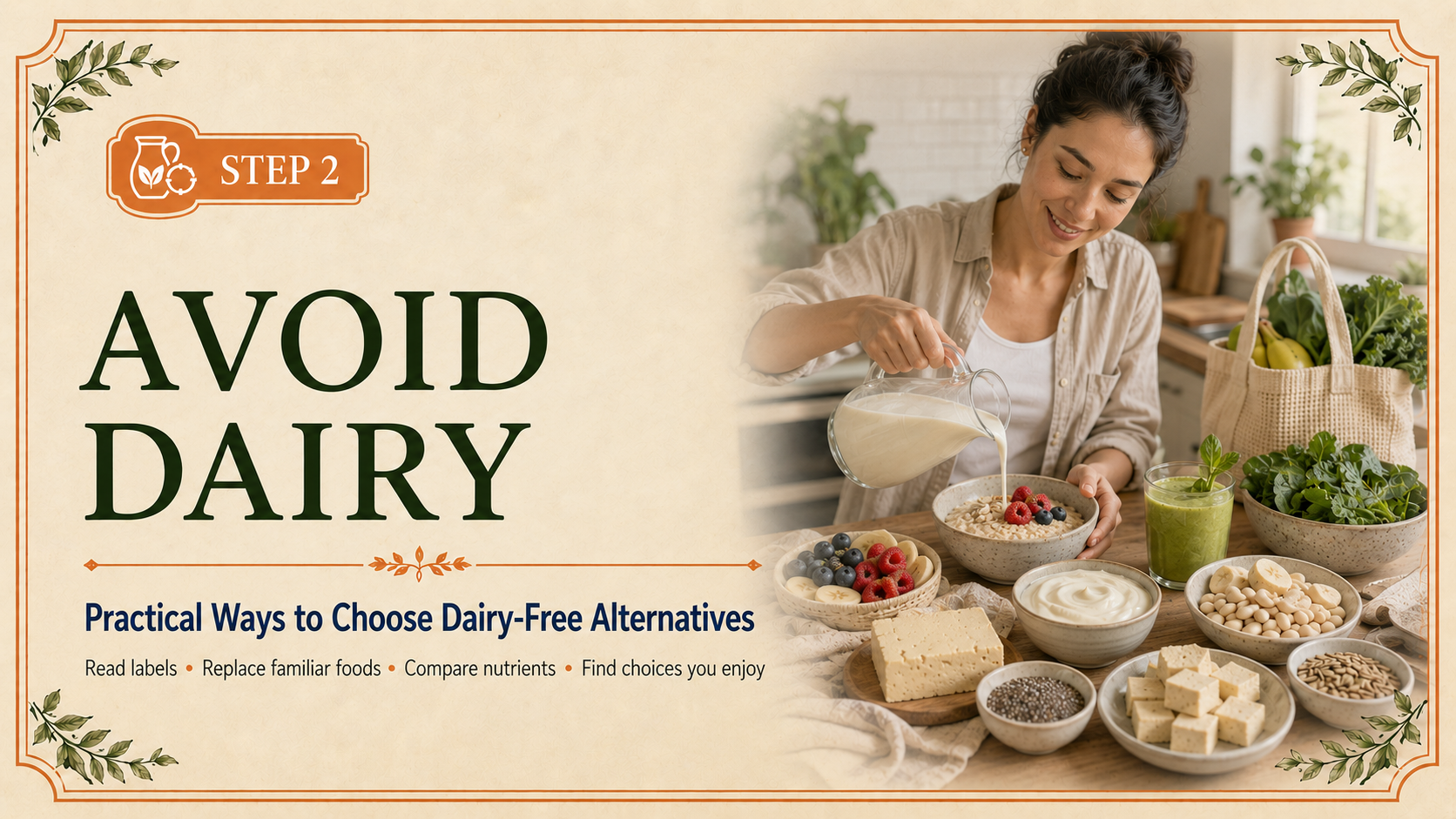
Options include almond, soy, oat, coconut, hemp, cashew, and more.
Check out the information below:
- Read about “Types of Plant-Based Diets”
- and “Benefits of a Plant-Based Diet” posts.
A Quick Reality Check
Here are two questions to help you reflect on dairy: Why are humans the only mammals that drink the milk of another species?
- And why do we gravitate to cow’s milk specifically, and not the milk of other mammals?
Controversy – not really
Watch this brief video to understand the dairy industry's impact on consumption patterns.
Your Health Comes First
Chronic disease rates continue to rise in North America despite abundant food and advanced healthcare. (Benavidez et al., 2024) Diet plays a major role — and dairy is part of that conversation. (Cohen et al., 2022)
This article aims to empower readers, not to cause fear.
It encourages questioning assumptions and exploring choices without fear or pressure.
Recommended Reading
These resources help readers understand why so many people feel better when they reduce or eliminate dairy.
- Got Milked? — A deep dive into dairy myths and modern nutrition
- What’s in Your Milk? — An exposé on industry practices and rBGH concerns
- The Cheese Trap — How dairy addiction affects weight, energy, and health
Final Thought / Conclusion
Dairy is a cultural staple, but not always essential or beneficial. When you move beyond marketing, many adults find dairy hard to digest, experience inflammation, or feel better without it.
Stepping back from dairy is about awareness. Choose foods that support your health and base your choices on current information, not tradition or industry influence.
Listen to your body to find what works best for you.
Author's Note
For most of my life, I accepted dairy as a normal, unquestioned part of the American diet. It wasn’t until I began studying nutrition more deeply—and listening to the experiences of people trying to heal their bodies—that I realized how much confusion and marketing surround this single food group. My goal with this article isn’t to tell you what to eat, but to give you the clarity and confidence to make choices that truly support your long‑term well‑being. If dairy works for you, that’s your journey. If it doesn’t, you deserve to know why—and what your options are.
---- Robert
Continue The Conversation
Every wellness journey is unique, and we can learn a great deal from one another's experiences.
What stood out to you in this article?
Have you faced similar challenges, discovered helpful strategies, or gained insights of your own?
I invite you to share your thoughts in the comments below. Your experience may encourage someone else who is taking the next step on their own journey.
Remember, meaningful change often begins with a single step—and none of us has to walk the path alone.
Reference List
MD, H. E. (2026). Lactose Intolerance - Harvard Health. Harvard Health Publishing. https://www.health.harvard.edu/digestive-health/lactose-intolerance-a-to-z
(2023). The Effects of Dairy Product and Dairy Protein Intake on Inflammation: A Systematic Review of the Literature. Advances in Nutrition 14(5), pp. 1015-1027. https://doi.org/10.1093/cdn/nzaa060_009
Snoj, T. & Majdič, G. (2018). Estrogens in consumer milk: is there a risk to human reproductive health?. European Journal of Endocrinology 179(6). https://doi.org/10.1530/EJE-18-0591
Huth, P. J., III, V. L., Keast, D. R., Park, K., & Auestad, N. (2013). Major food sources of calories, added sugars, and saturated fat and their contribution to essential nutrient intakes in the U.S. diet: data from the National Health and Nutrition Examination Survey (2003–2006). Nutrition Journal 12. https://doi.org/10.1186/1475-2891-12-116
Signal, V., Huang, S., Sarfati, D., Stanley, J., McGlynn, K. A., & Gurney, J. K. (2018). Dairy Consumption and Risk of Testicular Cancer: A Systematic Review. Nutr Cancer 70(5), pp. 710-736. https://doi.org/10.1080/01635581.2018.1470655
Ramsing, R., Santo, R., Kim, B. F., Altema-Johnson, D., Wooden, A., Chang, K. B., Semba, R. D., & Love, D. C. (2023). Dairy and Plant-Based Milks: Implications for Nutrition and Planetary Health. Current Environmental Health Reports 10. https://doi.org/10.1007/s40572-023-00400-z
ICohen, S. S., Bylsma, L. C., Movva, N. & Alexander, D. D. (2022). Theoretical attributable risk analysis and Disability Adjusted Life Years (DALYs) based on increased dairy consumption. BMC Public Health 22. https://doi.org/10.1186/s12889-022-14042-7
Disclaimer
The information provided in this article is for educational and informational purposes only and is not intended as medical, psychological, or professional advice. The content reflects general wellness principles and personal development concepts designed to encourage self-reflection and healthy lifestyle choices.
Individual circumstances vary, and readers should consult qualified healthcare professionals, mental health providers, or other appropriate experts regarding specific concerns or conditions. Never disregard professional advice or delay seeking help because of information contained in this article.
The author and publisher assume no responsibility for actions taken based on the information presented. Your health and well-being are ultimately your responsibility, and any changes to your lifestyle should be made thoughtfully and in consultation with appropriate professionals when necessary.