Introduction
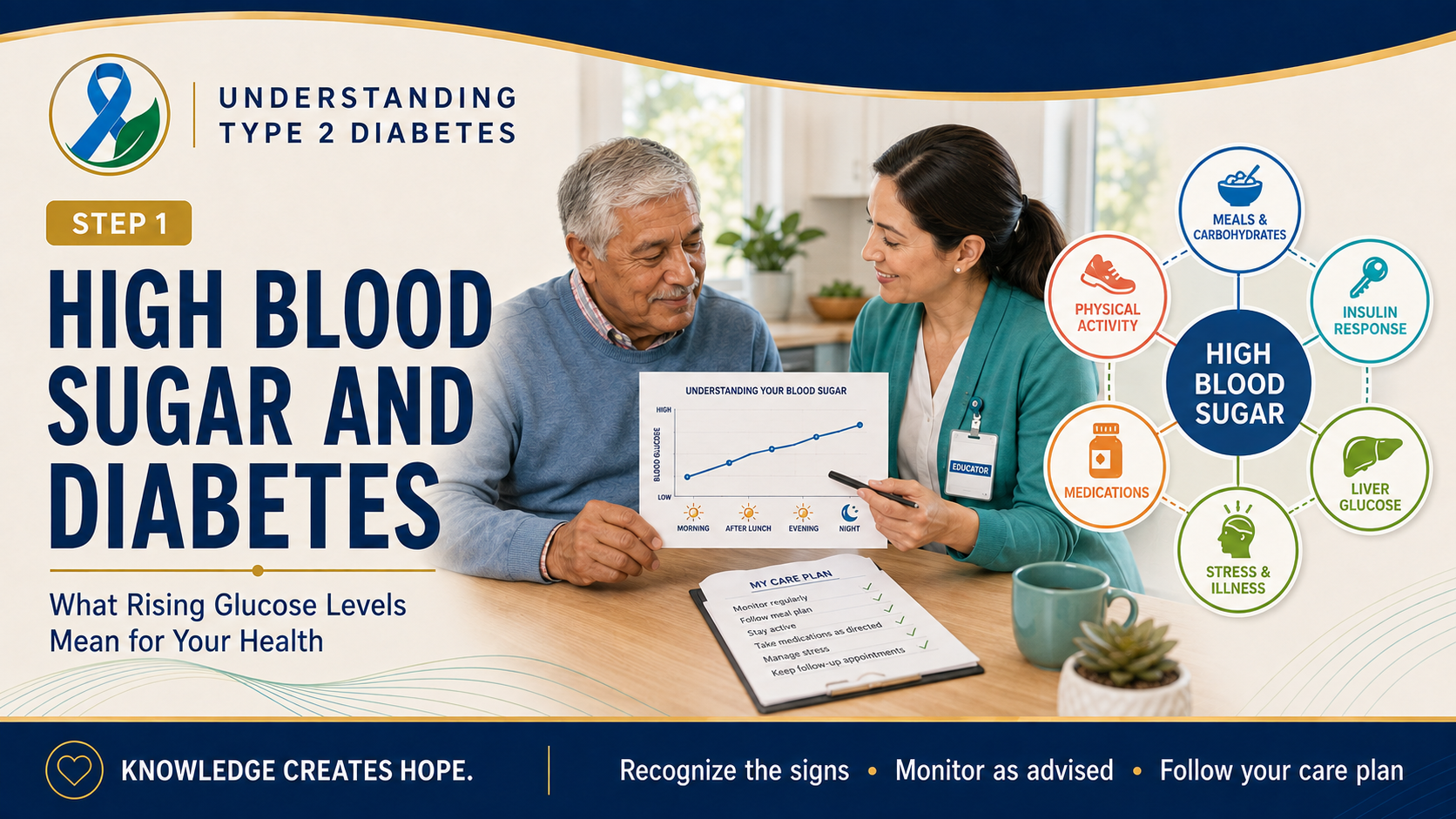
High blood sugar—also known as hyperglycemia—is a primary characteristic of Type 2 diabetes. While it can affect undiagnosed individuals, it occurs most frequently in those with prediabetes or diabetes. Hyperglycemia develops when the body fails to regulate glucose properly, typically because of insulin resistance, which is central to Type 2 diabetes. (Rachdaoui, 2020)
Understanding Type 2 Diabetes
Type 2 diabetes was previously called “adult-onset diabetes,” but increasing childhood obesity has resulted in diagnoses among children as young as eight to ten. (Type 2 Diabetes in Children and Adolescents- A Focus on Diagnosis and Treatment, 2024) Although a long-term condition, Type 2 diabetes is highly manageable—and sometimes reversible—through consistent habits: balanced nutrition, regular exercise, proper hydration, sufficient sleep, and healthy weight maintenance.
How High Blood Sugar Develops
In healthy individuals, insulin is released primarily after eating foods that raise blood sugar levels. (Carbohydrates and Blood Sugar, n.d.) However, modern diets often emphasize frequent consumption of high-glycemic, highly processed foods. This keeps insulin levels elevated for extended periods, leading to insulin resistance over time. (Solan, 2021)
When insulin resistance develops:
- The body still produces insulin, sometimes in large amounts.
- Cells stop responding to it effectively.
- The pancreas works harder, producing even more insulin.
- Eventually, the pancreas can’t keep up, and blood glucose rises.
This sequence results in chronic hyperglycemia, which defines Type 2 diabetes.
Other Causes of High Blood Sugar
Even people without diabetes can experience temporary high blood sugar due to:
- Eating excessive simple carbohydrates
- Sedentary lifestyle
- Illness, infections, or physical stress
- Emotional stress
- The “Dawn Phenomenon,” a natural early‑morning hormone surge that raises glucose around 4–5 AM (Staff, 2026)
These conditions can elevate glucose above normal ranges, particularly in those at increased risk.
The Role of Exercise
If you’re diagnosed with prediabetes or Type 2 diabetes, your doctor will almost always recommend physical activity. Movement helps your body use glucose for fuel, lowering blood sugar naturally. For many people, regular exercise alone can significantly improve glucose control.
If your job or lifestyle keeps you sitting most of the day, aim for at least 150 minutes of moderate to vigorous aerobic activity per week—about 30 minutes, five days a week. (Get Active | Diabetes | CDC, 2024)
How Food Choices Affect Blood Sugar
Your doctor or dietitian may ask you to keep a food journal to identify patterns. Foods that commonly cause sharp spikes include:
- Baked goods
- Refined sugars
- Processed foods
- Simple carbohydrates
Replacing these with complex carbohydrates—fruits, vegetables, whole grains, nuts, and berries—helps stabilize blood sugar and reduce hyperglycemia. (Choosing Healthy Carbs, 2024)
Final Thoughts / Conclusion
High blood sugar does not occur in isolation—it reflects your body’s response to food, activity, stress, sleep, and metabolic patterns. When glucose remains high, it burdens the pancreas, triggers inflammation, and increases the risk of complications over time. (Developmental Programming and Glucolipotoxicity: Insights on Beta Cell Inflammation and Diabetes, 2019) Encouragingly, hyperglycemia responds well to lifestyle adjustments. Incremental changes—more whole foods, regular exercise, effective stress management, and consistent hydration—can significantly improve glucose regulation. Whether addressing prediabetes or Type 2 diabetes, each positive change helps restore balance, protect your health, and support greater energy and stability.
Author’s Note
I wrote this post to bring clarity to a topic that often feels overwhelming. High blood sugar can be confusing, especially when symptoms vary from person to person, and online information is inconsistent. My goal is to give you a clear, compassionate explanation of what’s happening inside your body—and why it matters—without fear or judgment. You deserve practical guidance, steady encouragement, and the confidence that meaningful change is always possible. Thank you for taking the time to learn, reflect, and invest in your health. Your commitment truly matters.
---- Robert
Continue The Conversation
Every wellness journey is unique, and we can learn a great deal from one another's experiences.
What stood out to you in this article?
Have you faced similar challenges, discovered helpful strategies, or gained insights of your own?
I invite you to share your thoughts in the comments below. Your experience may encourage someone else who is taking the next step on their own journey.
Remember, meaningful change often begins with a single step—and none of us has to walk the path alone.
Reference List
- American Diabetes Association. Standards of Medical Care in Diabetes—2024.
- Centers for Disease Control and Prevention (CDC). “Type 2 Diabetes.”
- National Institute of Diabetes and Digestive and Kidney Diseases (NIDDK). “Type 2 Diabetes Overview.”
- Mayo Clinic Staff. “Hyperglycemia in Diabetes.”
- Harvard T.H. Chan School of Public Health. “Carbohydrates and Blood Sugar.”
- Cleveland Clinic. “High Blood Sugar (Hyperglycemia).”
- International Diabetes Federation. IDF Diabetes Atlas.
- American College of Sports Medicine. “Exercise and Type 2 Diabetes.”
- Rachdaoui, N. (2020). Insulin: The Friend and the Foe in the Development of Type 2 Diabetes Mellitus. Int. J. Mol. Sci. 2020. https://doi.org/10.3390/ijms21051770
- (2024). Type 2 Diabetes in Children and Adolescents- A Focus on Diagnosis and Treatment. Endotext. https://doi.org/10.1056/NEJMra1901240
- (n.d.). Carbohydrates and Blood Sugar. Harvard T.H. Chan School of Public Health. https://www.hsph.harvard.edu/nutritionsource/carbohydrates/carbohydrates-and-blood-sugar/
- Solan, M. (June 30, 2021). High-glycemic diets could lead to big health problems. Harvard Health Publishing. https://www.health.harvard.edu/staying-healthy/high-glycemic-diets-could-lead-to-big-health-problems
- Staff, M. C. (2026). The dawn phenomenon: What can you do?. Mayo Clinic. https://www.mayoclinic.org/diseases-conditions/diabetes/expert-answers/dawn-effect/faq-20057937
- (2024). Get Active | Diabetes | CDC. Centers for Disease Control and Prevention. https://www.cdc.gov/diabetes/living-with/physical-activity.html
- (2024). Choosing Healthy Carbs. Centers for Disease Control and Prevention. https://www.cdc.gov/diabetes/healthy-eating/choosing-healthy-carbs.html
- (2019). Developmental Programming and Glucolipotoxicity: Insights on Beta Cell Inflammation and Diabetes. Frontiers in Endocrinology 10. https://doi.org/10.3389/fendo.2019.00400
Disclaimer
The information provided in this article is for educational and informational purposes only and is not intended as medical, psychological, or professional advice. The content reflects general wellness principles and personal development concepts designed to encourage self-reflection and healthy lifestyle choices.
Individual circumstances vary, and readers should consult qualified healthcare professionals, mental health providers, or other appropriate experts regarding specific concerns or conditions. Never disregard professional advice or delay seeking help because of information contained in this article.
The author and publisher assume no responsibility for actions taken based on the information presented. Your health and well-being are ultimately your responsibility, and any changes to your lifestyle should be made thoughtfully and in consultation with appropriate professionals when necessary.