Introduction
Type 2 diabetes can be managed with plant-based diets rich in naturally healthy fiber. Fiber moves through your system, taking waste materials and other unneeded compounds with it. It also promotes satiety, helping you consume fewer calories throughout the day, supports healthy digestion, and helps control blood sugar levels.
Plant-based foods are among the healthiest choices, supplying essential nutrients that support physical, mental, and emotional well-being. (Firth et al., 2020)
Major nutrition studies confirm what parents advise: Eating fruits and vegetables greatly improves your chances for a long, healthy life. (Wang et al., 2021, pp. 1305-1312)
Given these benefits, choosing plant-based foods over processed options is key for those already diagnosed with prediabetes or diabetes. Yet, most people do not eat enough whole, minimally cooked plant-based foods.
Aim for at least 25 g of fiber daily. Women under 50 should consume more than 25 g, and men under 50 should consume more than 35 g for optimal results. (Fiber: The Carb That Helps You Manage Diabetes, 2024)
Plant-based foods provide phytonutrients, minerals, vitamins, and other beneficial compounds uncommon in processed foods. This diet supports overall health for both diabetics and non-diabetics.
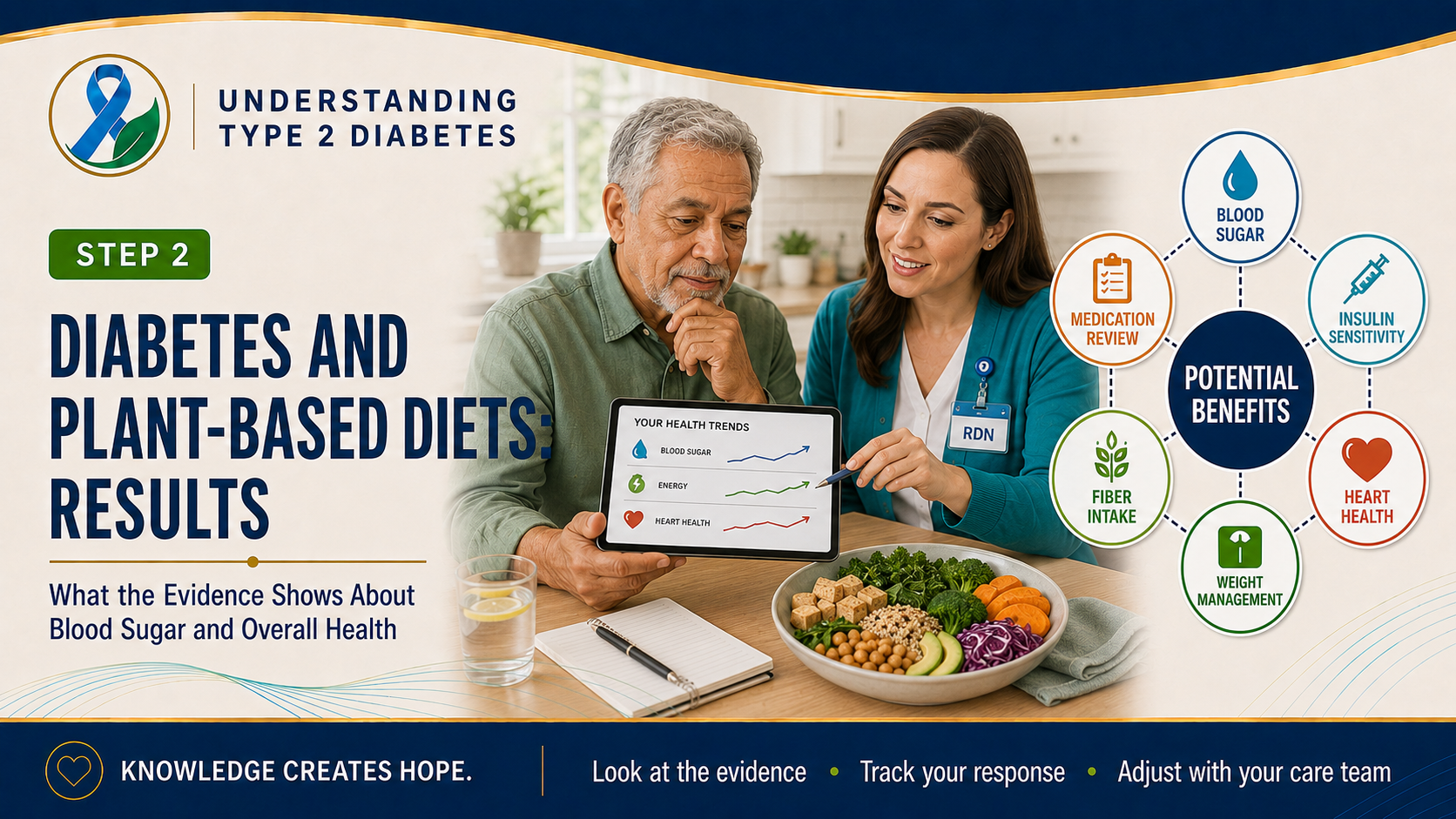
Diabetics And Plant-Based Diet Results
1. Weight Loss Because You Consume Fewer Calories
Plant-based foods are full of fiber, which keeps you full longer than nutrient- and fiber-poor processed foods. This leads to fewer calories consumed, supporting weight loss—a common challenge for people with diabetes.
2. Healthy Blood Glucose Levels
High-fiber foods help regulate healthy blood sugar levels. Blood sugar spikes can be dangerous for diabetics. Eating lots of fresh, plant-based options can naturally modulate glucose absorption, keeping you healthy.
3. You Get Plenty of Essential Minerals
Diabetics are often deficient in potassium, magnesium, folate, vitamin C, and vitamin E. (Mangal et al., 2023, p. 334) These and other essential minerals, vitamins, and nutrients are abundant in plant-based foods. The key here is to eat a wide variety of vegetables, fruits, nuts, and whole grains to ensure you give your body all the health-boosting nutrients it needs to help you manage your diabetes.
4. Diabetes Prevention
The International Diabetes Federation and other authorities state that type 2 diabetes, diagnosed in 90% to 95% of cases, is preventable with a mostly plant-based diet. (Type 2 diabetes, n.d.) Starting such a diet now can help prevent diabetes even if you do not currently have the condition.
Conclusion
A well-planned plant-based diet can significantly improve blood sugar control, insulin sensitivity, weight management, and metabolic health. (Austin et al., 2021) Whole, fiber-rich foods support steady glucose levels and efficient insulin use. Consistency makes these changes sustainable for long-term health.
Author's Note
I wrote this article to show what’s possible when you combine plant-based eating with diabetes management. People often notice improvements in energy, digestion, and blood sugar soon after adding more whole foods. I hope these results encourage you to discover what works best for your body. Each step toward whole-food choices brings greater balance.
---- Robert
Continue The Conversation
Every wellness journey is unique, and we can learn a great deal from one another's experiences.
What stood out to you in this article?
Have you faced similar challenges, discovered helpful strategies, or gained insights of your own?
I invite you to share your thoughts in the comments below. Your experience may encourage someone else who is taking the next step on their own journey.
Remember, meaningful change often begins with a single step—and none of us has to walk the path alone.
Reference List
- American Diabetes Association. Plant‑Based Diets and Diabetes Management.
- Centers for Disease Control and Prevention (CDC). Healthy Eating Patterns for Type 2 Diabetes.
- Harvard T.H. Chan School of Public Health. Plant‑Based Diets and Metabolic Health.
- National Institute of Diabetes and Digestive and Kidney Diseases (NIDDK). Diet and Nutrition for Diabetes.
- Mayo Clinic. Benefits of Plant‑Based Eating for Blood Sugar Control.
- Journal of the American College of Nutrition. Plant‑Based Diets and Improvements in Glycemic Control.
- Firth, J., Gangwisch, J. E., Borsini, A., Wootton, R. E. & Mayer, E. A. (2020). Food and mood: how do diet and nutrition affect mental wellbeing?. BMJ. https://doi.org/10.1136/bmj.m2382
- Wang, X., Ouyang, Y., Liu, J., Zhu, M., Zhao, G., Bao, W., & Hu, F. B. (2021). Fruit and Vegetable Intake and Mortality: Results from Two Prospective Cohort Studies of US Men and Women and a Meta-Analysis of 26 Cohort Studies. JAMA Internal Medicine 181(10), pp. 1305-1312. https://doi.org/10.1001/jamainternmed.2021.2341
- (2024). Fiber: The Carb That Helps You Manage Diabetes. Centers for Disease Control and Prevention. https://www.cdc.gov/diabetes/healthy-eating/fiber-helps-diabetes.html
- Mangal, D. K., Shaikh, N., Tolani, H., Gautam, D., Pandey, A. K., Sonnathi, Y., Gupta, S. D., Kalra, S., Sharma, K. C., Prasad, J., Tewari, R., & Anwar, F. (2023). Burden of micronutrient deficiency among patients with type 2 diabetes: systematic review and meta-analysis. BMJ Nutrition 8(1), p. 334. https://doi.org/10.1136/bmjnph-2022-000537
- (n.d.). Type 2 diabetes. International Diabetes Federation. https://idf.org/about-diabetes/types-of-diabetes/type-2-diabetes/
- Austin, G., Ferguson, J. J., & Garg, M. L. (2021). Effects of Plant-Based Diets on Weight Status in Type 2 Diabetes: A Systematic Review and Meta-Analysis of Randomized Controlled Trials. Nutrients 13(11). https://doi.org/10.3390/nu13114099
Disclaimer
The information provided in this article is for educational and informational purposes only and is not intended as medical, psychological, or professional advice. The content reflects general wellness principles and personal development concepts designed to encourage self-reflection and healthy lifestyle choices.
Individual circumstances vary, and readers should consult qualified healthcare professionals, mental health providers, or other appropriate experts regarding specific concerns or conditions. Never disregard professional advice or delay seeking help because of information contained in this article.
The author and publisher assume no responsibility for actions taken based on the information presented. Your health and well-being are ultimately your responsibility, and any changes to your lifestyle should be made thoughtfully and in consultation with appropriate professionals when necessary.