Introduction
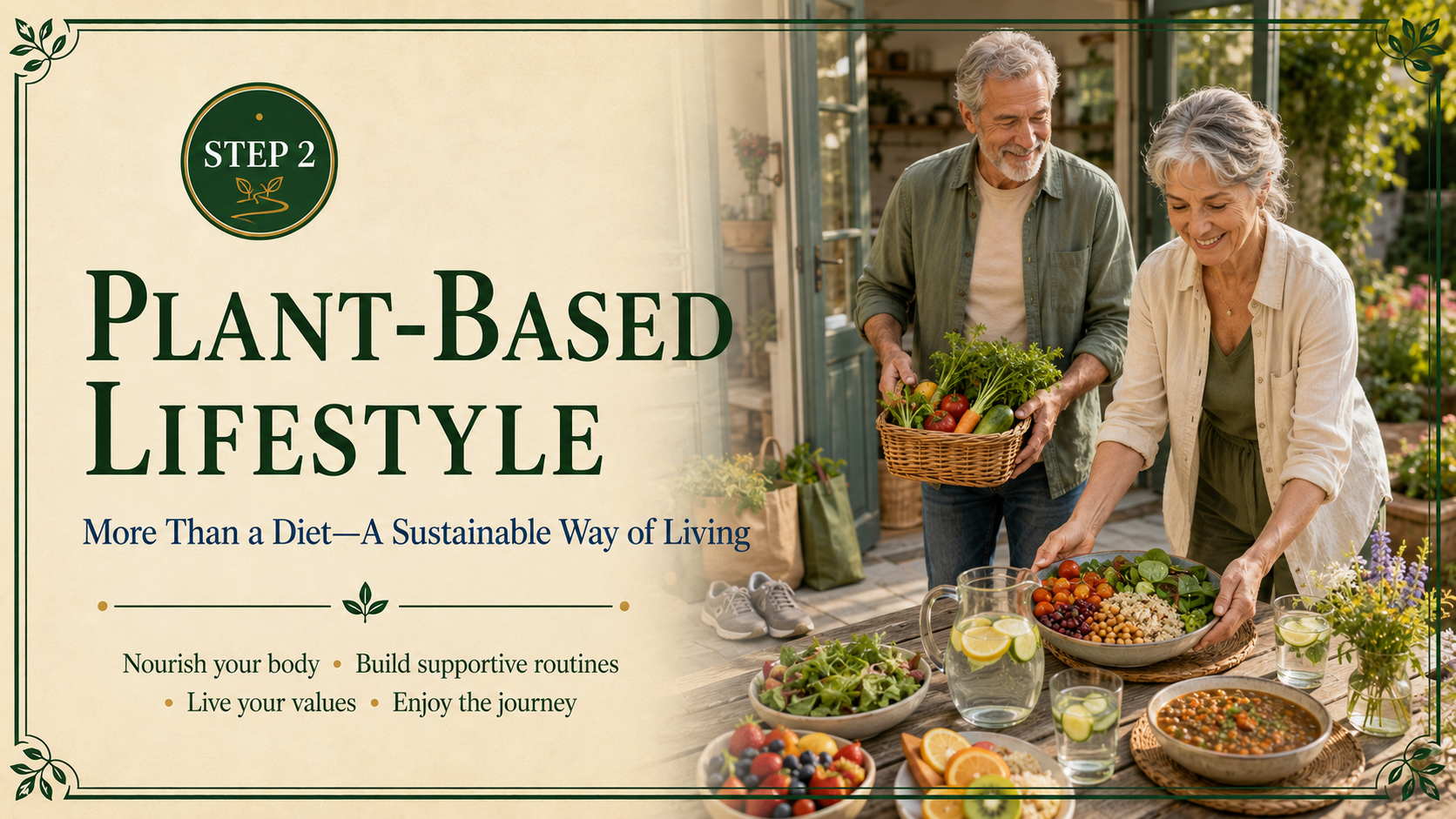
A plant-based lifestyle is a holistic approach that prioritizes whole, unprocessed plant foods, along with movement, rest, and intentional choices for long-term health. It’s not just about what you eat—it’s about how you live.
From Diet to Lifestyle: My “Aha” Moment
For years, I thought I had a healthy diet until I realized I was wrong. My “aha” moment was understanding that long-term health isn’t just about food but also about how we live. Adopting a plant-strong diet awakened me to the importance of making daily conscious choices about movement, rest, and mindset—key to transforming my health and aligning with our family values.
Why It Matters: The Science Behind the Shift
Dr. Colin Campbell's research in The China Study links animal protein intake to increased cancer risk, supported by studies on children with heart disease. (Campbell, 2012)
Anthropological research suggests that early humans consumed mostly plants, seeds, and starchy roots, challenging the concept of modern 'Paleo diets.' (Paleolithic Diet - StatPearls - NCBI Bookshelf, 2024)
Strong evidence shows that consuming whole, unprocessed plants promotes heart health, better diabetes control, and natural weight management. (Wright et al., 2017)
What It Looks Like in Practice
- No animal products
- No oils or processed foods
- Whole, unrefined plants only
- Movement, rest, and mindset matter too.
This foundation of a plant-strong lifestyle is the most sustainable and empowering path I have found for long-term health and well-being.
How to Start Living Plant-Based
- Begin with one plant-strong meal a day.
- Explore resources like Forks Over Knives or the Plant Strong diet.
- Review the Plant-Based Diet for Beginners.
Resources to Support Your Journey
Final Thoughts
This lifestyle empowers you to make intentional choices for your well-being. If you’re ready to explore more, take the first step by trying a plant-based meal today or joining our community conversation below. Your journey to lasting health begins with one action.
Author's Note
A plant‑based lifestyle is more than a way of eating—it’s a way of caring for your body, your community, and the world around you. My intention with this guide is to offer clarity and encouragement as you explore what this lifestyle can look like in your daily routines.
You don’t need to change everything overnight. Small, thoughtful steps like adding more whole foods, noticing how meals make you feel, and choosing habits that support your long-term well-being can create powerful momentum.
My hope is that this article helps you feel grounded, informed, and inspired as you shape a lifestyle that reflects your values and supports your health in a sustainable, joyful way.
— Robert
Continue The Conversation
Every wellness journey is unique, and we can learn a great deal from one another's experiences.
What stood out to you in this article?
Have you faced similar challenges, discovered helpful strategies, or gained insights of your own?
I invite you to share your thoughts in the comments below. Your experience may encourage someone else who is taking the next step on their own journey.
Remember, meaningful change often begins with a single step—and none of us has to walk the path alone.
References
- Academy of Nutrition and Dietetics. Position of the Academy of Nutrition and Dietetics: Vegetarian Diets. Journal of the Academy of Nutrition and Dietetics. 2023.
- Satija A, Hu FB. Plant‑based diets and chronic disease prevention. Annual Review of Public Health. 2023.
- U.S. Department of Agriculture & U.S. Department of Health and Human Services. Dietary Guidelines for Americans, 2020–2025.
- Harvard T.H. Chan School of Public Health. Healthy Eating Plate: Plant‑Forward Guidance. Updated 2024.
- American Heart Association. Plant‑Based Eating and Heart Health. Updated 2025.
- Clarys P, et al. Nutritional considerations of plant‑based dietary patterns. Advances in Nutrition. 2024.
- Kahleova H, et al. Health outcomes associated with plant‑based dietary patterns. Journal of Geriatric Cardiology. 2023.
Campbell, T. C. (2012). Animal Protein as a Carcinogen. Center for Nutrition Studies. https://nutritionstudies.org/animal-protein-carcinogen/
(2024). Paleolithic Diet - StatPearls - NCBI Bookshelf. StatPearls Publishing. https://www.ncbi.nlm.nih.gov/books/NBK482457/
Wright, N., Wilson, L., Smith, M., Duncan, B. & McHugh, P. (2017). The BROAD study: A randomized controlled trial using a whole food plant-based diet in the community for obesity, ischaemic heart disease, or diabetes. Nutrition & Diabetes 7(3). https://doi.org/10.1038/nutd.2017.3
Disclaimer
The information provided in this article is for educational and informational purposes only and is not intended as medical, psychological, or professional advice. The content reflects general wellness principles and personal development concepts designed to encourage self-reflection and healthy lifestyle choices.
Individual circumstances vary, and readers should consult qualified healthcare professionals, mental health providers, or other appropriate experts regarding specific concerns or conditions. Never disregard professional advice or delay seeking help because of information contained in this article.
The author and publisher assume no responsibility for actions taken based on the information presented. Your health and well-being are ultimately your responsibility, and any changes to your lifestyle should be made thoughtfully and in consultation with appropriate professionals when necessary.