Introduction
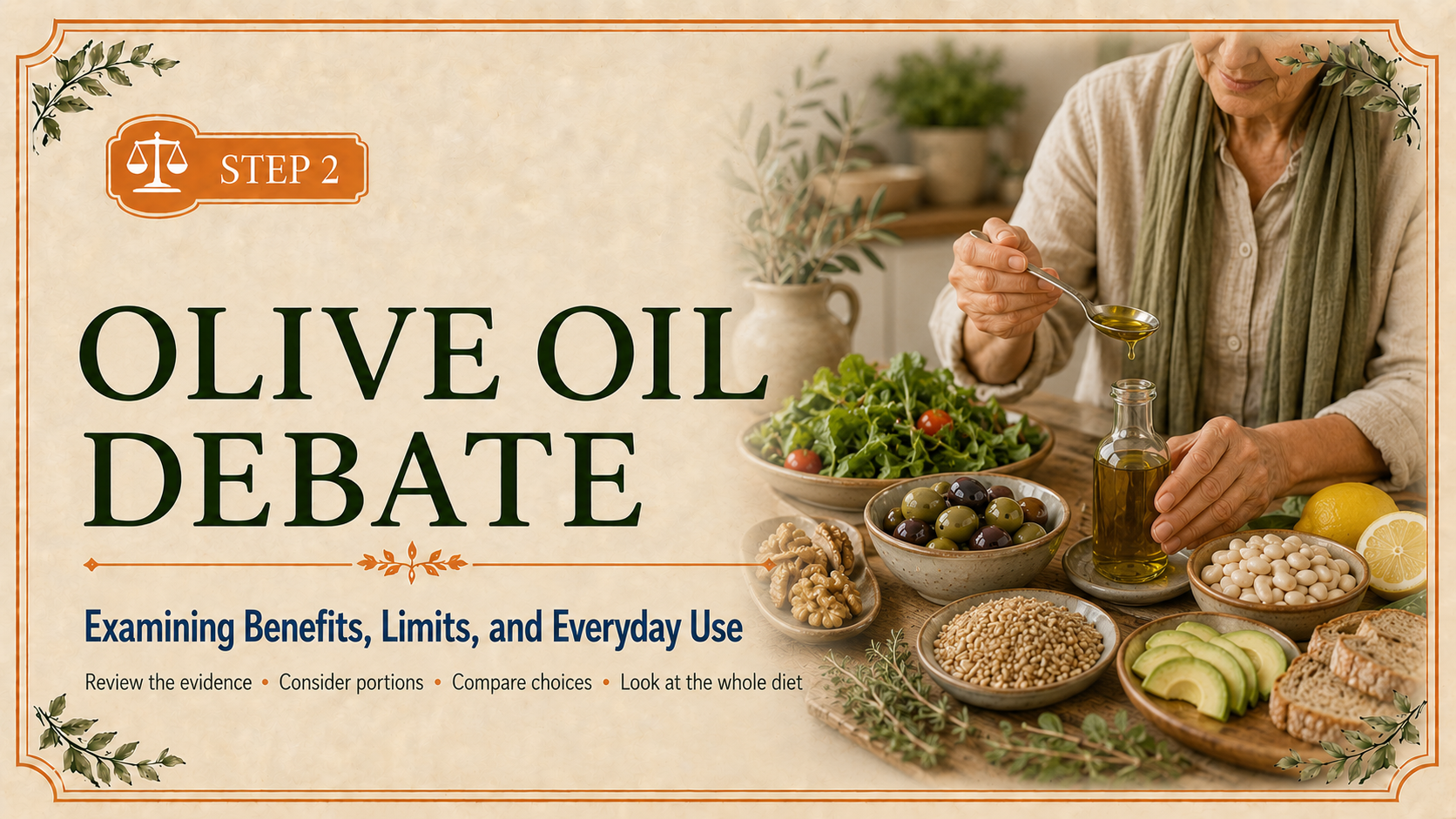
Olive oil is a common component of the Mediterranean diet and is regularly mentioned in the media and in packaged foods. It is important to consider how much of its reputation is supported by current science versus marketing.
This updated review aims to separate misconceptions from established evidence, allowing you to make choices based on current scientific understanding.
The Hype vs. The Truth: What We Really Know About Olive Oil
Olive oil is often promoted as a superfood capable of:
- Lowering LDL (“bad”) cholesterol
- Preventing heart attacks
- Reducing inflammation
- Extending lifespan
- Acting as a key reason the Mediterranean diet is considered healthy.
Its frequent use in sauces, dressings, marinades, and restaurant meals may lead to the assumption that prevalence equates to healthiness.
However, a product's widespread use does not necessarily indicate scientific endorsement of its benefits.
The Truth
Research indicates that olive oil contains monounsaturated fats and antioxidants, which differ from the saturated fats in butter, cheese, and meat. However, a comparative advantage does not inherently mean that it is beneficial.
Here are the facts that often get left out:
1. Olive oil is still 100% fat.
Every tablespoon contains 120 calories with no fiber, no water, and minimal nutrients. (Olive Oil: Calories, Nutrition & Health Facts (2026 Guide), 2026)
2. It is extremely calorie‑dense.
Oils are the most calorie‑dense foods on the planet. Even small amounts can contribute to weight gain, which increases the risk of chronic disease. (Huth et al., 2013)
3. It contains more saturated fat than many people realize.
Two tablespoons of olive oil have more than three times the saturated fat of a 4‑ounce chicken breast. (Extra Virgin Olive Oil: Benefits, Vs. Other Oil, and More, 2023)
4. The Mediterranean diet’s benefits come from plants — not oil.
The healthiest Mediterranean populations eat large amounts of vegetables, legumes, whole grains, and fruit… and very little oil compared to modern interpretations. (Mediterranean Diet: Food List & Meal Plan, 2024)
5. Whole foods outperform oils every time. (Lane et al., 2024)
If you want the antioxidants found in olives, you get far more by eating the whole olive, not the extracted oil.
According to Dr. Michael Klaper and other plant-based physicians, olive oil is considered less harmful than animal fats, but evidence does not support calling it a health food.
A More Helpful Way to Think About Olive Oil
Olive oil is not inherently harmful or miraculous. It is a refined product that can be included in diets in small quantities, preferably as a substitute for more harmful fats rather than an added component.
Whole plant foods may be more effective for supporting heart health, weight control, and disease prevention than refined fats like olive oil. (Greger, 2020)
Olive oil is not healthy - Dr. Klaper
Resources You May Find Helpful
- Check out these three great sources: Plant-Based Nutrition, 2E (Idiot’s Guides),
- Nutrition Facts: The Truth About Food, and
- The Forks Over Knives Plan
Final thought
Olive oil isn’t a miracle food or a villain. It’s a refined fat, with trade-offs. While less harmful than many highly processed vegetable oils, it lacks the fiber, antioxidants, and protective compounds of whole plant foods. (RD & PharmD, 2025) After reviewing the research and learning from experts like Dr. Esselstyn, I choose to avoid added oils and rely on naturally occurring fats from nuts, seeds, avocados, and olives.
A lot of confusion about olive oil comes from oversimplified claims. Benefits are more about the overall diet than just the oil. Choose foods in their natural form for better health.
Author's Note
Olive oil has long been promoted as healthy, but nutrition science reveals a nuanced story. Looking beyond marketing encourages a focus on whole foods over refined products. My goal is to provide clarity so you can make choices that fit your health goals.
– Robert
Continue The Conversation
Every wellness journey is unique, and we can learn a great deal from one another's experiences.
What stood out to you in this article?
Have you faced similar challenges, discovered helpful strategies, or gained insights of your own?
I invite you to share your thoughts in the comments below. Your experience may encourage someone else who is taking the next step on their own journey.
Remember, meaningful change often begins with a single step—and none of us has to walk the path alone.
Reference List
(2026). Olive Oil: Calories, Nutrition & Health Facts (2026 Guide). NutriScan App. https://nutriscan.app/calories-nutrition/olive-oil
Huth, P. J., III, V. L., Keast, D. R., Park, K., & Auestad, N. (2013). Major food sources of calories, added sugars, and saturated fat and their contribution to essential nutrient intakes in the U.S. diet: data from the National Health and Nutrition Examination Survey (2003–2006). Nutrition Journal 12. https://doi.org/10.1186/1475-2891-12-116
(2023). Extra Virgin Olive Oil: Benefits, Vs. Other Oil, and More. Healthline. https://www.healthline.com/nutrition/extra-virgin-olive-oil
(2024). Mediterranean Diet: Food List & Meal Plan. Cleveland Clinic. https://my.clevelandclinic.org/health/articles/16037-mediterranean-diet
Lane, M. M., Gamage, E., Du, S., Ashtree, D. N., McGuinness, A. J., Gauci, S., Baker, P., Lawrence, M., Rebholz, C. M., Srour, B., Touvier, M., Jacka, F. N., O'Neil, A., Segasby, T. & Marx, W. (2024). Ultra-processed food exposure and adverse health outcomes: umbrella review of epidemiological meta-analyses. BMJ. https://doi.org/10.1136/bmj-2023-077310
Greger, M. (2020). A Whole Food Plant-Based Diet Is Effective for Weight Loss: The Evidence. SAGE Open Medicine 14(5). https://doi.org/10.1177/1559827620912400
RD, A. R. & PharmD, J. C. (September 4, 2025). Comparing oils: Olive, coconut, canola, and vegetable oil. Medical News Today. https://www.medicalnewstoday.com/articles/324844
Flynn, M. M., Tierney, A., & Itsiopoulos, C. (2023). Is Extra Virgin Olive Oil the Critical Ingredient Driving the Health Benefits of a Mediterranean Diet? A Narrative Review. Nutrients 15(13). https://doi.org/10.3390/nu15132916
Disclaimer
The information provided in this article is for educational and informational purposes only and is not intended as medical, psychological, or professional advice. The content reflects general wellness principles and personal development concepts designed to encourage self-reflection and healthy lifestyle choices.
Individual circumstances vary, and readers should consult qualified healthcare professionals, mental health providers, or other appropriate experts regarding specific concerns or conditions. Never disregard professional advice or delay seeking help because of information contained in this article.
The author and publisher assume no responsibility for actions taken based on the information presented. Your health and well-being are ultimately your responsibility, and any changes to your lifestyle should be made thoughtfully and in consultation with appropriate professionals when necessary.
Wow. Great post here. And I have seen an abundance of the advantages of olive oil vs the other oils…..and my older sister nags me to death about it. :/ Now I can send her this, along with other references and get her off my back. (She’s a “personal trainer”….got certified via internet).